

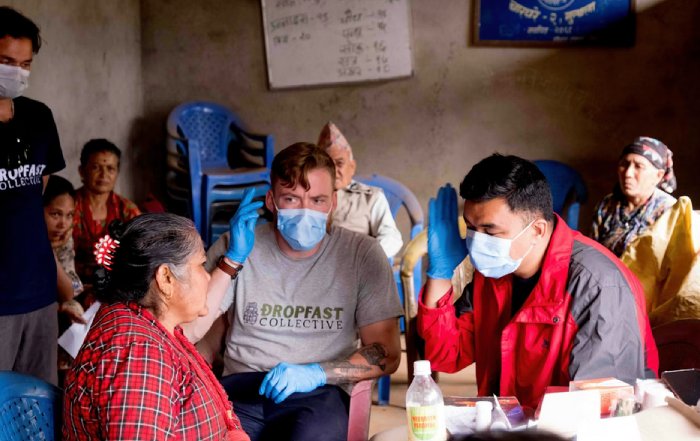
Rural Healthcare: Innovation, Equity and the WorldsDoor Perspective
Rural Health at a Turning Point
The global debate on healthcare has entered a decisive and more mature phase, defined by the recognition that rural communities across continents remain structurally disadvantaged despite an unprecedented wave of technological progress. From isolated farming towns in the United States and Canada to dispersed villages in France, Germany, Australia, Japan, Brazil and throughout the Global South, the same pattern recurs: limited access to medical personnel, fragile infrastructure, long travel distances to basic services, and health inequities that mirror and magnify broader socioeconomic divides. What was once discussed primarily as a social or moral concern is now widely acknowledged as a strategic economic and geopolitical priority, as governments, multilateral institutions and private-sector leaders understand that health resilience in rural regions underpins national productivity, social stability and long-term competitiveness.
For WorldsDoor.com, which is committed to exploring the intersections of technology, culture, society, environment and business, rural healthcare has become a natural focal point. The topic sits at the crossroads of the platform's coverage of health, society, environment, technology and world affairs, and it invites a distinctly interdisciplinary lens. The transformation underway is not simply about new devices or digital platforms; it is about reimagining how care is organized, financed and delivered in ways that respect local culture, leverage global knowledge and remain sustainable in an era of climate stress and demographic change.
Structural Challenges That Still Shape Rural Care
Even as digital health solutions proliferate, the foundational challenges of rural healthcare remain tangible and immediate. In the United States, for example, the closure of rural hospitals over the past decade, documented by organizations such as the American Hospital Association, has left millions of residents with no emergency department within a reasonable driving distance. Similar pressures are visible in Canada's northern territories, the Australian Outback, the Scottish Highlands, rural France, and aging prefectures in Japan, where shrinking populations and constrained public budgets make it difficult to maintain full-service facilities.
Global institutions have increasingly quantified these gaps. Readers seeking comparative data on health systems performance can explore the World Health Organization at who.int or examine cross-country indicators through OECD Health Statistics at oecd.org/health, where the disparities between urban and rural outcomes are laid out in stark detail. These analyses make clear that geography interacts with demography: aging populations in Europe and East Asia face rising burdens of chronic disease and long-term care needs, while many countries in Africa, South Asia and parts of Latin America manage rapidly growing, youthful populations that require maternal, child and preventive services in areas where infrastructure is weakest.
Distance remains a fundamental barrier. In large parts of Spain, Italy, South Africa, Norway, Finland and Brazil, a specialist consultation can involve hours of travel, lost income, and significant logistical stress. Research by organizations such as the National Rural Health Association and The King's Fund, whose work on health inequality can be explored at kingsfund.org.uk, shows that these travel burdens translate into delayed diagnoses, lower adherence to treatment and worse outcomes for conditions that are highly manageable when addressed early. For readers of WorldsDoor, these realities connect closely with the lived experiences explored in the platform's culture and lifestyle sections, where the human impact of systemic gaps is often most visible.
Telehealth Maturity in 2026: From Pilot to Core Infrastructure
The last half decade has seen telehealth move from experimental supplement to core infrastructure in many national health systems. Accelerated by the pandemic disruptions of the early 2020s and consolidated through regulatory reforms, telehealth is now embedded in routine care pathways across Singapore, New Zealand, much of Europe, North America and a growing number of countries in Asia, Africa and South America. For rural communities, this shift has been particularly consequential, as remote consultations, digital triage and virtual follow-up have become practical alternatives to long, costly journeys.
Leading academic and clinical institutions have played a central role in defining best practice. Mayo Clinic, for example, has developed integrated telehealth models and remote monitoring programs, accessible at mayoclinic.org, which connect patients in remote areas with multidisciplinary teams. The U.S. Department of Veterans Affairs, through its extensive telehealth network described at va.gov, has become a global reference point for delivering complex care to dispersed populations, including mental health support, rehabilitation and chronic disease management.
For the WorldsDoor audience, telehealth is not only a technology story but also a governance and ethics story, tying into coverage of technology and ethics. Countries such as Germany, Switzerland, the Netherlands and Japan have advanced stringent frameworks for data protection and cybersecurity, ensuring that the expansion of virtual care does not come at the expense of privacy or trust. As telehealth in 2026 increasingly incorporates AI-driven decision support, automated translation and remote diagnostics, questions around consent, algorithmic bias and accountability have become central to policy debates across Europe, Asia and North America.
Portable Diagnostics and the Decentralization of Clinical Capacity
Alongside virtual consultations, a quiet revolution has unfolded in the form of portable diagnostics that bring hospital-grade capabilities directly to rural clinics and even households. Handheld ultrasound devices, compact blood analyzers, rapid molecular tests for infectious diseases and portable ECG tools are now widely deployed in regions as diverse as India, China, Brazil, South Africa, Mexico, remote Australian communities and northern Canada. These tools enable frontline workers to conduct sophisticated assessments on site, reducing the need for repeated travel and enabling same-day clinical decisions.
Academic centers such as Johns Hopkins Medicine, whose work can be explored at hopkinsmedicine.org, continue to refine point-of-care technologies that are robust, affordable and adapted to low-resource environments. Global philanthropies including the Bill & Melinda Gates Foundation, accessible at gatesfoundation.org, have funded diagnostic platforms for diseases such as tuberculosis, malaria and HIV in rural Africa and Asia, while also supporting maternal and neonatal screening tools that can be used by community health workers with limited formal training.
In Europe, mobile screening units now traverse rural Germany, France, Italy, Spain and the Netherlands, offering mammography, cardiovascular risk checks and metabolic screenings. Across Singapore, Thailand, South Korea and Japan, government-backed health caravans and smart vans equipped with digital diagnostics visit islands and mountainous regions on a regular schedule. For WorldsDoor, these developments embody the shift toward community-centered, decentralized care that is also a recurring theme in the site's sustainable and society coverage, where the emphasis is on empowering local actors rather than concentrating capacity solely in metropolitan centers.
Remote Monitoring and the New Logic of Chronic Care
As populations age in Europe, North America, Japan, South Korea and parts of China, and as lifestyle-related conditions rise in countries across Asia, Africa and South America, chronic disease management has become the defining challenge of contemporary health systems. Rural areas, where older adults often prefer to age in place and where specialist services are scarce, have been at the forefront of remote patient monitoring initiatives. Wearable sensors, connected blood pressure cuffs, glucometers, pulse oximeters and home spirometers now feed continuous or near-continuous data streams into clinical dashboards, enabling early interventions before deterioration requires hospitalization.
Institutions such as Cleveland Clinic, whose programs can be examined at clevelandclinic.org, have shaped global models for integrating remote monitoring into standard care plans for heart failure, diabetes, COPD and other chronic conditions. Public health agencies like the Centers for Disease Control and Prevention (CDC) at cdc.gov have also underscored the need for culturally sensitive patient education to ensure that rural residents understand how to use devices, interpret alerts and communicate effectively with distant care teams.
For WorldsDoor, this evolution links directly with the platform's focus on education and health. Remote monitoring only delivers value when patients and caregivers possess the digital literacy and confidence to engage with the technology. In countries such as Finland, Norway, Australia and New Zealand, health authorities have invested heavily in community training, local digital navigators and blended models that combine in-person visits with virtual support, creating a more continuous and less fragmented experience of care.
Building and Sustaining a Rural Health Workforce
Technology cannot compensate for the absence of human expertise, and the shortage of health professionals willing and able to work in rural regions remains one of the most stubborn obstacles to equitable access. Many countries have experimented with financial incentives, scholarship schemes and mandatory rural rotations, yet retention continues to be a challenge, especially in remote areas of South Africa, Brazil, Malaysia, Thailand, Canada, Australia and the United States. The World Bank, whose analyses are available at worldbank.org, has repeatedly emphasized that investment in rural health labor markets yields dividends not only in health outcomes but also in broader economic development, as healthcare jobs anchor local economies and attract complementary services.
Innovative models have emerged to extend the reach of scarce specialists. Project ECHO-style tele-mentorship programs connect rural clinicians with academic centers through regular virtual case discussions, enabling knowledge transfer without requiring relocation. AI-assisted diagnostic tools and decision-support platforms, increasingly integrated into electronic health records, help nurses, general practitioners and community health workers manage complex cases with greater confidence. For WorldsDoor readers interested in the organizational and leadership dimensions of these shifts, the business section provides context on how health systems rethink incentives, career pathways and partnerships to make rural practice more attractive and professionally rewarding.
Sustainable Infrastructure and Climate-Resilient Rural Health
By 2026, the climate crisis is no longer a distant backdrop but a daily operational concern for health systems, particularly in rural regions that are more exposed to extreme weather, water stress and energy insecurity. Sustainable, climate-resilient infrastructure has therefore become a defining element of rural health strategy. Solar-powered clinics, modular buildings designed for rapid deployment, and water-efficient sanitation facilities are now common features in projects across Kenya, Nepal, Brazil, Peru, Indonesia and the Philippines. Guidance from the United Nations Environment Programme, accessible at unep.org, has been instrumental in shaping green building standards and energy strategies for health facilities in low- and middle-income countries.
In Norway, Sweden, Finland, Canada and Austria, architectural approaches blend indigenous and traditional design principles with modern engineering to create facilities that are both culturally meaningful and optimized for energy efficiency and resilience to cold or variable climates. Academic journals such as The Lancet, available at thelancet.com, have published influential work on how climate-related risks-from vector-borne disease expansion to heatwaves and flooding-disproportionately impact rural populations, reinforcing the case for integrating environmental planning directly into health policy.
These concerns resonate strongly with WorldsDoor's editorial focus on environment and sustainable development, where the platform consistently highlights that the future of healthcare cannot be separated from the future of the planet. For rural communities, resilient clinics that can operate through power outages, storms or supply chain disruptions are not a luxury but a necessity.
Data, Mapping and Evidence-Led Rural Strategy
The digitization of health information, combined with advances in geospatial analytics, has transformed how governments and organizations design rural health interventions. Mapping tools developed by Esri, presented at esri.com, allow planners to visualize the distribution of facilities, travel times, disease burdens and social determinants of health in granular detail. By overlaying demographic, environmental and utilization data, health agencies can identify "care deserts," prioritize investments and monitor the impact of interventions over time.
Global research centers such as the Institute for Health Metrics and Evaluation (IHME), accessible at healthdata.org, provide open datasets and modeling tools that inform policy debates in countries from the United Kingdom and Netherlands to China, South Africa and Brazil. This data-driven approach is increasingly essential as resources are constrained and decision-makers are expected to demonstrate measurable impact.
On WorldsDoor, these developments intersect with coverage of technology, world affairs and business, where the use of data is often examined through the dual lens of opportunity and risk. While analytics can sharpen strategy, they also raise important questions about privacy, consent and the representation of marginalized communities-questions at the heart of the platform's ongoing exploration of ethics and society.
Cultural Competence and Community Ownership of Care
Experience across continents has demonstrated that technological sophistication alone cannot close rural health gaps if solutions are not aligned with local values, languages and traditions. Rural communities in India, China, Malaysia, South Africa, Brazil, Guatemala, New Zealand, Canada and the United States often maintain distinct healing practices, spiritual frameworks and community decision-making structures. When health initiatives ignore these realities, they encounter mistrust, low uptake and short-lived impact.
Organizations such as The Commonwealth Fund, which can be explored at commonwealthfund.org, have documented how culturally adapted care models improve adherence, satisfaction and outcomes. In Canada, indigenous health authorities co-design services with First Nations, Inuit and Métis communities, integrating traditional medicine and community governance into formal health systems. In New Zealand, Māori-led providers have pioneered approaches that combine clinical care with cultural revitalization and social support, demonstrating that community ownership is a powerful driver of health equity.
For WorldsDoor, these narratives are central to the human-focused storytelling in culture and lifestyle. They illustrate that trustworthiness in healthcare is built through long-term relationships, respect for identity and genuine power-sharing, not only through technical expertise. Rural health innovation that succeeds over decades rather than months is invariably rooted in this kind of cultural competence.
Cross-Border Collaboration and Shared Innovation
Rural healthcare challenges rarely respect national borders, especially in regions where populations move seasonally for work, agriculture or trade. International collaboration has therefore become a cornerstone of rural health reform. Academic institutions such as Harvard Medical School, presented at hms.harvard.edu, partner with universities and ministries of health in Africa, Asia and Latin America to co-develop training curricula, research programs and tele-education initiatives. Multilateral organizations including the Asian Development Bank, accessible at adb.org, finance broadband expansion, clinic construction and cross-border disease surveillance networks in emerging economies.
The International Telecommunication Union (ITU), at itu.int, continues to champion digital inclusion and cybersecurity standards that are essential for telehealth reliability, while UNICEF, available at unicef.org, focuses on strengthening maternal, neonatal and child health services in rural and fragile settings. These collaborative efforts mirror the global, interconnected perspective that defines WorldsDoor's world and innovation sections, demonstrating that solutions tested in one region can often be adapted and refined elsewhere, provided that local context is respected.
Investment, Economics and the Business of Rural Health
By 2026, the economic case for rural health investment is more robust than ever. Studies from organizations like the Brookings Institution, accessible at brookings.edu, have shown that improved healthcare access correlates strongly with workforce participation, educational attainment and local business vitality. Healthy rural communities are better positioned to participate in regional supply chains, tourism, agriculture and emerging green industries, which in turn support national growth and social cohesion.
Private capital has begun to recognize this opportunity. Impact investors, venture funds and corporate innovation arms are backing digital health startups, logistics platforms and diagnostic companies that explicitly target rural markets in India, Africa, Latin America and underserved areas of Europe and North America. Foundations such as the Rockefeller Foundation, whose initiatives can be explored at rockefellerfoundation.org, continue to support ecosystem-level innovations, from data collaboratives to resilient infrastructure pilots.
For WorldsDoor, these trends are closely followed in the business section, where the platform examines how capital can be directed toward inclusive, ethical and sustainable models rather than short-term exploitation. The challenge for the coming decade will be to align financial incentives with long-term community well-being, ensuring that rural health investments are both profitable and profoundly beneficial.
Digital Literacy, Education and Community Empowerment
Ultimately, the success of any rural health innovation depends on the capacity of individuals and communities to understand, use and shape the tools offered to them. Digital literacy has therefore emerged as a critical enabler of equitable access. Governments, NGOs and universities now run training programs that teach residents how to navigate telehealth platforms, interpret health information, protect their privacy online and advocate for their needs within increasingly digital health systems.
The UNESCO Institute for Lifelong Learning, accessible at uil.unesco.org, promotes initiatives that strengthen adult education and digital skills in underserved populations worldwide, recognizing that literacy in the 2020s and beyond must encompass both traditional reading and writing and the ability to function confidently in digital environments. For rural youth, these skills are particularly important, as they open doors to remote work, online education and participation in global conversations about health, climate and social justice.
On WorldsDoor, these themes are woven through the education and society sections, reflecting the belief that empowered communities are not passive recipients of healthcare but active co-creators of healthier futures. The same mindset informs the platform's broader coverage of lifestyle, food and travel, where readers encounter stories of how people in rural regions adapt traditions, diets and daily routines in response to new knowledge and global trends.
Opening the Door to a Healthier Rural Future
Standing in 2026, the trajectory of rural healthcare is neither predetermined nor uniform, but the direction of travel is clear. Telemedicine, portable diagnostics, remote monitoring, sustainable infrastructure, data-driven planning and culturally grounded care models are converging to create possibilities that would have seemed out of reach just a decade ago. At the same time, persistent gaps in funding, workforce distribution, digital access and political attention remind global and local leaders that progress can stall or reverse if momentum is not maintained.
For WorldsDoor.com, this landscape is not just a subject of reporting; it is a lens through which to understand a rapidly changing world. Across sections devoted to health, world affairs, technology, environment and innovation, the platform continues to follow how rural communities from the United States, United Kingdom and Germany to South Africa, Thailand, Brazil and New Zealand navigate the interplay of tradition and transformation. The editorial commitment is to highlight experience and expertise on the ground, to amplify authoritative voices that understand both the science and the culture of health, and to build trust by presenting nuanced, evidence-based analysis.
Rural healthcare innovation, at its best, builds bridges: between clinicians and communities, between local knowledge and global science, between environmental stewardship and human well-being. As readers step through the "world's door" into stories from every continent, they encounter a shared aspiration-to ensure that where a person is born or chooses to live no longer determines the quality of care they can receive. The work ahead is substantial, but the foundations laid by 2026 suggest that a more equitable, connected and resilient rural health future is within reach for societies willing to invest, collaborate and listen.