

Travel Influencers: How Digital Storytellers Are Redefining Global Exploration
The travel industry in 2026 is no longer shaped primarily by glossy brochures or cinematic commercials; it is increasingly defined by a network of digital storytellers whose influence extends far beyond traditional tourism marketing. These travel influencers occupy a unique space at the intersection of culture, technology, sustainability, and business, and their voices resonate strongly with the global audience that turns to worldsdoor.com for insight into how the world is changing. What began as personal travel diaries on social media platforms has evolved into a sophisticated ecosystem of entrepreneurial brands, educational platforms, and advocacy-driven communities that guide how millions of people in the United States, Europe, Asia, Africa, and beyond choose to experience the world.
In this environment, influence is no longer measured solely by follower counts or viral photographs; it is evaluated through the lens of experience, expertise, authoritativeness, and trustworthiness. The most impactful travel creators of 2026 are those who combine lived experience on the road with a deep understanding of cultural nuance, environmental responsibility, and digital ethics. Their work is not limited to entertainment; it shapes how travelers think about health, lifestyle, business, technology, and the broader societal implications of global mobility. As audiences become more discerning, they increasingly look for creators whose values align with their own aspirations for meaningful, sustainable, and ethical travel. This evolution mirrors the editorial mission of worldsdoor.com/travel.html, where travel is treated as a doorway into culture, innovation, and global citizenship rather than a simple consumer product.
From Aesthetic Escapism to Responsible Global Storytelling
Over the past decade, the travel influencer landscape has undergone a marked shift from purely aesthetic escapism to narrative depth and social responsibility. Platforms such as Instagram, YouTube, TikTok, and newsletter ecosystems like Substack have become dynamic storytelling arenas where real-time experiences are layered with historical context, social commentary, and environmental insight. Influencers who once focused on postcard-perfect images now weave in perspectives on local economies, indigenous rights, climate resilience, and mental well-being. This transition mirrors broader digital trends observed by organizations such as National Geographic and UNESCO, which increasingly collaborate with creators to promote cultural preservation and responsible tourism. Readers interested in how these themes intersect with broader global developments can explore related coverage at worldsdoor.com/world.html.
The sophistication of travel storytelling has been accelerated by rapid advances in technology. Artificial intelligence tools now support everything from editing and translation to itinerary optimization and audience analytics, allowing creators to devote more energy to research, relationship-building, and narrative depth. Immersive formats such as 360-degree video, virtual reality experiences, and interactive maps have broadened access to destinations for people who may not be able to travel due to health, financial, or geopolitical constraints. Platforms such as Google Arts & Culture and Google Earth VR enable audiences to explore heritage sites and natural wonders in unprecedented detail, while creators provide the human context that transforms virtual exploration into a meaningful learning experience. Readers can learn more about how innovation is reshaping exploration at worldsdoor.com/innovation.html.
Influencers as Entrepreneurs, Educators, and Cultural Interpreters
By 2026, many of the world's best-known travel influencers have evolved from individual creators into multi-faceted brands that blend entrepreneurship with education and advocacy. Figures such as Murad Osmann, whose #FollowMeTo series became a global visual phenomenon, exemplify how a distinctive artistic concept can grow into long-term collaborations with organizations like Google Arts & Culture and major hospitality groups. His recent focus on augmented reality exhibitions and heritage preservation reflects a broader trend: leading creators are no longer satisfied with simply showcasing destinations; they seek to protect and interpret them. This aligns strongly with the values of worldsdoor.com/culture.html, which emphasizes respect for local history and identity as central to any travel narrative.
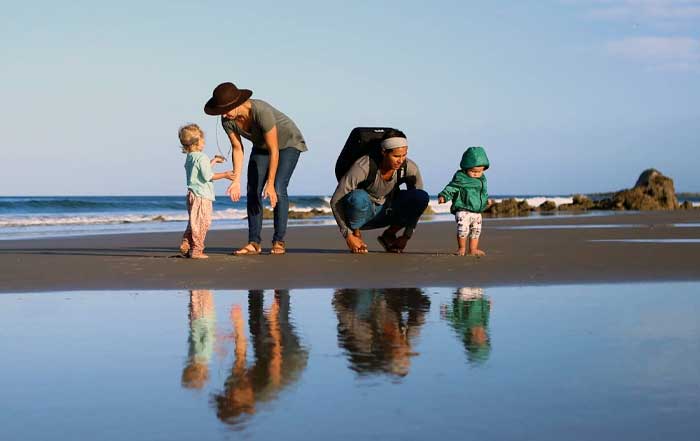
Similarly, nomadic power couples and families, such as Jack Morris and Lauren Bullen or The Bucket List Family, demonstrate how personal storytelling can expand into education, philanthropy, and product development. Their collaborations with brands like Four Seasons, Disney, and Hilton are increasingly structured around shared commitments to ethical tourism, family-friendly learning, and cross-cultural understanding rather than purely aspirational luxury. This evolution reflects a deeper awareness that influential creators carry a responsibility to model behavior that is safe, inclusive, and environmentally conscious. For readers interested in how these lifestyle and business dimensions converge, worldsdoor.com/lifestyle.html and worldsdoor.com/business.html provide complementary perspectives.
A growing number of travel influencers now position themselves explicitly as educators. Jessica Nabongo, known for becoming the first Black woman to visit every country, uses her platform and speaking engagements to analyze how race, passports, and economic inequality shape the freedom to move. Her collaborations with outlets like CNN Travel and Condé Nast Traveler, as well as with organizations such as Airbnb.org, underscore the importance of community-based tourism and inclusive storytelling. Influencers like Drew Binsky, who has documented everyday life in every country, and Rachel and Jun, who interpret Japanese culture for a global audience, function as informal cultural diplomats. Their content often complements the work of traditional institutions such as BBC Travel and The Japan Times by bringing nuanced local stories to younger, digitally native audiences. Readers looking to deepen their understanding of cultural diversity can explore related analysis at worldsdoor.com/culture.html.
Sustainability, Ethics, and the New Standards of Trust
As climate change, over-tourism, and social inequity have become central global concerns, sustainability and ethics have moved from the margins to the core of travel influence. Creators such as Chris Burkard, whose wilderness photography has appeared in The New York Times and Outside Magazine, have long advocated for environmental stewardship, but in 2026 this stance is no longer optional; it is a baseline expectation for credible voices in travel. Collaborations with brands like Patagonia, Sony, and conservation-focused NGOs underscore a shared commitment to responsible outdoor exploration, carbon-conscious travel, and the protection of fragile ecosystems. The editorial focus at worldsdoor.com/environment.html and worldsdoor.com/sustainable.html reflects this same urgency, highlighting how individual choices scale into collective impact.
Ethical considerations also extend to representation, privacy, and community benefit. Influencers such as Aggie Lal, Sorelle Amore, and Alyssa Ramos have built their brands around conscious travel, women's empowerment, and mental well-being, emphasizing that the stories told about a destination should respect the dignity and agency of local residents. Partnerships with organizations like the UN Environment Programme, Intrepid Travel, and EcoHotels.com support campaigns that foreground fair labor practices, locally owned accommodations, and regenerative tourism models. At the same time, thought leaders like Eva Zu Beck and Lexie Alford have begun using long-form video essays, podcasts, and live events to explore the philosophical and socio-economic dimensions of global mobility, inviting audiences to consider not only where they travel but why and how. For readers focused on the ethical dimensions of global exploration, worldsdoor.com/ethics.html and worldsdoor.com/society.html offer in-depth discussion of these themes.
Trust has become the decisive factor that separates enduring influence from fleeting popularity. Audiences in North America, Europe, and Asia have grown more sophisticated in identifying sponsored content and now expect transparent disclosure, honest reviews, and a clear separation between editorial judgment and commercial obligation. Influencers who routinely decline partnerships that conflict with their values, or who openly discuss the trade-offs involved in certain campaigns, tend to build more resilient communities. This trend is reinforced by platforms such as UNWTO and the World Travel & Tourism Council, which promote standards for sustainable and ethical tourism and increasingly invite digital creators into policy discussions. Readers interested in how these global frameworks intersect with business practice can explore more at worldsdoor.com/business.html.
Technology, Data, and the Future of Immersive Travel Media
Technological innovation continues to reshape what travel storytelling looks like and how it reaches audiences. High-resolution sensors, drones, and action cameras from companies like Sony, GoPro, and DJI have made cinematic-quality content accessible to independent creators, while editing suites powered by artificial intelligence streamline production and enable sophisticated narrative structures even on tight schedules. Influencers such as Christian LeBlanc and Jay Alvarrez have pushed the boundaries of visual storytelling with advanced aerial cinematography, underwater filming, and VR-ready sequences that immerse viewers in destinations from Bali to Iceland. These developments align with the technology-focused reporting at worldsdoor.com/technology.html, which tracks how emerging tools are redefining travel and media.
Beyond production, data analytics and AI-driven insights now play a central role in how influencers plan content and measure impact. Tools offered by platforms like Hootsuite, Sprout Social, and native analytics dashboards provide granular information about audience geography, interests, and engagement patterns. This data allows creators to tailor stories for specific regions-such as designing content that speaks directly to travelers in Germany, Canada, or Japan-while also identifying opportunities to highlight underrepresented destinations in Africa, South America, or Southeast Asia. At the institutional level, tourism boards and brands increasingly rely on influencer data to inform destination management, identify emerging travel corridors, and monitor the effectiveness of sustainability campaigns. For readers curious about how data and innovation intersect in the travel sector, worldsdoor.com/innovation.html offers further exploration.
At the same time, virtual and hybrid experiences are reshaping what it means to "visit" a place. Initiatives from organizations such as UNESCO and Google now allow virtual tours of World Heritage Sites, while platforms like Meta Horizon Worlds and other XR ecosystems support live, interactive events hosted by travel creators. These experiences are particularly impactful for audiences in regions facing travel restrictions, economic barriers, or health constraints. They also raise new ethical questions about representation, digital access, and the potential commodification of culture in virtual spaces-questions that serious influencers and platforms like worldsdoor.com/world.html treat with increasing care.
The Rise of Local Voices and Regional Expertise
One of the most significant developments in the travel influencer ecosystem is the rise of local and regional creators whose expertise is grounded in lived experience rather than transient visits. In countries across Africa, Asia, South America, and the Middle East, a new generation of storytellers is using video, photography, and long-form writing to present nuanced portrayals of their home regions. Collaborations with organizations such as Africa Tourism Partners, the ASEAN Centre for Sustainable Tourism, and regional tourism boards in destinations like Kenya, Vietnam, Peru, and South Africa are helping to decentralize the global travel narrative, ensuring that economic benefits and narrative control are more equitably distributed.
These local influencers often emphasize community-based tourism, indigenous knowledge, and environmental stewardship, offering perspectives that counterbalance the historically Eurocentric or North American focus of mainstream travel media. Their work complements that of global travelers such as Gunnar Garfors or Johnny Ward, whose extensive itineraries are increasingly framed around collaboration with local experts rather than solitary exploration. For readers interested in how regional voices are reshaping global perception, the coverage at worldsdoor.com/world.html and worldsdoor.com/travel.html provides valuable context.
Business Models, Brand Partnerships, and the Economics of Influence
Behind the inspiring visuals and heartfelt narratives lies a complex and rapidly evolving business landscape. In 2026, travel influencers operate as entrepreneurs who must balance creative integrity with financial sustainability. Revenue streams typically include brand partnerships, affiliate marketing, digital products, online courses, speaking engagements, and, increasingly, equity-based collaborations with travel startups and hospitality ventures. Influencers such as Brooke Saward, Johnny Ward, and Nas Daily have each demonstrated different pathways from personal blogs or short-form videos to diversified media companies and educational platforms. Their trajectories illustrate that long-term success in this space depends on strategic planning, professionalization, and a clear value proposition beyond mere visibility.
Brands and destinations, in turn, have become more sophisticated in evaluating influencer partnerships. Rather than one-off sponsored posts, many now prefer long-term ambassador programs that emphasize alignment on sustainability, inclusivity, and wellness. Luxury hotel groups such as Aman Resorts, Four Seasons, and Six Senses, along with airlines like Singapore Airlines and Emirates, collaborate with creators who can authentically communicate complex initiatives, from carbon offset programs to local sourcing in food and beverage operations. This approach aligns with the growing consumer demand for transparency and accountability in travel-related businesses. For readers seeking to understand these dynamics from a strategic standpoint, worldsdoor.com/business.html offers further business-focused analysis.
The influence economy also intersects with education and skill development. Platforms like Nas Academy and numerous independent mentorship programs run by creators such as Christian LeBlanc, Lauren Bath, and others provide training in storytelling, photography, video production, and ethical frameworks for aspiring influencers. This educational layer helps professionalize the field and fosters a culture in which best practices around sustainability, cultural sensitivity, and data privacy are more widely shared. Readers interested in the educational dimension of digital influence can explore related themes at worldsdoor.com/education.html.
Travel Influence as a Lens on Society and the Future
Ultimately, the evolution of travel influencers in 2026 reveals broader truths about how societies understand and relate to one another in a connected world. Travel content has become a lens through which audiences examine global health, environmental risk, geopolitical tension, and social change. Influencers who report from remote regions or politically sensitive areas often provide early insight into trends that later dominate international headlines, while those focusing on wellness, food, and lifestyle illuminate shifting values around work-life balance, nutrition, and mental health. Readers can find complementary coverage on these interlinked topics at worldsdoor.com/health.html, worldsdoor.com/food.html, and worldsdoor.com/lifestyle.html.
In this context, the most respected travel influencers function as digital diplomats and cultural interpreters. They help bridge divides between North and South, East and West, urban and rural, affluent and marginalized. Their stories, whether filmed in the streets of Tokyo, the mountains of Switzerland, the coasts of Australia, or the townships of South Africa, encourage audiences to see unfamiliar places not as exotic backdrops but as communities with histories, aspirations, and challenges that mirror their own. This ethos aligns closely with the mission of worldsdoor.com, which treats every destination as a doorway to deeper understanding rather than a checklist item.
As environmental pressures intensify and geopolitical uncertainties persist, the role of responsible travel storytelling will only grow more critical. Governments and international organizations are beginning to integrate influencer insights into tourism policy, climate adaptation strategies, and cultural preservation initiatives, recognizing that narratives shared on social platforms can either reinforce harmful patterns or catalyze positive change. The direction this influence takes will depend largely on whether creators, brands, and audiences continue to reward depth, humility, and ethical commitment over superficial spectacle.
For business leaders, policymakers, and globally curious readers who turn to worldsdoor.com for perspective, the message is clear: travel influencers are no longer peripheral entertainers; they are central participants in shaping how the world understands itself. Their work offers both inspiration and responsibility-an invitation to step through the world's doors with open eyes, informed choices, and a renewed sense of shared humanity.