

Best Car-Free City Breaks in the United States
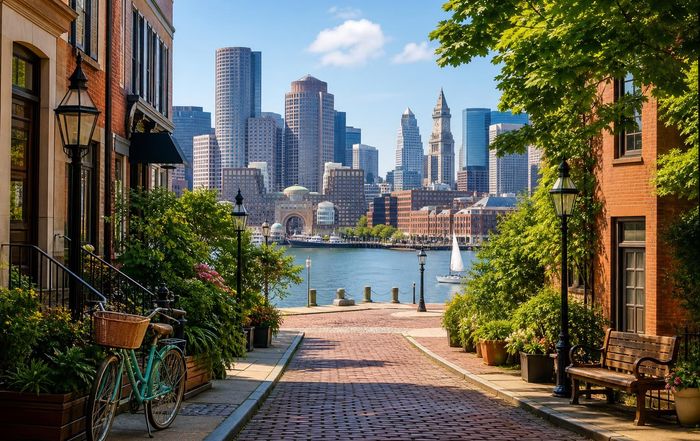
For many travelers, the ideal city break is one where a car is more burden than benefit: you arrive by plane or train, step into a walkable neighborhood, and spend a long weekend moving mostly on foot, by bike, or on reliable transit. In the United States-where urban life is often built around driving-this can feel surprisingly rare, but a growing number of cities are investing in walkability, bike lanes, and transit networks that make car-free trips not only possible, but enjoyable.
This guide focuses on U.S. destinations where visitors can realistically skip the rental car for a short break. It emphasizes compact cores, frequent transit, easy airport access, and neighborhoods where you can eat, explore, and experience local culture without sitting in traffic. For broader planning around low-impact travel and lifestyle choices, readers may also find the sustainability pages at Sustainable, Environment, and Travel very useful.
How this list was chosen
Car-free city breaks depend on more than just a subway map. For this article, cities were selected based on several overlapping factors:
A compact, interesting core with dense cultural, food, and nightlife options.
Walkability and bike-friendliness, drawing on tools like Walk Score, local planning data, and visitor experience.
Transit that is frequent and legible enough for a short-term visitor, informed by agencies such as the Metropolitan Transportation Authority (MTA) in New York or Bay Area Rapid Transit (BART) in San Francisco.
Reasonable airport or rail access to downtown without needing a car.
A mix of established favorites and a few less obvious places that are quietly improving their car-free credentials.
Urban design organizations such as Walk Score at https://www.redfin.com, PeopleForBikes at https://www.peopleforbikes.org, and the National Association of City Transportation Officials (NACTO) at https://nacto.org provide useful background on how U.S. cities are evolving for pedestrians and cyclists. While this list is not exhaustive, it offers a solid starting point for travelers who would rather wear out shoe soles than brake pads.
New York City: Iconic, dense, and endlessly explorable
If there is one U.S. city where a car is not only unnecessary but actively inconvenient, it is New York City. With one of the world's most extensive public transit systems, dense neighborhoods, and a 24-hour street life, New York rewards visitors who stay central and move by subway, bus, and foot. The MTA, at https://new.mta.info, runs subways and buses that reach all five boroughs, and most airport arrivals can get to Manhattan, Brooklyn, or Queens on transit in under an hour. While traffic and noise can be intense, especially in Midtown, the upside is that almost everything you might want to see is within a short transit ride or walk.
For a car-free city break, staying in neighborhoods such as Lower Manhattan, Brooklyn Heights, Williamsburg, or Long Island City puts you close to a mix of local restaurants, waterfront parks, and cultural institutions. You can walk the High Line, explore Central Park, or wander through SoHo and the West Village without ever needing a ride-hail. Citi Bike, New York's large bike-share system, offers another way to move between neighborhoods, and recent expansions of protected bike lanes-documented by the New York City Department of Transportation at https://www.nyc.gov-have made cycling more comfortable for visitors who are used to urban riding.
New York is also a useful case study in how car-free travel intersects with broader questions of health, environment, and urban life. The city's dense transit use is often cited by organizations such as the U.S. Environmental Protection Agency at https://www.epa.gov as a factor in lower per-capita transport emissions compared with more car-dependent regions. For travelers interested in how urban form shapes wellbeing, the intersection of mobility, Health, and Society is very visible on New York's streets.
San Francisco: Hills, transit, and car-light coastal living
San Francisco packs dramatic geography, diverse neighborhoods, and a well-developed transit ecosystem into a compact peninsula. While the Bay Area as a whole is famously car-dependent, the city proper is one of the easiest places in the western United States to explore without driving. Visitors can arrive at San Francisco International Airport and connect to downtown on BART, whose regional rail network is outlined at https://www.bart.gov. Within the city, Muni buses and light-rail lines, classic cable cars, and an expanding network of bike lanes connect many of the main visitor districts.
For a car-free weekend, staying in or near Union Square, SoMa, North Beach, or the Mission District allows you to combine walking with short transit hops. You can ride a historic streetcar along the Embarcadero, walk or cycle through Golden Gate Park, or climb stairways in Telegraph Hill and Russian Hill for sweeping views. The city's dense coffee, food, and bar culture means you rarely need to travel far for a change of scene, and ferries from the Ferry Building can take you across the bay to Sausalito or Oakland without a car.
San Francisco's streets also reflect broader debates about sustainable transport and urban policy. Groups like SPUR at https://www.spur.org and San Francisco Municipal Transportation Agency at https://www.sfmta.com have pushed for transit-first policies and traffic calming, while local advocacy has led to pedestrianization of key streets such as parts of Market Street. For travelers who care about climate and urban innovation, the city is an instructive laboratory that ties directly into themes covered in Innovation and Environment.
Boston and Cambridge: Historic streets and transit-first exploration
Greater Boston offers a rare combination in the United States: a compact, historic street grid, a robust legacy transit system, and a dense cluster of universities that keep the area lively year-round. The Massachusetts Bay Transportation Authority (MBTA), accessible via https://www.mbta.com, runs subway, bus, commuter rail, and ferry services that connect Logan International Airport to downtown and to nearby Cambridge, Somerville, and Brookline. For a visitor, this means you can land, board the Silver Line bus or a ferry into the city, and be walking around the North End or Back Bay in short order.
Boston's core neighborhoods are tightly packed and pedestrian-friendly, with a mix of historic architecture and modern development. The Freedom Trail strings together many of the main historic sites on a marked walking route, while areas such as Beacon Hill, South End, and Seaport each offer distinctive food and nightlife scenes. Across the river, Harvard Square and Kendall Square in Cambridge are easily reached on the Red Line and provide a different atmosphere, with bookshops, academic buildings, and tech offices clustered together. The region's public bike-share system, Bluebikes, extends across multiple municipalities, making it simple to ride along the Charles River Esplanade or between campuses and downtown.
Boston is also a useful entry point into broader conversations about education, research, and urban policy. Institutions such as Harvard University at https://www.harvard.edu and MIT at https://www.mit.edu have been active in studying how transit and land-use planning affect energy use and public health, echoing themes explored in Education and World coverage. For travelers who enjoy layering cultural and intellectual exploration onto their city breaks, Boston and Cambridge offer unusually rich terrain-no car required.
Chicago: Big-city energy with rail at its core
Chicago combines the scale of a major metropolis with a downtown that is surprisingly manageable on foot and by train. The city's elevated and subway network, known as the "L", is operated by the Chicago Transit Authority (CTA), whose system map and service information can be found at https://www.transitchicago.com. Trains from both O'Hare International Airport and Midway International Airport run directly into the Loop, making it one of the easiest major U.S. cities to reach by rail from the airport. Once downtown, a grid of streets, riverfront promenades, and lakefront paths make walking and cycling straightforward.
For a car-free stay, basing yourself in the Loop, River North, West Loop, or South Loop puts you within walking distance of Millennium Park, the Art Institute of Chicago, and the Chicago Riverwalk. The Lakefront Trail stretches for miles along Lake Michigan, offering a traffic-free route for walking, running, or cycling between beaches and museums. Neighborhoods such as Wicker Park, Logan Square, and Hyde Park are easily reached by train or bus and offer a more local feel, with independent restaurants, music venues, and bookstores.
Chicago's position as a major rail hub also makes it a natural gateway for travelers exploring car-free options beyond a single city. Long-distance services operated by Amtrak, whose national network is outlined at https://www.amtrak.com, converge at Union Station, connecting Chicago to cities across the Midwest and beyond. For visitors interested in how transportation, business, and climate intersect, Chicago's ongoing investments in transit and waterfront resilience align closely with topics covered in Business and Sustainable sections.
Portland, Oregon: Walkable neighborhoods and everyday bike culture
Portland, Oregon has spent decades cultivating a reputation for bike-friendliness, transit use, and compact neighborhoods, making it one of the most comfortable U.S. cities for a car-free weekend. Portland International Airport is connected to downtown by the MAX Light Rail, part of the TriMet system detailed at https://trimet.org. Once in the city, a combination of light-rail, streetcar, frequent bus routes, and an extensive network of bike lanes and neighborhood greenways make it easy to navigate without driving.
Staying in or near Downtown, the Pearl District, or the Central Eastside allows visitors to walk between riverfront parks, food carts, coffee roasteries, and independent shops. Neighborhoods such as Hawthorne, Alberta Arts District, and Mississippi Avenue are easily reached by bus or bike and offer a dense concentration of restaurants, bars, and live music venues. The city's bike-share program, BIKETOWN, supported by local and corporate partners, provides an accessible way for travelers to join Portland's everyday cycling culture, which has been highlighted by organizations such as PeopleForBikes.
Portland also illustrates how car-free travel intersects with environmental and ethical questions. Local and regional planning bodies, including Metro at https://www.oregonmetro.gov, have long emphasized growth boundaries, transit-oriented development, and green infrastructure. For visitors interested in sustainable food systems, the city's farmers' markets and restaurant scene connect naturally to themes covered in Food, Environment, and Ethics, offering a tangible sense of how lifestyle choices play out in an urban context.
Washington, D.C.: Monuments, museums, and a maturing transit network
The U.S. capital, Washington, D.C., is another strong candidate for a car-free city break, particularly for travelers interested in history, politics, and museums. The Washington Metropolitan Area Transit Authority (WMATA) operates the Metrorail and bus system, with maps and trip planning tools available at https://www.wmata.com. Metrorail connects Reagan National Airport directly to central D.C., and extensions to Dulles International Airport have significantly improved rail access for long-haul arrivals.
The core of D.C.-including the National Mall, Smithsonian museums, Capitol Hill, and Downtown-is highly walkable, with broad sidewalks and an intuitive grid. Neighborhoods such as Dupont Circle, Logan Circle, U Street, and Capitol Hill offer a dense mix of restaurants, bars, and smaller galleries within easy reach of Metro stations. The city's bike-share program, Capital Bikeshare, and an expanding network of protected bike lanes make cycling between monuments, waterfronts, and residential neighborhoods increasingly practical for visitors.
D.C. is also a focal point for national conversations about transport, climate, and public health. Federal agencies such as the U.S. Department of Transportation at https://www.transportation.gov and the Centers for Disease Control and Prevention (CDC) at https://www.cdc.gov publish research and guidelines on topics ranging from active transport to air quality. For travelers who want to connect their city break to broader questions about how societies organize mobility and public space, D.C. offers both lived experience and direct access to institutions shaping national policy.
New Orleans: Culture, music, and slow-paced streets
While New Orleans may not have the extensive rail networks of New York or Chicago, it offers something different: a compact, atmospheric core where walking and the occasional streetcar or rideshare can cover most needs. Visitors arriving at Louis Armstrong New Orleans International Airport can reach the city by airport shuttle or bus, and once in town, staying in or near the French Quarter, Marigny, or Central Business District makes it possible to explore much of the city's historic and cultural heart on foot.
The St. Charles Avenue Streetcar and Canal Streetcar lines, operated by the New Orleans Regional Transit Authority at https://www.norta.com, provide a scenic way to move between downtown, the Garden District, and City Park. The city's relatively flat terrain and gridded streets make walking between neighborhoods like Bywater, Treme, and Faubourg Marigny straightforward, though summer heat and humidity can be intense. For evenings out, especially late-night returns, many visitors supplement walking and transit with occasional ride-hails, while still avoiding the need for a rental car.
New Orleans also underscores the relationship between climate, culture, and urban form. The city's vulnerability to storms and flooding, highlighted by organizations such as the National Oceanic and Atmospheric Administration (NOAA) at https://www.noaa.gov, has brought attention to questions of resilience, equity, and the future of coastal living. Experiencing the city's music, food, and street life on foot can provide a more intimate sense of how communities adapt to environmental pressures-an ongoing story that resonates with coverage in Culture and World.
Philadelphia: Dense history and neighborhood-scale exploring
Philadelphia often flies under the radar compared with New York or D.C., but it is one of the most walkable large cities in the United States, with a compact core and a straightforward transit network. The Southeastern Pennsylvania Transportation Authority (SEPTA), whose services are detailed at https://www.septa.org, runs regional rail, subways, trolleys, and buses that link Philadelphia International Airport to Center City in around 20-30 minutes. Once downtown, a tight grid, relatively short blocks, and a concentration of historic sites make it easy to explore on foot.
Staying in Center City, Old City, or Rittenhouse Square allows visitors to walk between the Liberty Bell, Independence Hall, Reading Terminal Market, and the Philadelphia Museum of Art. Neighborhoods such as Fishtown, Northern Liberties, and South Philadelphia are easily reached by subway, bus, or bike and offer a rich mix of local restaurants, music venues, and murals. The city's growing network of bike lanes and trails, including the Schuylkill River Trail, has been supported by local advocacy groups and planning agencies, contributing to a culture where cycling is increasingly visible.
Philadelphia's role in U.S. history and its contemporary arts and food scenes make it a compelling destination for travelers who like to connect past and present. Local universities and institutions, including the University of Pennsylvania at https://www.upenn.edu, contribute to ongoing research on urbanism, health, and social equity-topics that intersect with Society and Health coverage. Experiencing the city at walking speed brings these themes into sharper focus, from rowhouse architecture to neighborhood corner stores.
Smaller-scale options: College towns and compact cores
Beyond major metropolitan centers, several smaller U.S. cities and college towns lend themselves well to car-free short breaks, especially for travelers who prefer a slower pace and more intimate scale. Places such as Madison, Wisconsin, Burlington, Vermont, Ann Arbor, Michigan, and Boulder, Colorado typically combine walkable downtowns, strong bike cultures, and frequent local buses with a high concentration of cafes, bookstores, and live music. While airport access can be less straightforward than in larger cities-sometimes requiring a shuttle or regional bus-the on-the-ground experience often rewards the extra step.
These towns often score highly on walkability and bike-friendliness metrics compiled by organizations like Walk Score and PeopleForBikes, and they frequently serve as testing grounds for innovations in street design and sustainable transport. The presence of large universities tends to support robust public transit, car-share schemes, and a culture where not owning a car is relatively normal. For travelers who are particularly interested in how education, environment, and lifestyle intersect, such destinations can feel like living case studies in ideas often discussed in Lifestyle, Education, and Sustainable sections.
Planning a car-free U.S. city break: Practical tips
Choosing a destination is only part of making a car-free trip work smoothly. A few planning habits can make the experience more enjoyable and reduce the temptation to default to taxis or ride-hails. First, study the local transit agency's website-whether it is the MTA, CTA, TriMet, WMATA, or SEPTA-before you arrive. Most agencies now offer trip planners and mobile ticketing apps, and some integrate with open-source tools developed by organizations such as the OpenStreetMap Foundation at https://www.osmfoundation.org. Understanding how fares work and which passes make sense for a weekend can save money and confusion at the station.
Second, choose accommodation with location in mind rather than just price. Being within a short walk of a major transit hub or in a dense, mixed-use neighborhood often matters more than having a slightly larger room on the edge of town. Mapping out likely walking routes between your hotel, transit stops, and evening destinations can highlight where you might want a bike-share membership or where late-night bus frequencies drop. Many cities publish open data on transit and bike-share systems, which independent developers and travel-planning apps use to provide real-time information.
Third, consider how your car-free choices fit into broader sustainability and wellbeing goals. Walking and cycling can turn a city break into a more active holiday, with potential health benefits that organizations like the World Health Organization (WHO) at https://www.who.int and the CDC regularly highlight in their physical activity guidelines. Reducing car use also lowers local air pollution and greenhouse gas emissions, connecting individual travel decisions to global climate targets discussed across Environment and World coverage.
Why car-free city breaks matter
Choosing a car-free city break in the United States is about more than convenience. It is a way of experiencing places at human scale, where streets, parks, and transit lines become part of the story rather than just the backdrop. In dense, walkable neighborhoods, travelers are more likely to stumble upon small galleries, local diners, and community events that rarely make it into guidebooks. They may also gain a clearer sense of how urban design, public policy, and everyday choices shape the texture of city life.
As more U.S. cities invest in transit, bike infrastructure, and pedestrian-friendly streets, the range of realistic car-free destinations is likely to expand. For now, the cities highlighted here-New York, San Francisco, Boston and Cambridge, Chicago, Portland, Washington, D.C., New Orleans, Philadelphia, and a constellation of smaller college towns-offer compelling starting points. They demonstrate that even in a country built around the automobile, it is entirely possible to open the door to rich travel experiences powered mainly by your own two feet.