

Modernizing Old Infrastructure: The Overlooked Lever in the Climate Fight
Climate Reality in 2026: Why Infrastructure Can No Longer Be Ignored
By 2026, the climate crisis has moved decisively from projection to lived experience. Record-breaking heatwaves in the United States, prolonged droughts in Spain and Australia, flooding in Germany and South Africa, and intensifying typhoons in Japan and the Philippines have confirmed what scientists at organizations such as the Intergovernmental Panel on Climate Change have warned for decades: the global climate system is destabilizing, and existing economic and social structures are struggling to cope. While public debate has largely focused on renewable energy deployment, electric mobility, and sustainable consumption, a quieter but equally decisive factor shapes the trajectory of both emissions and resilience: the vast layer of aging infrastructure built for a different century, a different climate, and a different global economy.
Across North America, Europe, Asia, Africa, and South America, much of the physical backbone of modern life-roads, bridges, ports, power grids, water systems, schools, hospitals, and housing-was designed for stable weather patterns, smaller populations, and a fossil-fuel-based energy system. Today, those assumptions no longer hold. As World's Door has consistently emphasized through its coverage on business, environment, and world affairs, the question is no longer whether infrastructure must be modernized, but how quickly and intelligently this transformation can be achieved, and whether it can be aligned with climate, social, and economic goals simultaneously.
Old infrastructure is not simply inefficient; it is often actively harmful. Outdated coal-heavy power systems continue to drive greenhouse gas emissions, leaky water networks waste scarce resources, and energy-inefficient buildings lock in high operating costs and carbon footprints for decades. At the same time, critical assets such as dams, ports, railways, and digital backbones are increasingly exposed to extreme weather that exceeds their original design thresholds, raising the risk of cascading failures that can paralyze entire regions. For a global audience concerned with health, lifestyle, technology, and sustainable growth, as reflected in the diverse readership of World's Door, the modernization of infrastructure has become a central test of leadership, governance, and long-term thinking.
The Climate Burden of Aging Systems
The climate impact of outdated infrastructure is multidimensional, touching emissions, resilience, and equity. In the United States, much of the electricity transmission grid was constructed between the 1950s and 1970s, long before the proliferation of intermittent renewables and distributed generation. Heatwaves in recent summers have triggered rolling blackouts and grid emergencies, demonstrating how systems designed for historical averages now fail under climate-driven extremes. In Europe, stormwater and river management infrastructure in countries such as Germany and Italy still reflects mid-20th century rainfall patterns, which are increasingly obsolete as intense downpours become more frequent. Similar vulnerabilities can be seen in rapidly growing cities across Asia and Africa, where drainage, transport, and housing are under severe stress.
Research from agencies such as the International Energy Agency shows that buildings and construction account for a substantial share of global energy-related emissions, much of it stemming from inefficient existing stock rather than new builds. Poor insulation, outdated heating and cooling systems, and leaky envelopes in older homes and offices across Canada, France, China, and the United Kingdom lock in unnecessary energy demand. At the same time, old industrial facilities and port infrastructure, often concentrated in lower-income neighborhoods, contribute to local air pollution, exacerbating respiratory and cardiovascular diseases and intensifying health inequalities that World's Door explores in its health coverage.
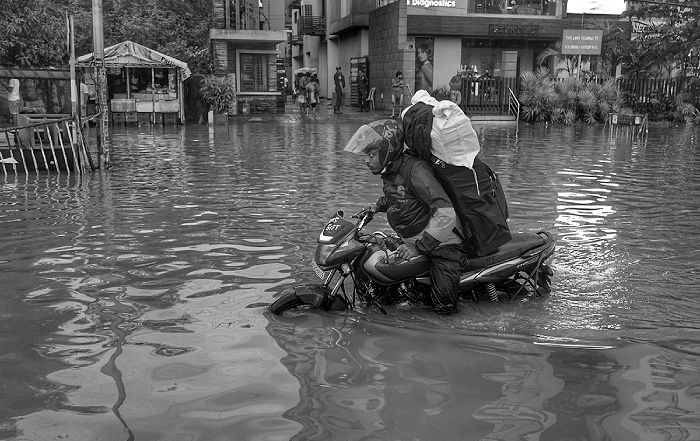
Vulnerability to extreme weather multiplies these climate and health burdens. The devastating floods of 2022 in Pakistan, wildfires in Australia and Greece, and heatwaves in India and Spain exposed how outdated roads, power lines, water systems, and hospitals can fail precisely when they are most needed. Damaged bridges cut off access to care and food, overwhelmed drainage systems accelerate urban flooding, and overheated data centers and substations disrupt digital and financial services. Institutions such as the World Meteorological Organization have documented the growing frequency and severity of such events, underlining that resilience is now a core infrastructure requirement rather than an optional add-on.
At the same time, legacy systems often slow the green transition itself. Ports without adequate shore power limit the decarbonization of shipping; grids that cannot accommodate bidirectional flows constrain rooftop solar and community wind projects; and rail networks not designed for high-speed, electrified transport delay the shift from aviation and trucking to lower-carbon modes. The net result is a structural drag on decarbonization efforts. Yet as World's Door highlights in its innovation section, where policymakers and industry leaders have embraced modernization, they have discovered that upgrading infrastructure can unlock a powerful combination of emissions reductions, economic opportunity, and improved quality of life.
Policy Leadership: Embedding Climate in Infrastructure Decisions
Around the world, policy frameworks are gradually shifting to reflect the realization that infrastructure and climate policy are inseparable. The United Nations Framework Convention on Climate Change (UNFCCC) has increasingly framed adaptation and resilience as core components of national climate strategies, while the Paris Agreement encourages countries to align infrastructure investment with long-term low-emission development pathways. Institutions such as the World Bank and the Asian Development Bank have expanded climate-related lending, placing greater emphasis on resilient and low-carbon infrastructure, from transport corridors to urban water systems.
In Europe, the European Green Deal and related initiatives such as the EU Climate Law and the Renovation Wave Strategy aim to decarbonize buildings and transport while improving resilience and social outcomes. These policies link updated building codes, performance standards, and financing tools to concrete objectives such as reducing energy poverty and cutting emissions from construction materials. The European Commission provides detailed guidance on how member states can integrate climate risk and life-cycle emissions into public procurement and infrastructure planning, setting a benchmark for other regions.
In the United States, the Infrastructure Investment and Jobs Act and subsequent climate-focused legislation have dedicated hundreds of billions of dollars to grid modernization, public transit, electric vehicle charging, and resilience projects. Agencies such as the U.S. Department of Energy and the Federal Emergency Management Agency are increasingly requiring climate risk assessments and resilience criteria as conditions for funding. Similar trends can be observed in Canada, Australia, Japan, and South Korea, where national strategies explicitly tie infrastructure renewal to net-zero commitments and adaptation priorities.
For global readers following policy shifts across continents, the editorial perspective at World's Door-particularly in its world and ethics sections-underscores that effective leadership in this domain requires more than technical standards. It demands governance models that ensure continuity across political cycles, prioritize vulnerable populations, and integrate climate considerations into every stage of the infrastructure lifecycle, from planning and design to financing, construction, and operation.
Technology at the Core of Climate-Ready Infrastructure
Modernizing infrastructure for a warming world is not simply a matter of replacing old assets with newer versions. It involves reimagining infrastructure as an intelligent, networked, and adaptive system built on advances in materials science, digital technologies, and clean energy. Around the globe, technology-driven projects are demonstrating what this new paradigm can look like in practice.
Smart electricity grids are a central example. Traditional grids in countries such as Italy, Mexico, and South Africa were designed for one-way power flows from centralized fossil-based plants. Today, as rooftop solar, onshore and offshore wind, and battery storage proliferate, grids must accommodate decentralized, bidirectional flows while maintaining stability. Smart grids use sensors, automation, and artificial intelligence for real-time monitoring and demand forecasting, enabling higher shares of renewables without compromising reliability. The International Renewable Energy Agency has documented how nations like Germany, Denmark, and Norway are leveraging digitalization to integrate large volumes of wind and solar power, laying the groundwork for flexible, low-carbon energy systems that can withstand climate shocks.
Advances in construction materials and methods are equally transformative. Researchers and companies are commercializing low-carbon and carbon-storing materials such as engineered timber, carbon-cured concrete, and recycled steel, significantly reducing the embodied emissions of buildings and infrastructure. Self-healing concrete, tested in parts of the Netherlands and the United Kingdom, can extend the lifespan of bridges and tunnels while reducing maintenance-related emissions. Organizations such as the World Green Building Council provide frameworks and case studies demonstrating how cities from Singapore to Toronto can retrofit and construct buildings that are both energy-efficient and climate-resilient, aligning with the sustainable living themes that World's Door explores in its lifestyle section.
Transport modernization is another critical front. Electric and hydrogen-powered buses, trucks, and trains are beginning to replace diesel fleets in cities across Europe, Asia, and Latin America, supported by charging and refueling infrastructure integrated into urban planning. In Norway, Sweden, and the Netherlands, investments in cycling superhighways, pedestrianization, and low-emission zones have reshaped mobility patterns, improving air quality and public health while cutting emissions. The International Transport Forum has highlighted how such integrated strategies can dramatically reduce transport-related emissions while enhancing accessibility and safety.
Digital twins-virtual replicas of physical infrastructure that integrate real-time data-are emerging as powerful tools for planning and managing climate-resilient systems. Cities like Singapore and Helsinki use digital twins to simulate flood scenarios, heatwaves, and traffic flows, optimizing investments and maintenance schedules. These technologies, discussed in depth across World's Door technology and innovation coverage, illustrate how infrastructure modernization is increasingly a data-driven exercise that requires collaboration between engineers, urban planners, data scientists, and public officials.
Financing the Transformation: From Cost Burden to Strategic Investment
The scale of funding required to modernize global infrastructure is immense, but so is the cost of inaction. The Organisation for Economic Co-operation and Development (OECD) has estimated that trillions of dollars in annual investment will be needed to align infrastructure with climate and development goals. However, when avoided disaster losses, lower operating costs, and health benefits are taken into account, modernized infrastructure often proves economically superior over its lifecycle to maintaining outdated systems. The challenge for policymakers and investors is to structure financing in ways that recognize long-term value and distribute risks appropriately.
Public-private partnerships remain a central mechanism. In countries from the United Kingdom to Brazil and India, PPPs have allowed governments to tap private capital and expertise while retaining strategic control over essential services. When properly designed, with transparent contracts and clear performance metrics, these partnerships can accelerate climate-resilient infrastructure upgrades in sectors such as water, transport, and energy. Organizations like the Global Infrastructure Facility provide tools and advisory services to help governments structure bankable, sustainable projects that meet both investor expectations and public interest objectives.
Green bonds and sustainability-linked loans have grown rapidly, connecting institutional investors to projects with clear environmental benefits. According to the Climate Bonds Initiative, global green bond issuance has expanded into the hundreds of billions of dollars annually, financing projects ranging from flood defenses in Japan and Thailand to building retrofits in France and Germany. At the same time, climate funds such as the Green Climate Fund and regional development banks, including the African Development Bank and Asian Infrastructure Investment Bank, are increasingly channeling concessional finance toward infrastructure in emerging economies, helping them leapfrog to low-carbon, resilient systems.
Carbon pricing adds another dimension. Countries such as Sweden, Canada, and New Zealand have demonstrated that revenues from carbon taxes or emissions trading systems can be recycled into infrastructure modernization, supporting energy efficiency programs, public transit expansion, and clean energy deployment. For business leaders and investors tracking these trends, the analysis on World's Door business offers a lens on how climate finance and infrastructure strategies intersect, shaping competitiveness and risk across sectors.
Equity, Health, and Social Stability: The Human Dimension of Modernization
Beyond emissions and physical resilience, infrastructure modernization is fundamentally about people: their health, mobility, safety, and dignity. Aging and poorly designed infrastructure often burdens low-income communities and marginalized groups, who are more likely to live in flood-prone housing, near polluting industrial sites, or in neighborhoods with inadequate transport and healthcare access. Modernization, if guided by principles of fairness and inclusion, can reverse these patterns and strengthen social cohesion.
Public health provides a clear illustration. Upgrading water and sanitation systems in rapidly growing cities in Africa, Asia, and South America can dramatically reduce waterborne diseases, improve maternal and child health, and enhance resilience to climate-driven disruptions in water supply. Air quality improvements from phasing out diesel buses and coal-fired power plants reduce respiratory illness and premature mortality, with significant economic benefits. The World Health Organization has repeatedly emphasized that climate-resilient infrastructure-hospitals with reliable clean power, cooling centers during heatwaves, robust supply chains for medicines and food-is a core determinant of population health, a perspective that aligns closely with the themes explored in World's Door health reporting.
Education and social mobility are also at stake. Reliable digital infrastructure and climate-proof schools ensure continuity of learning during extreme weather events and pandemics, a reality that became painfully clear during recent global crises. Investments in resilient transport networks improve access to jobs and services, particularly for residents in rural areas and informal settlements. The broader societal implications of these changes, including shifts in culture, behavior, and expectations, are reflected in ongoing analysis on World's Door society and education, where the interplay between infrastructure, opportunity, and social norms is a recurring theme.
For cities and regions that depend heavily on tourism, such as Italy, Thailand, Spain, and many island nations, modernized infrastructure is also a prerequisite for sustaining travel and cultural exchange in a warming world. Climate-resilient airports, ports, coastal defenses, and cultural heritage protection strategies are essential to protect both livelihoods and identity. Readers interested in how travel, culture, and climate adaptation intersect can find complementary perspectives in World's Door coverage of travel and culture, where local stories illuminate global patterns.
Future-Proofing: Designing for Uncertainty and Long Horizons
One of the most challenging aspects of climate-resilient infrastructure is that it must perform under conditions that are inherently uncertain. Sea levels could rise faster than expected, precipitation patterns could shift in non-linear ways, and socio-economic changes could alter demand for services. As a result, future-proofing is less about predicting a single outcome and more about designing flexibility, modularity, and redundancy into systems from the outset.
Scenario-based planning has become a best practice among forward-looking governments and businesses. Institutions such as the Network for Greening the Financial System and the Task Force on Climate-related Financial Disclosures encourage the use of multiple climate and economic scenarios to stress-test infrastructure investments and identify vulnerabilities. Cities like Singapore, Rotterdam, and Copenhagen have incorporated such approaches into coastal defense and drainage planning, designing barriers and retention systems that can be incrementally elevated or expanded as conditions evolve.
Nature-based solutions are also gaining traction as cost-effective, adaptive complements to traditional "grey" infrastructure. Restoring wetlands to buffer floods, reforesting watersheds to stabilize slopes and regulate water flows, and protecting mangroves to shield coastlines can provide resilience while enhancing biodiversity and carbon sequestration. Organizations such as the International Union for Conservation of Nature have documented successful projects in regions from Brazil and Costa Rica to South Africa and Indonesia, demonstrating that working with nature rather than against it can yield durable benefits.
For a global audience increasingly attuned to sustainability, ethics, and long-term value, the editorial stance at World's Door-linking environment, business, technology, lifestyle, and culture-reinforces the idea that future-proof infrastructure is not only a technical or financial undertaking. It is an expression of collective priorities and intergenerational responsibility, determining whether today's decisions will expand or constrain the choices available to future citizens.
Conclusion: Opening the Door to a Resilient, Low-Carbon Future
In 2026, the modernization of old infrastructure has emerged as one of the most powerful and concrete levers for addressing the climate crisis while advancing economic competitiveness, public health, and social stability. From aging power grids in North America to water systems in Europe, transport corridors in Asia, and urban housing in Africa and South America, the assets that underpin modern life are being tested by conditions they were never designed to withstand. Continuing to operate and maintain these systems as if the climate were stable is no longer viable.
Global leaders in government, business, and civil society now face a strategic choice. They can treat infrastructure modernization as a reactive, piecemeal response to disasters, or they can approach it as a proactive, integrated agenda that aligns climate mitigation, adaptation, and development. The latter path demands coordinated policy frameworks, innovative financing, cross-border collaboration, and a commitment to equity and transparency. It also requires embracing technological innovation and nature-based solutions, and embedding flexibility into designs so that infrastructure can evolve with a changing climate and shifting societal needs.
For the community that turns to World's Door for insight into health, travel, culture, lifestyle, business, technology, environment, and the evolving dynamics of global society, infrastructure modernization is more than a technical topic. It is a lens through which the future of cities, food systems, education, and daily life can be understood. As the world moves deeper into the decisive decades for climate action, the question is not whether infrastructure will change, but who will shape that change, on what terms, and with whose interests in mind.
By spotlighting stories of innovation from Germany to Singapore, examining policy experiments in Canada and South Korea, and exploring community-led adaptation in Kenya, Bangladesh, and beyond, World's Door aims to help its readers see infrastructure not as a fixed backdrop, but as a living system that can be redesigned to support a low-carbon, resilient, and inclusive future. Modernization, in this sense, is not simply about replacing what is old; it is about opening the door to a world where the foundations of daily life are aligned with the planet's limits and humanity's highest aspirations.