

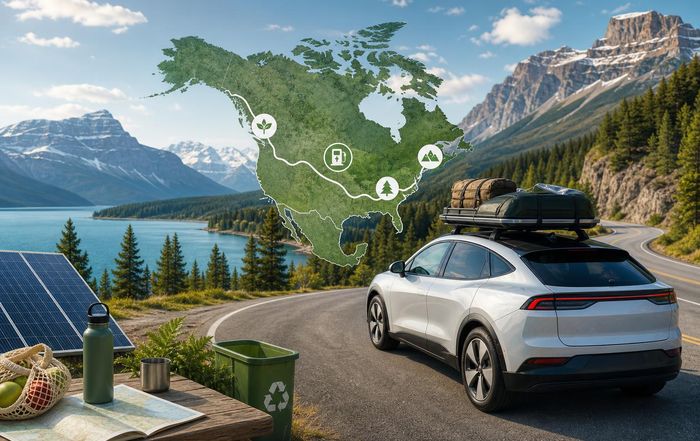
Eco-Friendly Road Trip Planning Across North America?
Rethinking the Great North American Road Trip
The classic North American road trip has long symbolized freedom, curiosity, and the thrill of open horizons, yet in an era of accelerating climate change and growing awareness of environmental impact, many travelers are asking how this beloved tradition can be reimagined in a more sustainable way. As time unfolds, advances in electric vehicles, renewable energy, and low-impact tourism are transforming how people move across the vast landscapes of the United States, Canada, and Mexico, creating new possibilities for journeys that honor both the planet and the spirit of exploration. For worldly travellers here, who are already engaged with responsible travel, mindful lifestyle choices, and the broader evolution of global society, eco-friendly road trips offer a powerful way to connect personal adventure with collective responsibility.
This new approach does not require sacrificing comfort, discovery, or spontaneity. Instead, it invites travelers to integrate environmental awareness into each stage of the journey, from vehicle selection and route planning to food choices and cultural experiences, aligning the joy of the road with the long-term health of the ecosystems and communities that make North America so compelling to explore.
Understanding the Environmental Impact of Road Trips
Any serious discussion of sustainable road travel begins with an honest assessment of its environmental footprint. According to the U.S. Environmental Protection Agency (EPA), transportation remains the largest source of greenhouse gas emissions in the United States, driven primarily by gasoline and diesel vehicles; those emissions contribute directly to climate change, air pollution, and related health impacts in urban and rural communities alike. Readers who wish to understand the scale of this impact can review the EPA's overview of transportation and climate change.
In Canada, data from Environment and Climate Change Canada similarly show that the transportation sector accounts for a significant share of national emissions, with passenger vehicles representing a substantial component of that total. The agency's reports on greenhouse gas emissions highlight the urgency of reducing fuel consumption and transitioning to cleaner technologies. Mexico's national climate strategies, documented by the Government of Mexico and international partners such as the World Bank, also emphasize the importance of cleaner mobility solutions as part of broader efforts to meet Paris Agreement targets.
For travelers, this means that every decision related to distance, vehicle type, driving style, and fuel source has measurable consequences. Yet it also means that intentional planning can significantly reduce the environmental cost of a road trip, especially when combined with broader lifestyle shifts that prioritize low-carbon mobility, sustainable food systems, and conscious consumption. On WorldsDoor, where readers frequently explore environmental and sustainable topics, this holistic perspective is increasingly becoming part of how journeys are imagined and shared.
Choosing Greener Vehicles and Technologies
One of the most impactful decisions in eco-friendly road trip planning is the choice of vehicle. Over the past decade, the rapid expansion of electric vehicles (EVs), plug-in hybrids, and highly efficient combustion engines has fundamentally changed what is possible on long-distance routes across North America.
Organizations like the International Energy Agency provide regularly updated data on the global rise of EVs, noting in their Global EV Outlook that electric car sales have continued to grow, supported by falling battery costs, expanding charging networks, and stronger policy incentives. In the United States, the U.S. Department of Energy maintains detailed information on alternative fuels and advanced vehicles, including comparisons of emissions and efficiency that help travelers evaluate the environmental benefits of different options.
For many road trippers, fully electric vehicles have become increasingly practical thanks to the growth of fast-charging networks. Companies such as Tesla, Electrify America, ChargePoint, and EVgo have deployed thousands of public charging stations along major highways and in smaller communities. The non-profit Alternative Fuels Data Center offers an interactive map of charging stations across the United States and Canada, while Natural Resources Canada provides a similar EV charging and alternative fuels locator for Canadian travelers. These tools enable careful route planning that minimizes range anxiety and maximizes the use of clean electricity.
However, the environmental benefits of EVs are not uniform and depend on factors such as the local electricity mix, vehicle size, and driving patterns. Studies from research institutions like the Union of Concerned Scientists have examined these variables and generally conclude that, in most regions of North America, electric vehicles produce significantly lower lifetime emissions than comparable gasoline cars, especially as grids incorporate more renewable energy. Their analysis on cleaner cars provides a nuanced overview of these findings.
For travelers who are not yet ready or able to adopt a fully electric vehicle, highly efficient hybrid or plug-in hybrid models still offer meaningful reductions in fuel use. The U.S. Department of Energy's fueleconomy.gov portal allows users to compare fuel economy and emissions across different models, helping them choose vehicles that align with both budget and environmental goals. Even within the realm of conventional cars, smaller, lighter models with modern engines and low rolling-resistance tires can reduce fuel consumption, particularly when combined with gentle driving habits and regular maintenance.
Planning Routes for Lower Impact and Deeper Connection
Eco-friendly road trip planning is not only about the vehicle; it is also about the routes chosen and the pace at which travelers move. Selecting shorter, more direct itineraries naturally reduces emissions, yet many travelers also find that slowing down, spending more time in each destination, and avoiding unnecessary detours can create richer, more immersive experiences. This "slow travel" approach is increasingly recognized by sustainable tourism experts as a way to reduce environmental impact while deepening cultural understanding.
Organizations such as the Global Sustainable Tourism Council (GSTC) have developed criteria for sustainable destinations that emphasize responsible planning, community engagement, and environmental stewardship. Travelers who prioritize regions and communities that align with these principles can support local economies that are actively working to balance tourism with conservation. This might mean choosing routes that pass through smaller towns with strong local food systems, protected natural areas managed by Indigenous communities, or cities that have invested in green infrastructure and public transport.
For North American road trips, this could involve following scenic byways that highlight national and provincial parks, UNESCO World Heritage Sites, and culturally significant landscapes. The U.S. National Park Service provides comprehensive information on parks and conservation areas, while Parks Canada offers detailed resources on national parks and historic sites. Mexico's National Commission of Natural Protected Areas (CONANP) similarly maintains information on protected areas, giving travelers multiple opportunities to integrate nature-based experiences into their routes while respecting conservation guidelines.
On WorldsDoor, where travel, culture, and world perspectives intersect, route planning can be framed not only as a logistical exercise but as an intentional design of meaningful encounters. Selecting destinations that prioritize environmental stewardship and cultural authenticity allows road trips to become a form of participatory support for communities that are leading the transition toward more sustainable tourism models.
Staying, Eating, and Shopping with Sustainability in Mind
Once on the road, day-to-day choices around accommodation, food, and shopping can significantly shape both the environmental impact and the overall character of the journey. Many travelers are now seeking lodging options that demonstrate genuine commitment to sustainability, whether through energy-efficient design, renewable power, water conservation, or support for local communities.
Certification systems such as Green Key Global and LEED (Leadership in Energy and Environmental Design, administered by the U.S. Green Building Council) provide frameworks for recognizing hotels and buildings that meet rigorous environmental standards. Travelers can explore Green Key Global's listings or review LEED-certified projects to identify accommodations that align with their values. In Europe and increasingly in North America, the EU Ecolabel and other regional initiatives also signal responsible practices, illustrating how global standards are gradually influencing hospitality sectors worldwide.
Food choices are equally important. The Food and Agriculture Organization of the United Nations (FAO) and scientific bodies such as the EAT-Lancet Commission have documented the environmental impacts of different diets, noting that plant-forward eating patterns generally result in lower greenhouse gas emissions and reduced land and water use. Travelers who prioritize local, seasonal, and plant-rich meals can therefore reduce their footprint while discovering regional culinary traditions. Resources from EAT on sustainable diets provide an accessible introduction to these ideas.
In many parts of North America, farmers' markets, community-supported agriculture programs, and independent restaurants emphasizing local ingredients offer opportunities to connect directly with producers and food cultures. For readers interested in deepening their understanding of how food, health, and the environment intersect, WorldsDoor's health and food sections explore these themes in greater detail, encouraging travelers to see each meal as both nourishment and a chance to support more resilient food systems.
Shopping along the way also presents choices that can either reinforce or undermine sustainability goals. Prioritizing durable, locally made products over mass-produced souvenirs, minimizing single-use plastics, and carrying reusable containers all contribute to waste reduction. Organizations like Zero Waste International Alliance and educational resources from UNEP on single-use plastics highlight the global scale of plastic pollution and the importance of behavioral change. While individual actions alone cannot solve systemic problems, they do send signals to businesses and policymakers about evolving expectations.
Leveraging Technology for Smarter, Cleaner Travel
The rapid evolution of digital tools and connected technologies is reshaping how travelers plan and execute road trips, offering new ways to optimize routes, reduce fuel use, and access real-time information about environmental conditions. Navigation apps that integrate eco-routing features, such as selecting paths with fewer stops, less congestion, or gentler terrain, can lower emissions while saving time and money. Research cited by organizations like the International Transport Forum suggests that such optimizations, when widely adopted, can contribute to meaningful reductions in urban and regional pollution.
For drivers of electric vehicles, specialized apps that map charging stations, estimate range under different conditions, and provide status updates are essential. Many of these tools draw on open data or partnerships with charging networks, ensuring that travelers can confidently plan multi-day itineraries across North America's diverse landscapes. The Open Charge Map project, for example, maintains a global, community-driven database of charging locations, while various automakers integrate similar information directly into vehicle navigation systems.
Beyond navigation, technology can support eco-friendly road trips in subtler ways. Smart thermostats and energy monitoring devices at home enable travelers to reduce household energy use while they are away, amplifying the overall environmental benefit of their journey. Digital platforms that facilitate car-sharing, ride-sharing, or peer-to-peer rentals can increase vehicle utilization and reduce the number of cars on the road, particularly in urban areas. Studies by organizations such as Transportation Research Board and ICLEI - Local Governments for Sustainability have explored the potential of shared mobility to complement public transport and reduce emissions when carefully integrated into broader planning strategies.
On WorldsDoor, readers interested in the intersection of technology, innovation, and sustainability can find ongoing coverage of these developments, including emerging tools such as AI-assisted route planning, real-time air quality monitoring, and digital platforms that connect travelers with local environmental initiatives.
Health, Well-Being, and the Human Side of Sustainable Travel
Eco-friendly road trips are not only about external impacts; they also touch deeply on personal health, mental well-being, and the quality of relationships with travel companions and host communities. Research in fields ranging from environmental psychology to public health consistently shows that time spent in nature can reduce stress, improve mood, and enhance cognitive function. Organizations like the American Psychological Association and the World Health Organization have highlighted the benefits of contact with natural environments for both physical and mental health.
When travelers slow down, incorporate walking, hiking, or cycling into their itineraries, and prioritize restful, screen-light evenings over constant connectivity, they often report a deeper sense of restoration. This aligns with emerging concepts such as "digital detox" and "mindful travel," which encourage intentional breaks from the hyper-connected, high-speed patterns of everyday life. For readers of WorldsDoor who follow health and lifestyle trends, eco-friendly road trips can become a practical expression of these ideas, blending physical activity, outdoor immersion, and reflective time.
At the same time, sustainable travel invites a more respectful, reciprocal relationship with the communities encountered along the way. Listening to local perspectives, learning about Indigenous histories and contemporary realities, supporting community-led enterprises, and observing cultural norms all contribute to more ethical forms of tourism. Educational resources from organizations such as UNESCO on intangible cultural heritage and from the United Nations World Tourism Organization (UNWTO) on responsible tourism provide frameworks for understanding how travel can either reinforce or challenge social and cultural resilience.
Ethics, Climate Responsibility, and the Future of Road Travel
As climate science becomes increasingly precise, the ethical dimensions of discretionary travel, including road trips, are coming into sharper focus. Reports from the Intergovernmental Panel on Climate Change (IPCC) detail the urgency of reducing global greenhouse gas emissions to limit warming and avoid the most severe impacts on ecosystems, economies, and vulnerable populations. Their assessments, available through the IPCC website, underscore that every sector, including tourism and personal mobility, must contribute to the transition.
For many travelers, this raises complex questions: How can the desire to explore be reconciled with the need to decarbonize rapidly? What responsibilities do individuals in higher-income countries bear, given their disproportionate historical contributions to emissions? How can road trips be planned in ways that support adaptation and resilience in communities already experiencing climate-related disruptions?
While there are no simple answers, a growing number of organizations, scholars, and activists are working to articulate principles for ethical, low-carbon travel. Initiatives such as Tourism Declares a Climate Emergency and academic work on "degrowth tourism" encourage rethinking not only how people travel but how often, how far, and for what purposes. At the same time, innovation in vehicle technology, renewable energy, and sustainable infrastructure suggests that road travel itself is evolving, with the potential for dramatically lower emissions in the coming decades.
For WorldsDoor, which explores ethics alongside business, education, and global society, these debates are part of a broader conversation about what it means to live responsibly in an interconnected world. Eco-friendly road trips are not a complete solution to the climate crisis, yet they can serve as practical laboratories for aligning values with actions, experimenting with low-impact living, and building narratives of hope and adaptation rather than resignation.
Practical Inspiration for Eco-Friendly North American Journeys
Across North America, countless examples already exist of travelers, communities, and organizations working together to redefine what a road trip can be. In the Pacific Northwest, networks of EV chargers now connect cities like Seattle, Vancouver, and Portland with national parks and coastal towns, enabling emission-free exploration of forests, mountains, and shorelines. In the American Southwest, Indigenous-led tourism initiatives invite visitors to experience desert landscapes through the lens of long-standing ecological knowledge, emphasizing respect, reciprocity, and conservation.
In Canada's Atlantic provinces, small coastal communities are developing sustainable tourism strategies that highlight local seafood, traditional music, and protected marine areas, while in Mexico's interior regions, eco-lodges and community-managed reserves demonstrate how tourism revenue can support biodiversity protection and cultural revitalization. Organizations such as The Nature Conservancy and WWF document many of these efforts, offering case studies of community-based conservation and sustainable livelihoods that can inspire travelers to seek out similar experiences.
For readers of WorldsDoor, these stories illustrate that eco-friendly road trip planning is not an abstract exercise but a living, evolving practice grounded in real places and relationships. By choosing routes that intersect with such initiatives, supporting businesses that prioritize sustainability, and sharing their experiences with others, travelers can help accelerate the broader cultural shift toward more responsible mobility.
Opening the Door to a Different Kind of Road
The road trip has always been about more than the distance between two points; it is a narrative of curiosity, challenge, and transformation. In 2026, as environmental realities demand new forms of courage and imagination, eco-friendly road trip planning across North America offers a way to honor that narrative while embracing a different kind of heroism-one that measures success not only in miles covered but in emissions avoided, ecosystems respected, and communities uplifted.
For those who turn to us as a positive minded, educational gateway to global perspectives on travel, culture, environment, and innovation, the invitation is clear. By integrating thoughtful vehicle choices, carefully designed routes, responsible consumption, and a deep respect for the places and people encountered along the way, every journey can become a step toward a more sustainable and compassionate world. The open road still beckons; the challenge now is to follow it in ways that leave the landscapes, communities, and shared atmosphere that sustain life not diminished, but strengthened, for those who will travel after.