

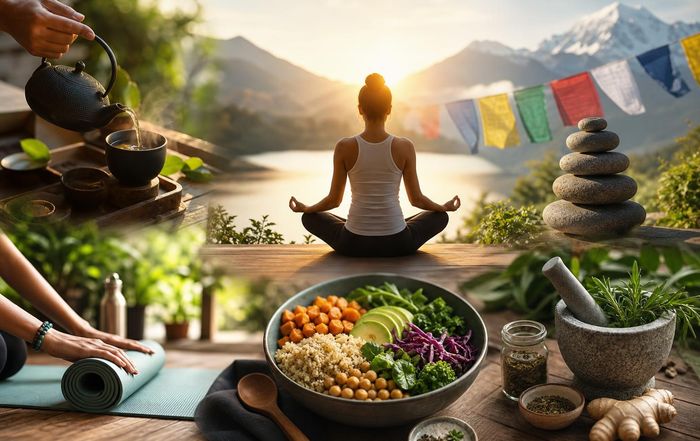
Healthy Daily Habits Inspired by Global Wellness Practices
In a world where wellness trends can change overnight and social media often amplifies fads more loudly than evidence, a quieter, more enduring wisdom continues to flow from traditional cultures and contemporary public health research across the globe. For hip and healthy fans online today, who approach life through the interconnected lenses of travel, culture, health, lifestyle, environment and innovation, the most meaningful daily habits are often those that blend time-tested practices with modern scientific understanding, and that can be woven gently into ordinary days rather than reserved for rare retreats or special occasions.
This article explores how people in different regions-ranging from Japan and the Nordic countries to the Mediterranean, India, North America and beyond-shape their everyday routines to support physical vitality, emotional balance and a sense of purpose. Drawing on current research from organizations such as the World Health Organization, Harvard T.H. Chan School of Public Health, and other respected institutions, it considers how these practices can be adapted realistically to modern urban and digital lives in 2026, while remaining sensitive to cultural origins and local contexts.
Readers who wish to go deeper into related themes can find complementary perspectives across WorldsDoor's sections on health, travel, culture, lifestyle, and environment, where the emphasis consistently falls on experience, expertise, authoritativeness and trustworthiness.
Morning Rituals: How the World Wakes Up Well
Around the world, the first hour after waking often sets the tone for physical and mental health throughout the day. In Japan, a gentle form of stretching and movement called radio taiso has, for decades, encouraged people of all ages to start the morning with coordinated, low-impact exercise broadcast on national radio and television. While participation rates have fluctuated over time, the concept of brief, structured movement upon waking aligns with research from institutions such as Mayo Clinic and Cleveland Clinic, which highlight that even short bouts of physical activity can improve circulation, joint mobility and mood. Readers can explore more on the benefits of regular movement through resources from Mayo Clinic and Cleveland Clinic.
In many Nordic countries, a contrasting yet complementary ritual involves embracing natural light as early as possible, especially during darker months. Public health guidance in nations such as Sweden and Norway encourages people to spend time outdoors in the morning to help regulate circadian rhythms and support vitamin D levels, with organizations like The Sleep Foundation and National Institutes of Health noting that morning light exposure can improve sleep quality and daytime alertness. Those living in urban environments or lower-light climates increasingly turn to light therapy lamps, which, when used under appropriate medical advice, can support mood and energy, particularly for individuals prone to seasonal affective symptoms. Further insights on circadian health can be found through The Sleep Foundation and the National Institute of Mental Health at NIMH.
In Mediterranean countries such as Italy and Spain, the morning often begins with a simple, unhurried coffee ritual that prioritizes connection and mindful savoring over volume or speed. While the health impact of coffee depends on individual tolerance and preparation, research summarized by Harvard T.H. Chan School of Public Health suggests that moderate coffee consumption is associated with a lower risk of several chronic diseases for many adults, particularly when not overloaded with sugar and heavy cream. Readers interested in the science behind coffee and health can consult Harvard T.H. Chan School of Public Health and Johns Hopkins Medicine at Johns Hopkins Medicine.
For WorldsDoor's global community, a practical synthesis of these traditions might mean starting the day with a few minutes of gentle stretching or yoga inspired by Japanese and Indian practices, stepping outside or near a window for natural light in the spirit of Nordic health guidance, and enjoying a mindful beverage-whether coffee, tea or herbal infusion-without screens, messages or hurried multitasking. Such a sequence requires no specialized equipment, only the intention to protect the first fifteen to thirty minutes of the day as a foundation for well-being, a principle often echoed in WorldsDoor's reflections on lifestyle and society.
Movement as a Way of Life, Not a Workout
Across many cultures, the most sustainable physical activity is not framed as exercise in the narrow sense, but as a natural part of daily living. In so-called "Blue Zones," a term popularized by author and researcher Dan Buettner to describe regions with unusually high concentrations of people who live into their 90s and beyond, residents often integrate movement into routine tasks rather than relying solely on formal workouts. While specific claims about Blue Zones longevity have been discussed and in some cases debated among researchers, the broader pattern of regular, moderate, incidental movement is widely supported by public health data from organizations such as the World Health Organization and Centers for Disease Control and Prevention. Readers can learn more about global physical activity guidelines from the WHO at World Health Organization and the CDC at CDC Physical Activity.
In Japan, the concept of ikigai, often translated as a "reason for being," is sometimes associated with staying active through meaningful tasks well into older age, whether through gardening, walking to local markets or caring for grandchildren. In many European cities, including Amsterdam and Copenhagen, cycling infrastructure has been deliberately designed so that commuting by bicycle becomes a safe, convenient default rather than a niche sport. Studies published in journals such as The Lancet Public Health and summarized by organizations like Transport for London and European Cyclists' Federation have linked active commuting to lower risks of cardiovascular disease and improved mental health, though outcomes can vary by individual health status and local conditions.
Nordic walking, which uses specially designed poles to engage the upper body and reduce joint strain, originated in Finland as an off-season training method for cross-country skiers and has since spread across Europe, North America and Asia. Research cited by The American College of Sports Medicine and other professional bodies indicates that this form of walking can increase energy expenditure compared with regular walking while remaining joint-friendly and accessible to many older adults. For those interested in evidence-based exercise options, resources from The American College of Sports Medicine and NHS Inform in the United Kingdom at NHS Inform offer practical guidance.
For readers of WorldsDoor, especially those navigating dense cities in the United States, United Kingdom, Germany, Canada, Australia or across Asia, the lesson is that daily movement can be reframed from a separate, time-consuming obligation into a design choice. Choosing stairs over elevators when possible, walking or cycling for short errands, standing or stretching during virtual meetings, and integrating short "movement snacks" throughout the day reflect a global convergence between traditional ways of living and modern health recommendations. This philosophy aligns closely with the platform's coverage in health and innovation, which often highlight how small, cumulative changes can yield meaningful long-term benefits.
Nourishing the Body: Food Traditions with Modern Evidence
Food rituals offer some of the most vivid examples of how cultural heritage and contemporary science can reinforce one another. The Mediterranean diet, characterized by abundant vegetables, fruits, whole grains, legumes, nuts, olive oil, moderate fish and limited red meat, has been extensively studied over several decades. Large observational and interventional studies, including the widely discussed PREDIMED trial and subsequent analyses, have linked this pattern to reduced risks of cardiovascular disease and certain chronic conditions, although some aspects of the original research have undergone re-examination and reanalysis. Institutions such as the European Society of Cardiology and American Heart Association continue to reference Mediterranean-style eating as a heart-healthy option, while emphasizing that individual needs vary. Readers can explore more at American Heart Association and the European Society of Cardiology via ESC.
In Japan, traditional dietary patterns often emphasize rice, vegetables, soy-based foods such as tofu and miso, fish, seaweed and fermented products, with relatively modest portion sizes. While modern Japanese diets have diversified and, in some cases, become more Westernized, epidemiological studies summarized by organizations such as The BMJ and World Cancer Research Fund suggest that traditional Japanese dietary elements, particularly high vegetable and fish intake and lower saturated fat consumption, may contribute to historically lower rates of certain chronic diseases, though genetics, lifestyle and healthcare systems also play significant roles. Those interested in the relationship between diet and cancer risk can refer to World Cancer Research Fund.
In India and across South Asia, plant-forward meals built around lentils, chickpeas, vegetables, spices and whole grains offer another lens on healthful eating. Turmeric, ginger, garlic and other spices long used in Ayurvedic traditions have attracted increasing scientific attention for their anti-inflammatory and antioxidant properties. While laboratory and small-scale human studies have indicated potential benefits, major organizations such as National Center for Complementary and Integrative Health in the United States emphasize that more large, rigorous trials are needed to confirm specific clinical outcomes for many herbal and spice-based interventions. Readers can learn more about evidence-based perspectives on traditional remedies at NCCIH.
The growing global interest in plant-rich diets, whether vegetarian, flexitarian or Mediterranean-inspired, also reflects environmental and ethical considerations. Reports from bodies such as the EAT-Lancet Commission and United Nations Environment Programme have argued that shifting toward more plant-based eating patterns can support both human health and planetary sustainability, though there is ongoing debate about the best balance between local food systems, cultural traditions and global recommendations. Readers seeking a broader environmental context can explore WorldsDoor's coverage on sustainable living and food, as well as external resources from UN Environment Programme.
For the WorldsDoor audience, the most practical takeaway is not that any single regional diet is universally superior, but that common threads-emphasis on minimally processed foods, generous intake of vegetables and legumes, mindful use of healthy fats, moderate portion sizes and shared meals-emerge repeatedly from diverse cultures and are consistently supported by reputable organizations such as World Health Organization, National Health Service in the UK and Health Canada. Readers can review national dietary guidelines via WHO Nutrition and Health Canada.
Mind and Spirit: Global Approaches to Mental Well-Being
As mental health has moved to the forefront of public conversation in recent years, many individuals have turned to both traditional contemplative practices and modern therapeutic tools. In India, the ancient disciplines of yoga and meditation, rooted in philosophical and spiritual traditions, have been adapted worldwide into secular practices aimed at reducing stress and improving emotional regulation. Randomized trials and meta-analyses summarized by organizations such as American Psychological Association and National Institute of Mental Health suggest that mindfulness-based interventions can modestly reduce symptoms of anxiety, depression and stress for many participants, though they are not a substitute for professional medical or psychological care when needed. Readers can access more information on mindfulness and mental health at American Psychological Association and NIMH.
In Japan, the practice of shinrin-yoku, or forest bathing, encourages individuals to immerse themselves in natural environments, engaging all senses without specific goals or strenuous activity. Studies conducted in Japan and other countries, and reported by sources such as Environmental Health and Preventive Medicine and International Journal of Environmental Research and Public Health, have found associations between time spent in forests and reductions in stress markers such as cortisol, as well as improvements in mood and perceived well-being. While not all studies are large-scale or long-term, the overall pattern aligns with broader research on the mental health benefits of nature exposure. Those interested can learn more through International Union for Conservation of Nature and Nature Conservancy.
Nordic concepts such as friluftsliv in Norway and Sweden, which translates roughly to "open-air life," similarly emphasize the restorative value of everyday contact with nature, whether through short walks in nearby parks or longer excursions. These cultural attitudes are reflected in policies that preserve public access to natural spaces and encourage outdoor education for children. In the United States, United Kingdom, Canada and other countries, health professionals increasingly recognize the value of "green prescriptions," in which time in nature complements conventional treatment, a trend documented by organizations like Royal College of General Practitioners in the UK and Kaiser Permanente in North America.
At the same time, digital mental health tools have become more prominent, particularly since the COVID-19 pandemic. Teletherapy, meditation apps and online support communities can expand access to care, especially in regions where in-person services are limited. However, professional bodies such as World Health Organization and American Psychiatric Association caution that digital tools should be evaluated carefully for data privacy, clinical evidence and cultural appropriateness. WorldsDoor's coverage in technology and ethics often highlights this intersection, inviting readers to consider how innovation can support, rather than replace, human connection and professional expertise.
For readers seeking actionable daily habits, a realistic approach might involve dedicating a short period each day-perhaps ten to twenty minutes-to a chosen mental well-being practice, whether that is mindfulness meditation, breathwork, journaling, prayer, or a quiet walk in nature. The key, reflected in both traditional teachings and modern psychology, is consistency and the cultivation of non-judgmental awareness rather than perfection. This perspective is deeply aligned with WorldsDoor's broader exploration of culture and education, where learning to understand one's inner world is seen as a lifelong journey.
Social Connection and Community: The Heart of Global Wellness
Across continents, one of the most consistently identified predictors of long-term health and life satisfaction is the quality of social relationships. Longitudinal research, including the well-known Harvard Study of Adult Development, has suggested that strong social bonds are associated with better physical health, emotional resilience and even longevity, though such studies also acknowledge that social dynamics are complex and that correlation does not prove direct causation in every case. Summaries of this research can be found through Harvard Medical School at Harvard Health.
In Southern Europe, daily life often revolves around shared meals and intergenerational gatherings, with family and community playing central roles. In many African cultures, concepts such as Ubuntu, often expressed as "I am because we are," emphasize mutual care and collective identity, influencing how people respond to personal and community challenges. In East Asia, social cohesion is often supported by neighborhood associations, workplace rituals and festivals that reinforce a sense of belonging.
For individuals in large cities in North America, Europe or Asia, where mobility and digital communication can sometimes weaken local ties, intentionally cultivating community may require more conscious effort. This might involve joining local cultural associations, volunteering, participating in religious or spiritual communities, or simply making time for regular, device-free conversations with friends and family. Organizations such as Mental Health Foundation in the UK and Canadian Mental Health Association provide resources on how social connection supports mental health, while also addressing issues such as loneliness and digital overload. Readers can explore more at Mental Health Foundation and Canadian Mental Health Association.
WorldsDoor's own global readership often finds connection through shared interests in travel, culture and sustainable living, and the platform's stories from different countries highlight how hospitality, generosity and curiosity about others can serve as powerful daily habits in themselves. Even small gestures-greeting neighbors, supporting local businesses, or learning basic phrases in another language before visiting a new country-can nurture a sense of shared humanity that transcends borders and reinforces personal well-being.
Rest, Recovery and Digital Boundaries
One of the most pressing wellness challenges for people across the United States, Europe, Asia and beyond is not a lack of information, but an overload of stimuli, particularly from digital devices. Sleep specialists and public health organizations consistently warn that chronic sleep deprivation and nighttime exposure to blue light from screens can disrupt circadian rhythms, impair cognitive performance and increase risks for various health problems. Guidance from bodies such as National Sleep Foundation, World Health Organization and national health agencies typically recommends seven to nine hours of sleep for most adults, along with a consistent sleep schedule and a calming pre-bedtime routine. Readers can consult National Sleep Foundation and NHS Sleep Advice for further detail.
Cultural practices around rest differ significantly. In Spain and parts of Latin America, the tradition of the siesta historically allowed for midday rest, though modern work patterns have altered its prevalence. In many East and Southeast Asian countries, short daytime naps, even in workplaces or schools, are sometimes seen as a practical way to maintain productivity, though attitudes vary widely and are influenced by local norms. Research summarized by organizations such as American Academy of Sleep Medicine suggests that brief naps of 10-20 minutes can improve alertness and performance for some people without significantly disrupting nighttime sleep, while longer or irregular naps may be less beneficial for others.
Digital boundaries have become an increasingly important aspect of daily wellness. Countries such as France have introduced "right to disconnect" legislation aimed at protecting workers from constant after-hours communication, and companies in various regions are experimenting with email-free evenings or meeting-light days. While research on the long-term impact of these policies is still emerging, early assessments reported by outlets such as OECD and Eurofound indicate that clear expectations around digital availability can reduce stress and improve work-life balance, especially when combined with supportive organizational cultures. More information on workplace well-being can be found at OECD and Eurofound.
For WorldsDoor readers, building healthy rest habits may involve creating a personal "digital sunset" each evening, during which notifications are silenced and screens are set aside in favor of reading, conversation, light stretching or other calming activities. Aligning bedtime and wake-up times as consistently as possible, even across busy schedules and different time zones while traveling, can support both physical health and emotional stability. These themes resonate strongly with the platform's focus on health and world, reminding readers that in an always-on planet, intentional pauses are a radical and restorative choice.
Sustainable Self-Care: Aligning Personal Wellness with Planetary Health
A distinctive feature of contemporary wellness conversations is the growing recognition that individual health is inseparable from environmental and social conditions. Air quality, access to green spaces, climate stability and equitable food systems all shape the context in which personal habits unfold. Organizations such as World Health Organization, Intergovernmental Panel on Climate Change and Lancet Countdown on Health and Climate Change have repeatedly emphasized that climate change is not only an environmental issue but a profound public health challenge. Reports available through IPCC and The Lancet outline how rising temperatures, changing disease patterns and extreme weather events affect physical and mental health worldwide.
At the same time, many of the daily habits that support personal wellness also contribute to environmental sustainability. Choosing active transport where feasible reduces emissions while promoting cardiovascular health. Eating more plant-rich meals can lower an individual's dietary carbon footprint while aligning with evidence-based nutrition guidance. Spending time in nearby parks rather than long-distance travel for every vacation can reduce environmental impact while nurturing a deeper connection to local ecosystems.
WorldsDoor's daily sections on environment, sustainable living and business frequently explore how companies, communities and individuals can integrate sustainability into everyday decisions. External resources from organizations such as World Resources Institute, World Wildlife Fund and Ellen MacArthur Foundation further elaborate on how sustainable business practices and circular economy models can support both planetary and human well-being. Readers can learn more about sustainable business practices at World Resources Institute and Ellen MacArthur Foundation.
For readers who love travel, a core interest of the WorldsDoor community, the challenge and opportunity lie in embracing forms of tourism that respect local cultures, ecosystems and economies. This might involve choosing longer, more immersive trips over frequent short flights, supporting locally owned accommodations and restaurants, and learning about the environmental and cultural context of destinations before arrival. Many national tourism boards and organizations such as Global Sustainable Tourism Council provide guidelines for responsible travel, which can be explored via GSTC.
Weaving Global Wisdom into Everyday Life
The daily habits described here-from Japanese morning stretches and Mediterranean shared meals to Nordic outdoor traditions, Indian contemplative practices and emerging digital boundaries-demonstrate that wellness is not a single prescription but a tapestry woven from diverse cultural threads and evolving scientific insight. For the wellness fans here today, spread across the United States, Europe, Asia, Africa, Oceania and the Americas, the most powerful practices are likely to be those that honor both personal circumstances and the cultural roots from which these ideas arise.
In practical terms, this may mean selecting a small number of habits that resonate deeply-perhaps a morning routine inspired by Japanese and Nordic practices, a plant-rich meal pattern informed by Mediterranean and Asian traditions, a short daily mindfulness or nature practice, a commitment to nurturing social connections, and clear boundaries around rest and digital life-and then integrating them consistently rather than chasing every new trend. It also involves staying informed through trustworthy sources, questioning exaggerated claims, and recognizing that genuine wellness is less about perfection and more about compassionate, sustainable choices over time.
As WorldsDoor continues to open windows onto different cultures, landscapes and ways of living, its role is not to prescribe a single path, but to accompany readers as they discover their own, drawing on global wisdom and local realities. In doing so, the platform affirms a simple yet profound idea: that healthy daily habits, grounded in respect for both people and planet, can transform not only individual lives but the shared future of communities around the world.