

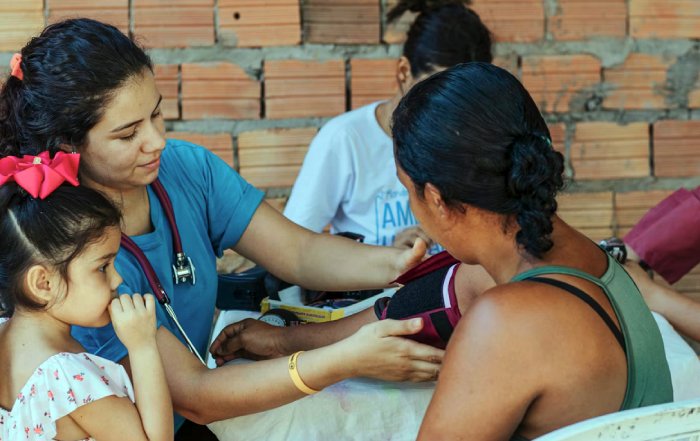
Global Health Initiatives Transforming Quality of Life
Worldsdoor's Lens on a New Era of Global Health
Global health has moved decisively from the margins of policy debate to the center of how nations, businesses and communities define stability, prosperity and long-term resilience. The impact of pandemics, chronic disease, mental health pressures and environmental disruption is now understood not merely as a medical concern but as a structural force shaping economies, travel, culture, education and everyday lifestyle choices. In this context, Worldsdoor positions its journalism and analysis as a bridge between complex global initiatives and the lived realities of readers across North America, Europe, Asia, Africa, Oceania and South America, who increasingly recognize that health is the foundation upon which every other aspiration rests.
This integrated perspective is reflected in how Worldsdoor connects its health coverage with reporting on business, technology, environment and society, recognizing that the most influential initiatives today are those grounded in experience, scientific expertise, institutional authoritativeness and demonstrable trustworthiness. In an era in which misinformation spreads as quickly as any virus, the credibility of institutions such as the World Health Organization (WHO), World Bank, United Nations (UN) and leading academic centers has become a determinant of quality of life in its own right, shaping whether communities accept vaccines, adopt preventive behaviors, embrace digital tools and support long-term reforms. Readers who follow these developments through Worldsdoor find not only news but also context, connecting global frameworks to personal decisions about travel, work, education and lifestyle.
From Crisis Management to Systemic Resilience
The years since the COVID-19 pandemic have profoundly altered how governments and organizations think about preparedness, revealing that reactive, short-term crisis management is insufficient in a world of recurring biological, climatic and geopolitical shocks. In 2026, global health initiatives are increasingly defined by a pivot toward systemic resilience, with the WHO advancing updated frameworks for health emergency preparedness and response that emphasize early detection, integrated surveillance and equitable access to countermeasures. Interested readers can review how these standards evolve and how countries benchmark their performance through official WHO portals that detail the International Health Regulations and emerging pandemic agreements.
Multilateral lenders have followed suit. The World Bank has expanded its health portfolio, tying financing to measurable improvements in primary care, workforce capacity and digital infrastructure, while also collaborating with the International Monetary Fund (IMF) on the macroeconomic case for resilient health systems. Analyses from organizations such as the Organisation for Economic Co-operation and Development (OECD) explain how investments in health security can mitigate productivity losses, protect supply chains and stabilize public finances, illustrating that robust health systems are not a fiscal burden but an asset. Readers seeking a broader geopolitical context can turn to Worldsdoor's world coverage, which examines how these macro-level shifts influence policy debates, and how they filter down into local clinics, workplaces and communities.
Universal Health Coverage and the Global Equity Agenda
At the core of contemporary global health policy is the pursuit of universal health coverage, which the United Nations has enshrined as a central target within the Sustainable Development Goals. Universal health coverage is not only a technical blueprint for financing and service delivery; it is a statement of societal values that affirms health care as a right rather than a privilege. The UN and WHO maintain detailed dashboards on coverage, financial protection and service quality, allowing observers to track progress in countries as diverse as the United States, Canada, the United Kingdom, Germany, Thailand, Brazil and South Africa, and to understand where gaps remain.
Research from organizations such as The Commonwealth Fund provides comparative insights into how different health systems perform on access, outcomes and equity, highlighting the strengths of long-standing public systems in countries like Canada and Australia, as well as the innovations emerging from middle-income nations that have expanded coverage rapidly over the past two decades. These analyses show that quality of life improves most where universal coverage is anchored in strong primary care, community health workers, preventive services and financial protection mechanisms that shield households from catastrophic costs.
For Worldsdoor's audience, which spans regions with very different health architectures, the human dimension of universal coverage is paramount. Through features and interviews, Worldsdoor explores how reforms affect patients navigating chronic illness in Italy, rural communities in India, or migrant workers in the Gulf, and connects these stories to debates on fairness, priority-setting and social contracts. Its ethics section examines how governments and insurers balance cost containment with access, and how societies negotiate difficult choices around emerging therapies, aging populations and end-of-life care. In doing so, Worldsdoor underscores that universal health coverage is ultimately a question of trust: whether citizens believe that institutions will be there when they need them most.
Digital Health, Artificial Intelligence and the Reimagined Care Experience
The digital transformation of health care, accelerated during the pandemic, has become a defining feature of global health initiatives in 2026. Telemedicine, remote monitoring, electronic health records and AI-assisted diagnostics are now embedded in health systems across the United States, Europe, parts of Asia and increasingly in emerging markets, changing how people experience care from the first symptom to long-term management. The WHO, OECD and World Economic Forum (WEF) have published guidance on digital health governance, stressing interoperability, cybersecurity, data protection and equity to ensure that innovation enhances rather than undermines trust. Readers can explore these principles through WEF's reports on the future of health and digital ecosystems, which analyze both opportunities and risks.
Artificial intelligence has moved from pilot projects to operational reality in areas such as radiology, pathology, clinical decision support and hospital logistics. Leading institutions like Stanford University and the Massachusetts Institute of Technology (MIT) conduct rigorous evaluations of AI models, examining bias, generalizability and clinical impact, while regulators in the European Union, United States and other jurisdictions implement or refine risk-based AI regulations. Detailed overviews of these regulatory approaches are available through entities such as the European Commission and the U.S. Food and Drug Administration (FDA), providing clarity on how high-risk health applications are being scrutinized.
For individuals, these developments translate into tangible changes: a patient in rural Australia can consult a specialist via secure video, a person living with diabetes in Germany can receive personalized dosing advice through connected devices, and an older adult in Japan can benefit from AI-enabled fall detection and home monitoring. Yet digital divides remain stark, particularly in parts of Africa, South Asia and marginalized communities in high-income countries, where connectivity, affordability and digital literacy lag. Initiatives led by organizations such as UNICEF and the mobile industry association GSMA seek to close these gaps by expanding infrastructure and promoting inclusive design, and their public resources outline practical strategies for digital inclusion. Worldsdoor's technology and innovation sections follow these developments closely, examining not only the tools themselves but also the ethical, regulatory and cultural questions they raise.
Health Security, Vaccines and Preparedness in a Fragmented World
Pandemic preparedness has become a permanent fixture on national security agendas, with governments recognizing that biological threats can destabilize economies as profoundly as financial crises or armed conflict. The Global Health Security Agenda (GHSA), encompassing countries from the United States, United Kingdom and Germany to Thailand, South Korea and Kenya, continues to drive investments in surveillance, laboratory capacity, emergency operations and workforce training. Publicly available assessments, including the Global Health Security Index, allow policymakers and citizens to gauge national readiness and identify weaknesses that require attention.
On the countermeasure side, organizations such as the Coalition for Epidemic Preparedness Innovations (CEPI) and Gavi, the Vaccine Alliance remain central to accelerating vaccine development and ensuring access for low- and middle-income countries. CEPI's strategy of funding "prototype pathogen" platforms and regional manufacturing hubs aims to shorten the time from outbreak detection to vaccine deployment, while Gavi's work with governments and manufacturers continues to support routine immunization and outbreak response. Detailed impact reports and financing models can be explored through their official sites, and the Bill & Melinda Gates Foundation provides complementary analysis on how vaccine markets, innovation incentives and public-private partnerships can be shaped to serve both equity and efficiency.
For Worldsdoor's global readership, health security is not an abstract exercise in modeling; it influences whether borders stay open, how travel is regulated and how communities interact. Through its travel coverage, Worldsdoor examines how health certificates, airport screening, insurance products and destination policies evolve, affecting tourism in Italy, Spain, Thailand, New Zealand and beyond. Its culture and lifestyle reporting explores how festivals, workplaces and public spaces adapt to a world in which outbreaks are expected rather than exceptional, highlighting both the resilience and fatigue that shape social behavior.
Climate Change, Environment and the Rise of Planetary Health
By 2026, the health impacts of climate change are no longer projections but daily realities in many parts of the world, from heatwaves in Europe and North America to flooding in Asia and drought in Africa. The concept of "planetary health," advanced by researchers and institutions worldwide, has gained traction as a framework that links human well-being to the integrity of natural systems. The Intergovernmental Panel on Climate Change (IPCC) provides authoritative assessments of how rising temperatures, air pollution, extreme weather and ecosystem disruption affect disease patterns, food security and mental health, while the Lancet Countdown on Health and Climate Change tracks progress and policy responses, offering data that inform national strategies.
International agencies such as the UN Environment Programme (UNEP) and the World Meteorological Organization (WMO) work with health ministries to develop early warning systems for heatwaves, air quality alerts and climate-sensitive diseases, enabling cities to better protect vulnerable populations. At the same time, businesses are increasingly expected to account for health implications in their climate and sustainability strategies, with disclosure frameworks such as those promoted by CDP and related initiatives pushing firms in sectors like energy, transport, agriculture and real estate to quantify and mitigate health-related externalities. Those interested in the intersection of sustainability and health can explore analyses from organizations like The World Resources Institute (WRI), which detail how decarbonization and nature-based solutions can yield substantial health co-benefits.
Worldsdoor treats planetary health as a unifying theme across its environment, sustainable and food coverage, examining how regenerative agriculture, urban green spaces, clean mobility and dietary shifts influence both environmental outcomes and individual well-being. Articles explore, for instance, how Mediterranean diets in Italy and Spain contribute to cardiovascular health while supporting local ecosystems, or how urban planning in Scandinavian cities integrates cycling infrastructure, clean air and social cohesion. This holistic approach reflects Worldsdoor's conviction that quality of life in the 21st century cannot be separated from the health of the planet that sustains it.
Mental Health, Social Change and the Redefinition of Well-Being
Mental health has emerged as one of the defining global health challenges of the mid-2020s, with rising rates of anxiety, depression, burnout and loneliness reported across age groups and regions. The WHO and World Bank have highlighted the enormous economic and social costs of untreated mental health conditions, while emphasizing the benefits of integrating mental health into primary care, social services and workplace policies. Their policy briefs and global action plans provide governments and employers with evidence-based strategies for scaling up services and reducing stigma.
In high-income countries such as the United States, United Kingdom, Germany, Japan and Australia, mental health initiatives increasingly focus on early detection, digital therapies, workplace programs and community-based support. Professional bodies such as the American Psychological Association (APA) and the Royal College of Psychiatrists publish clinical guidelines and research summaries that inform practitioners and policymakers, while academic centers evaluate the effectiveness of app-based interventions and tele-counseling. In low- and middle-income countries, organizations like Partners In Health and BasicNeeds continue to demonstrate that task-shifting to community health workers, peer support networks and culturally adapted interventions can significantly expand access even where specialist resources are scarce.
Worldsdoor's society and culture reporting explores how mental health is reframed across different regions, from shifting attitudes toward therapy in East Asia to youth activism around well-being in Europe and North America, and the role of faith and community structures in Africa and Latin America. Articles examine how digital culture, economic precarity, climate anxiety and social polarization influence psychological health, and how schools, universities and employers respond. By connecting these narratives to its education and lifestyle coverage, Worldsdoor emphasizes that mental health is not solely a medical issue but a mirror of broader societal conditions.
Education, Health Literacy and the Power of Informed Communities
Global health initiatives in 2026 increasingly recognize that informed, empowered communities are essential to sustaining progress. Health literacy-people's ability to find, understand and use health information-has become a strategic priority for governments, schools and civil society. Organizations such as UNESCO and UNICEF advocate comprehensive school health programs that integrate nutrition, hygiene, mental health and sexual and reproductive health into curricula, particularly in regions where educational and health inequalities intersect. Their programmatic guidance illustrates how early education can shape lifelong attitudes toward prevention, care-seeking and civic engagement.
Trusted public health institutions, including the U.S. Centers for Disease Control and Prevention (CDC) and the UK National Health Service (NHS), maintain extensive online libraries with guidance on vaccination, chronic disease prevention, travel health and emergency preparedness. These resources are increasingly localized, translated and adapted for different cultural contexts, acknowledging that effective communication must resonate with diverse linguistic, religious and social norms. At the same time, the proliferation of misinformation has spurred initiatives in media literacy and fact-checking, with collaborations between health agencies, technology platforms and independent organizations such as Full Fact and Health Feedback working to strengthen the information environment.
Worldsdoor contributes to this ecosystem by curating accessible, context-rich reporting that connects global data to personal decisions about diet, exercise, travel, parenting, workplace choices and financial planning. Through its education coverage, it highlights how universities in the United States, United Kingdom, Germany, Singapore and elsewhere embed public health, ethics and sustainability into curricula across disciplines, preparing future leaders who view health not as an isolated sector but as a cross-cutting responsibility. By offering readers clear explanations, relevant case studies and links to reputable external resources, Worldsdoor aims to foster the kind of informed agency that underpins resilient, healthy societies.
Business, Innovation and the Economics of Well-Being
Businesses have become pivotal actors in global health, both as employers and as innovators whose products, services and supply chains influence billions of lives. The recognition that health is a core component of human capital has prompted companies in technology, finance, manufacturing, retail and hospitality to invest in employee well-being, occupational safety and inclusive benefits, aligning these efforts with environmental, social and governance (ESG) strategies. The World Economic Forum and Business for Social Responsibility (BSR) have documented how such investments can reduce absenteeism, enhance productivity and strengthen brand loyalty, while also contributing to broader social resilience.
The health innovation ecosystem remains vibrant, with startups and established firms developing new diagnostics, therapeutics, digital platforms and data analytics tools. Venture capital flows into health and life sciences continue to be strong in hubs such as the United States, United Kingdom, Germany, France, Singapore, South Korea and Israel, reflecting persistent demand for solutions to aging populations, chronic diseases and system inefficiencies. At the same time, regulators and ethicists stress the importance of robust oversight, transparency and equitable access, with institutions such as the Nuffield Council on Bioethics and Hastings Center offering influential guidance on issues ranging from AI in clinical care to global access to medicines.
Worldsdoor's business and innovation sections analyze these dynamics, exploring how companies integrate health into corporate strategy, how investors assess health-related risks and opportunities, and how cross-sector partnerships can align commercial incentives with public health goals. Coverage ranges from employer mental health initiatives in Canada and the Netherlands to sustainable food innovation in Brazil and plant-based alternatives in the United States, illustrating that the economics of well-being are increasingly intertwined with environmental sustainability, ethical sourcing and social inclusion.
Regional Realities: Diverse Pathways, Shared Challenges
While global frameworks provide overarching direction, the trajectory of health initiatives is shaped by regional realities. In North America and Western Europe, policymakers grapple with aging demographics, rising chronic disease burdens and escalating costs, prompting experiments with value-based care, integrated delivery networks and advanced digital tools. Institutions such as the European Centre for Disease Prevention and Control (ECDC) provide regional coordination on surveillance and preparedness, while national agencies refine models that balance public and private roles.
In Asia, rapid urbanization, technological leadership and demographic shifts create both challenges and opportunities. Countries like Japan and South Korea pioneer robotics and AI in elder care, Singapore develops smart-nation health platforms, and China scales digital health and genomics at unprecedented speed, raising questions about data governance and global collaboration. In Africa, Latin America and parts of South and Southeast Asia, dual burdens of infectious and non-communicable diseases intersect with resource constraints, but also spur innovative community-based and low-cost models that are increasingly recognized as globally relevant. The African Union and regional development banks support cross-border initiatives in surveillance, vaccine manufacturing and workforce training, demonstrating that regional solidarity can compensate, at least in part, for global inequities.
Worldsdoor's global orientation allows it to juxtapose these diverse pathways, helping readers in the United States, United Kingdom, Germany, Canada, Australia, France, Italy, Spain, the Netherlands, Switzerland, China, Sweden, Norway, Singapore, Denmark, South Korea, Japan, Thailand, Finland, South Africa, Brazil, Malaysia, New Zealand and beyond to understand both the uniqueness of their national debates and the common challenges they share. Through its world and health reporting, it highlights how lessons from one region can inspire adaptation in another, reinforcing the idea that global health is a collective endeavor shaped by local innovation.
Trust, Ethics and the Role of Worldsdoor in a Complex Information Ecosystem
Beneath every global health initiative lies a fundamental question: who is trusted to define problems, propose solutions and allocate resources? The pandemic era exposed fractures in trust, from skepticism toward vaccines and public health measures to concerns about data privacy, algorithmic bias and corporate influence. In response, leading organizations and scholars have called for governance models that are more transparent, participatory and ethically grounded. Institutions such as the Nuffield Council on Bioethics and Hastings Center provide frameworks for evaluating trade-offs and ensuring that human dignity, equity and accountability remain at the forefront of decision-making.
For media platforms, this environment demands a renewed commitment to rigor, clarity and independence. Worldsdoor responds by anchoring its coverage in verifiable evidence, clearly distinguishing analysis from opinion and consistently directing readers to reputable external sources, from WHO and UN agencies to respected academic and professional organizations. At the same time, Worldsdoor's editorial approach is deeply personal to its mission: to open a door onto the world that is both expansive and navigable, helping readers see the connections between health, travel, culture, lifestyle, business, technology, environment, innovation, ethics, society, education and food. Its homepage at worldsdoor.com reflects this integrated vision, inviting readers to explore how choices made in boardrooms, laboratories, parliaments and households reverberate across borders and generations.
As 2026 unfolds, global health initiatives will continue to evolve in response to new pathogens, climate shocks, technological breakthroughs and social movements. Their success will be measured not only in reduced mortality or increased coverage, but in whether people feel safer when they travel, more supported at work, more included in their communities and more hopeful about the future. For readers, staying informed about these initiatives through trusted sources is no longer optional; it is part of exercising responsible citizenship and leadership in an interdependent world. Worldsdoor's role is to accompany that journey-translating complexity into insight, connecting global trends to individual experience and fostering the informed engagement that is indispensable to a healthier, more equitable and more resilient planet.