

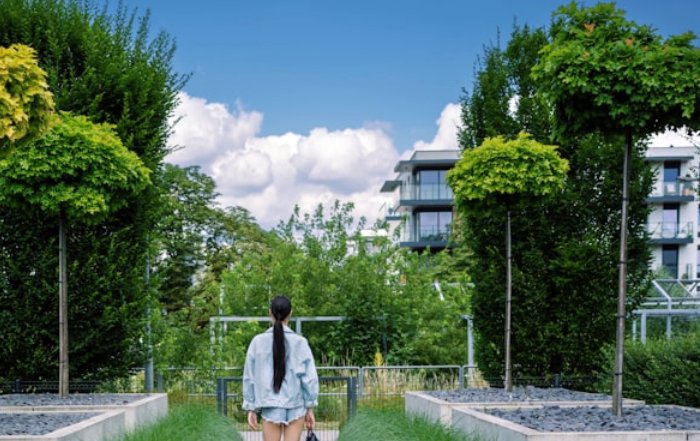
Living Green Cities: How Urban Laboratories Are Rewriting the Future
Across the world, cities have moved beyond their traditional roles as hubs of commerce, culture, and community to become sophisticated living laboratories where the future of sustainability is being designed, tested, and scaled in real time. As climate risks intensify and the global population continues its steady shift toward urban life, metropolitan regions from North America to Europe, Asia, Africa, and Latin America are emerging as the primary arenas in which environmental responsibility, technological innovation, and social transformation intersect. For the global audience of WorldsDoor.com, which follows developments in health, travel, culture, lifestyle, business, technology, and the environment, this urban revolution is not an abstract policy trend but a tangible reshaping of how people live, work, move, and connect every day.
According to the United Nations and its ongoing urbanization projections, nearly 70 percent of the world's population is expected to live in cities by 2050, a demographic reality that concentrates both risk and opportunity. This concentration places unprecedented pressure on housing, infrastructure, energy, water, food systems, and social services; yet it also creates fertile ground for new models of sustainable living that can be replicated far beyond city boundaries. In 2026, the most forward-looking municipal governments, businesses, and civic organizations are treating their cities as experimental ecosystems, blending ecological design, circular economic principles, and digital intelligence to reduce environmental impact while enhancing quality of life. Readers who follow the evolving global landscape on WorldsDoor's world section see this transformation reflected in diverse regions, from the dense megacities of Asia to the historic capitals of Europe and the rapidly growing urban centers of Africa and South America.
Europe's Evolving Green Urban Transformation
Europe remains a reference point for holistic urban sustainability, not only because of its ambitious climate targets but also due to its long history of compact, transit-oriented cities that lend themselves naturally to low-carbon living. Cities such as Copenhagen, Amsterdam, and Stockholm have moved from pilot projects to systemic transformation, demonstrating how governance, technology, and citizen participation can align around a shared environmental vision. Copenhagen's early pledge to reach carbon neutrality, supported by large-scale wind energy deployment, integrated cycling infrastructure, and district heating systems that reuse industrial waste heat, has evolved into a more comprehensive climate adaptation agenda that includes flood-resilient waterfronts and nature-based solutions to manage rising sea levels. Urban planners around the world now study Copenhagen's climate budget model through organizations such as C40 Cities, which documents how transparent emissions accounting can guide investment and policy.
In the Netherlands, Amsterdam continues to refine its circular economy strategy, extending the principles outlined in its 2020-2025 roadmap into new sectors such as construction, fashion, and food. The city's adoption of the Doughnut Economics framework, inspired by economist Kate Raworth, has encouraged municipal authorities and businesses to evaluate decisions against both social foundations and ecological ceilings, creating a more integrated approach to prosperity. International observers can explore similar concepts via institutions such as the Ellen MacArthur Foundation, which promotes circular economy models worldwide. Amsterdam's collaborative platform Amsterdam Smart City remains a powerful example of open innovation, where residents, startups, and researchers co-create solutions-from energy-positive buildings to data-driven mobility systems-that can later be scaled to other European cities including Berlin, Barcelona, and Paris. Readers interested in how these strategies intersect with corporate strategy and finance can explore sustainable business practices in WorldsDoor's dedicated coverage.
Stockholm, often cited as a pioneer in eco-district development, has extended the lessons of Hammarby Sjöstad into new neighborhoods, integrating renewable energy, advanced wastewater treatment, and district-wide recycling into everyday life. The Swedish capital's approach reflects a broader Nordic commitment to climate neutrality, supported by national policies and research from institutions such as the Stockholm Environment Institute, which provides analytical tools for cities worldwide seeking to reduce emissions while maintaining social equity. Similar eco-districts in Hamburg, Vienna, and Zurich show how European cities are using neighborhood-scale laboratories to test ideas that can later inform national policy frameworks and European Union initiatives such as the EU Green Deal, which aims to make Europe the first climate-neutral continent.
North America's Urban Green Revolution
In North America, the past few years have seen a decisive shift from isolated green projects to more comprehensive urban sustainability strategies, particularly in the United States and Canada. New York City, long a symbol of dense urban life, has evolved into a complex climate laboratory where resilience, public health, and environmental justice are increasingly treated as mutually reinforcing priorities. The transformation of former industrial spaces such as the High Line and Hudson Yards into green public corridors and energy-efficient mixed-use districts has demonstrated the economic and social value of adaptive reuse, while newer initiatives focus on coastal resilience along the Hudson River and Lower Manhattan, where climate adaptation projects integrate flood protection with accessible public spaces. Organizations like the Urban Land Institute and the Natural Resources Defense Council provide frameworks and case studies that inform similar projects in other U.S. and Canadian cities.
In Canada, Toronto and Vancouver have positioned themselves as leaders in climate-conscious urban design. Toronto's waterfront revitalization continues to expand, incorporating smart grids, low-carbon buildings, and district energy systems that reduce both emissions and operating costs. Its collaboration with universities and technology firms reflects a broader trend in which academic research is embedded directly into city planning, turning urban districts into open-air laboratories for low-energy infrastructure and climate-resilient design. Vancouver, which has consistently ranked among the world's greenest cities, has sharpened its focus on electrified transport, zero-emission buildings, and green job creation, aligning municipal policies with British Columbia's clean growth strategy and Canada's federal climate commitments under the Paris Agreement. Professionals exploring how climate policy intersects with markets, finance, and entrepreneurship can find complementary analysis on WorldsDoor's business page, where urban sustainability is increasingly framed as a central driver of long-term competitiveness.
Asia's Smart and Sustainable Megacities
Asia's urban transformation is unfolding at a scale unmatched anywhere else, with megacities in China, India, Japan, South Korea, and Southeast Asia rapidly integrating digital technology into sustainability efforts. Singapore remains a global benchmark for the fusion of nature and technology, with projects like Gardens by the Bay, Punggol Eco-Town, and new "sponge city" initiatives that use green infrastructure to absorb stormwater and mitigate flooding. The government's Smart Nation program, which leverages sensors, artificial intelligence, and data analytics to optimize everything from traffic flows to energy distribution, has moved beyond experimentation into mainstream governance. International observers can learn more about such approaches from the World Bank's urban development resources, which document how data-driven planning can reduce emissions and improve service delivery in rapidly growing cities.
In South Korea, Seoul has advanced its Digital Twin City initiative, creating a high-fidelity virtual replica of the city that allows planners and engineers to simulate new buildings, transport networks, and flood defense systems before they are constructed. This digital infrastructure supports more accurate climate risk assessments and cost-effective interventions, while also enabling citizen engagement through virtual consultations and participatory planning platforms. Meanwhile, Tokyo continues to invest heavily in hydrogen-powered transport, energy-efficient buildings, and vertical farming, aligning local initiatives with Japan's national goal of achieving carbon neutrality by 2050. Institutions such as the Asian Development Bank and UNESCAP provide analytical and financial support for these efforts, highlighting replicable models for other Asian cities facing similar challenges. For readers interested in how these technological and cultural shifts are reshaping everyday life, WorldsDoor's culture section offers deeper narratives from across Asia's evolving urban landscapes.
Urban Nature, Biodiversity, and Green Infrastructure
One of the most visible shifts in global cities over the past decade has been the return of nature to urban cores, not as ornamental landscaping but as critical infrastructure for climate resilience, public health, and biodiversity. The concept of urban rewilding, once niche, is now part of mainstream planning in cities such as London, Paris, Singapore, and Melbourne, where green corridors, restored wetlands, and tree-lined streets function as cooling systems, flood buffers, and habitats for pollinators and birds. London's network of green corridors and the London National Park City initiative illustrate how a dense metropolis can reframe itself as a living ecosystem, supported by guidance from organizations like the Royal Society for the Protection of Birds (RSPB) and the UK Green Building Council.
In France, Paris has expanded its mandate for green roofs and solar panels on new commercial buildings, while also experimenting with "cool streets" that use reflective materials, shade trees, and water features to mitigate urban heat islands. Melbourne's Urban Forest Strategy, which aims to increase tree canopy cover significantly by 2040, has become a model for Australian and international cities seeking to link climate adaptation with mental health and social cohesion. Such initiatives underscore the growing recognition that urban nature is a core component of infrastructure, not a luxury. Readers who follow environmental design, climate adaptation, and ecological innovation can explore related themes on WorldsDoor's environment page, where urban biodiversity is increasingly seen as a foundation for resilient societies.
Renewable Energy and Circular Urban Resource Systems
Energy transition is the backbone of urban sustainability, and in 2026 cities across Europe, North America, and Asia are accelerating their shift toward renewable, decentralized power systems. Freiburg in Germany, often called the "Green City," remains a pioneering example, with widespread rooftop solar, energy-positive buildings, and transit-oriented planning that collectively minimize fossil fuel use. German cities are supported by national policies such as the Energiewende, while institutions like the Fraunhofer Institute for Solar Energy Systems continue to refine technologies that enable urban microgrids and building-integrated photovoltaics. Similar momentum is visible in Oslo, Zurich, and Copenhagen, where district heating, waste-to-energy plants, and electrified public transport form interconnected systems designed to capture and reuse energy that once went to waste.
Circular resource systems are becoming equally central to urban strategy. San Francisco's long-standing zero-waste ambition, Tokyo's meticulous recycling programs, and Seoul's food waste-to-energy systems illustrate how cities can transform waste streams into valuable inputs for energy generation, agriculture, and manufacturing. The Ellen MacArthur Foundation and the OECD provide guidance for municipalities seeking to adopt circular economy principles in sectors ranging from construction to electronics. In many European and Asian cities, construction waste is now systematically reused, while organic waste is converted into biogas or compost for urban agriculture. Readers interested in how these closed-loop systems intersect with entrepreneurship and technology will find complementary coverage on WorldsDoor's innovation hub, where circularity is treated as both an environmental imperative and a business opportunity.
Data, Technology, and the Intelligent City
Digital infrastructure has become the nervous system of modern sustainable cities, enabling them to sense, forecast, and adapt to changing conditions in real time. The expansion of Internet of Things (IoT) networks, combined with advances in artificial intelligence and cloud computing, allows cities to monitor air quality, energy use, water leaks, traffic congestion, and even noise levels with unprecedented granularity. Barcelona's Urban Platform, which aggregates data from thousands of sensors, has been widely studied as a model of integrated city management, while Helsinki's Smart Kalasatama district continues to test how digital services can reduce residents' environmental footprints and improve everyday convenience. Resources from organizations such as the World Economic Forum and McKinsey Global Institute document how these smart systems can reduce emissions and operating costs when deployed with clear governance frameworks.
In drought-prone regions, cities such as Los Angeles and Cape Town are using advanced analytics to manage water resources more efficiently, combining real-time consumption data with predictive models of rainfall and demand. In the United Kingdom, Transport for London (TfL) uses machine learning to optimize traffic signals and public transport schedules, cutting congestion and emissions. These technologies, however, raise critical questions about privacy, equity, and digital inclusion, which are increasingly central to public debates and regulatory frameworks. Readers who follow the intersection of digital innovation, ethics, and sustainability can explore more in WorldsDoor's technology section, where intelligent infrastructure is examined through both technical and societal lenses.
Social Equity, Culture, and the Human-Centered City
While infrastructure and technology are essential, the long-term success of green urban laboratories ultimately depends on how they serve people. In 2026, a growing number of city leaders recognize that sustainability must be inseparable from social equity, cultural identity, and public health. The concept of the "15-minute city," advanced by urbanist Carlos Moreno and piloted in Paris, Milan, and Melbourne, has gained renewed relevance in the wake of the COVID-19 pandemic and ongoing climate disruptions. By organizing neighborhoods so that residents can access work, education, healthcare, and leisure within a short walk or bike ride, this model reduces emissions while also fostering stronger local economies and social cohesion. The OECD and UN-Habitat have highlighted such approaches as key to inclusive, low-carbon urban development.
Cultural practices and creative industries play a powerful role in embedding sustainability into daily life. In Kyoto, traditional values of harmony with nature and craftsmanship that prioritizes durability over disposability offer a counterpoint to fast-consumption culture, influencing contemporary design and tourism strategies. In Berlin, the transformation of Tempelhofer Feld from an airfield into a vast public park, and the proliferation of cultural events focused on climate themes, show how cities can repurpose space in ways that honor history while pointing toward a greener future. In South Africa, Cape Town's Design Indaba has turned design and storytelling into tools for ecological and social innovation, inspiring cities across Africa to integrate sustainability into their cultural narratives. Readers who wish to trace these cultural currents can explore WorldsDoor's lifestyle and society sections, where sustainability is examined not just as a policy agenda but as a lived cultural experience.
Education, Health, and the Urban Learning Ecosystem
Sustainable cities are, by necessity, learning cities. In 2026, education systems in many leading urban centers are integrating climate literacy, systems thinking, and practical sustainability skills into curricula at all levels. Zurich incorporates circular economy concepts into primary and secondary education, while universities in Melbourne, Vancouver, and Singapore partner with city governments to measure neighborhood-level ecological footprints and test new solutions. International initiatives such as UNESCO's Education for Sustainable Development provide frameworks that cities adapt to local contexts, ensuring that future generations see sustainability not as an optional subject but as a core competency for citizenship and work. Readers can learn more about how education is shaping sustainable societies on WorldsDoor's education page.
Public health has simultaneously emerged as a central pillar of urban sustainability. The World Health Organization's Healthy Cities Network, now spanning hundreds of municipalities, encourages integrated strategies that link clean air, walkable urban design, access to green spaces, and community-based healthcare. Cities like Toronto, Singapore, and Melbourne have documented measurable mental and physical health benefits from investments in parks, bike lanes, and pollution monitoring, reinforcing the idea that environmental policy is, in many respects, health policy. The COVID-19 pandemic underscored the importance of resilient health systems and equitable access to outdoor spaces, lessons that continue to inform planning decisions in 2026. For readers tracking how environmental and health agendas converge, WorldsDoor's health section provides in-depth coverage.
Food Systems, Urban Economies, and Green Jobs
Urban sustainability would be incomplete without a transformation of food systems and economic structures. Across continents, cities are experimenting with rooftop farms, vertical agriculture, and community gardens to shorten supply chains, improve food security, and reduce emissions from transport. Projects such as Brooklyn Grange in New York, Sky Greens in Singapore, and Pasona Urban Farm in Tokyo demonstrate how underused rooftops and interior spaces can become productive landscapes, providing fresh produce and educational opportunities. The Milan Urban Food Policy Pact, now joined by hundreds of cities worldwide, encourages local governments to integrate food policy into broader climate and social strategies, promoting fair access to healthy diets and supporting regional producers. Readers interested in these evolving food systems can explore related stories on WorldsDoor's food page.
Economically, the shift toward green cities is driving the expansion of a global green economy that the International Labour Organization and other institutions estimate in the trillions of dollars. Cities like Berlin, Vancouver, and San Francisco have become hubs for climate technology, clean energy, and sustainable finance, attracting entrepreneurs and investors who see decarbonization as both necessity and opportunity. Green jobs now span sectors from renewable energy installation and building retrofitting to climate data analysis and environmental risk management. Financial centers in London, New York, and Singapore are advancing green bonds and sustainability-linked loans, guided by frameworks from the Task Force on Climate-related Financial Disclosures (TCFD) and the International Sustainability Standards Board (ISSB). These developments are reshaping how businesses assess risk and opportunity, a dynamic explored in depth on WorldsDoor's business insights.
Governance, Ethics, and Citizen Participation
Behind every successful living green city lies a governance architecture that aligns long-term vision with day-to-day decision-making. In 2026, leading cities embed climate and social metrics into procurement, zoning, budgeting, and investment decisions, ensuring that sustainability is not a side project but a core operating principle. Amsterdam integrates its Doughnut Economics framework into municipal planning, Copenhagen updates its climate budget annually with public transparency, and Singapore's Urban Redevelopment Authority coordinates multi-decade land-use plans that balance economic growth with environmental constraints. These approaches draw on and contribute to global frameworks such as the UN Sustainable Development Goals and the Paris Agreement, which provide shared benchmarks for progress. Readers seeking deeper exploration of the ethical and regulatory dimensions of urban transformation can visit WorldsDoor's ethics page.
Citizen participation is increasingly recognized as both a democratic necessity and a practical enabler of effective sustainability policies. Digital democracy platforms like Madrid's Decide Madrid and Taipei's vTaiwan allow residents to propose and vote on environmental initiatives, while participatory budgeting in cities across Brazil, Europe, and North America channels public funds toward community-chosen green projects. Grassroots initiatives-from solar cooperatives in Cape Town to community energy projects in Germany-complement top-down policies, creating a more resilient and inclusive ecosystem of change. This participatory culture, documented by organizations such as ICLEI - Local Governments for Sustainability, reinforces trust between citizens and institutions, a critical ingredient for ambitious climate action.
A Shared Global Blueprint for Living Green Cities
Today the notion of cities as living green laboratories has evolved from a visionary idea into a tangible reality observable in neighborhoods, transport systems, parks, and workplaces across the world. From Copenhagen's climate budget and Singapore's smart ecological infrastructure to Vancouver's green economy and Berlin's cultural climate activism, a shared global blueprint is emerging-one that sees cities not as problems to be managed but as powerful instruments for planetary regeneration. The most advanced urban centers are moving beyond harm reduction toward regenerative design, where buildings can act as carbon sinks, mobility systems are powered entirely by renewables, and waste is systematically transformed into new resources.
Crucially, the cities that will define the coming decades are those that combine environmental performance with social inclusion, cultural vitality, and economic opportunity. Sustainability that benefits only a privileged minority is neither just nor durable; therefore, the leading urban experiments of this decade increasingly foreground equity, affordability, and participation. The convergence of technology, nature, and human-centered design is creating cities that are not only smarter and cleaner but also more humane and resilient.
For the global community that turns to WorldsDoor.com to understand the evolving intersections of health, travel, culture, lifestyle, business, technology, environment, and society, the story of living green cities is, in many ways, the defining narrative of this era. It is the story of how humanity is learning, sometimes haltingly but with growing determination, to realign its densest, most complex habitats with the limits and possibilities of the planet. As new experiments unfold, WorldsDoor will continue to follow how each neighborhood-scale innovation, each policy breakthrough, and each act of citizen engagement contributes to a more sustainable, equitable, and inspiring urban future.