

How Migration Shapes Food, Language, and Urban Culture
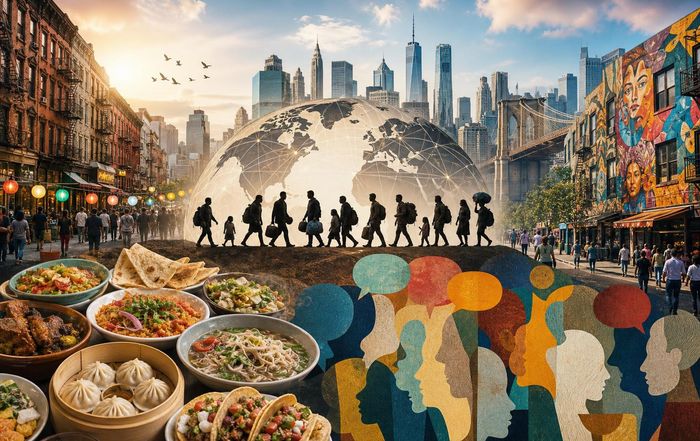
Migration has always been one of humanity's most powerful creative forces, quietly and persistently reshaping what people eat, how they speak, and the ways cities feel and function. In 2026, as societies continue to negotiate the challenges and opportunities of unprecedented mobility, it has become clearer than ever that the movement of people across borders is not only an economic or political story but also a profound cultural one. For WorldsDoor, whose readers are curious about travel, culture, health, lifestyle, and the future of global society, migration offers a lens through which the modern world's most inspiring transformations can be seen with unusual clarity.
Migration as a Global Cultural Engine
Modern migration is often framed in terms of numbers and policies, yet behind the statistics lies a constant exchange of ideas, skills, and traditions that shape daily life in cities across continents. According to the United Nations Department of Economic and Social Affairs, there are now hundreds of millions of international migrants worldwide, and many more internal migrants moving within their own countries as they search for opportunities, safety, and connection. Readers interested in the broader global context can explore how these flows affect societies through resources such as the UN DESA migration data portal and the International Organization for Migration's World Migration Report.
For cities from New York to London, Berlin to Singapore, Johannesburg to São Paulo, migration has become a defining feature of urban identity. These metropolitan areas are no longer just national hubs; they are crossroads where cuisines, languages, and cultural practices intersect, collide, and blend. On WorldsDoor, readers can trace these intersections across sections like travel, culture, and world, where the lived experiences of migrants and host communities increasingly shape the stories being told.
Food: The Most Delicious Evidence of Movement
Perhaps the most visible and tangible impact of migration appears on the plate. Culinary traditions travel with migrants, who bring recipes, cooking techniques, and ingredients from their homelands and adapt them to new environments. Over time, these transplanted food cultures influence mainstream tastes, create new hybrid cuisines, and transform entire city districts into gastronomic destinations.
In the United States, for example, dishes once considered niche-such as kimchi from Korean cuisine or pho from Vietnamese cooking-have become widely recognized and appreciated. Organizations like the James Beard Foundation and media outlets such as Eater regularly document how immigrant chefs reinterpret their heritage in contemporary kitchens, while scholars and journalists at Smithsonian Magazine's food section explore the historical roots of these culinary journeys. In the United Kingdom, the story of curry-now deeply embedded in British identity-is a well-researched case of how South Asian migration reshaped national eating habits, with sources like the BBC and The British Library's food history resources tracing this evolution.
In European cities such as Berlin, the now-iconic döner kebab, introduced by Turkish migrants, has become a staple street food, often cited in urban cultural studies as a symbol of hybrid identity. Researchers at institutions like SOAS University of London and the Max Planck Institute for the Study of Religious and Ethnic Diversity have examined how food businesses established by migrants function not only as economic enterprises but also as social spaces where communities gather, negotiate identity, and build new networks.
Food migration is not confined to restaurants. Supermarkets in cities across Canada, Australia, and the Netherlands now routinely stock ingredients such as gochujang, tahini, and plantains, reflecting the tastes of increasingly diverse populations. Public health researchers and organizations such as the World Health Organization have started to consider how changing diets influence wellbeing, while chefs and nutrition advocates explore how traditional foodways can support healthier lifestyles in new settings. Readers who want to connect these culinary transformations with broader discussions of wellbeing can explore health and wellness perspectives and lifestyle trends on WorldsDoor.
In many cities, food has also become a bridge between long-established residents and newcomers. Initiatives like community kitchens, migrant-led food festivals, and culinary tourism projects documented by UNESCO's intangible cultural heritage platform highlight how recipes and cooking rituals can foster dialogue, mutual respect, and a sense of shared belonging. The rise of "refugee-run restaurants" in countries such as Germany, Italy, and Canada, often covered by outlets like The Guardian and National Geographic, illustrates how food can be a pathway to employment, cultural recognition, and social integration.
Language: New Urban Dialects and Hybrid Expressions
Alongside food, language is one of the most immediate markers of migration's influence on culture. As people move, they carry their mother tongues into new linguistic landscapes, where words, expressions, and even sentence structures begin to mix. Over time, this interaction can reshape the way entire cities speak, giving rise to new dialects, accents, and hybrid forms of communication.
Linguists and sociologists have extensively documented how urban centers such as London, Toronto, and Singapore have developed multiethnolects, speech varieties influenced by multiple migrant languages that become popular among young people of diverse backgrounds. Research conducted at institutions like University College London and the University of Toronto, and reported in outlets like The Conversation and BBC Future, has shown that these new forms of speech are not simply "slang" but complex linguistic systems that reflect social identities, power dynamics, and cultural creativity.
In London, for instance, what some call "Multicultural London English" has absorbed elements from Caribbean English, South Asian languages, and West African varieties, among others. Similarly, in cities such as Amsterdam and Oslo, linguists have observed new youth speech patterns influenced by Arabic, Turkish, Somali, and other migrant languages. These developments are part of a broader trend in which English and other global languages are continuously reshaped by non-native speakers, challenging older notions of linguistic purity and standardization.
Digital communication has amplified these shifts. Social media platforms and messaging apps allow migrant communities to maintain ties with their countries of origin while participating in local conversations, creating transnational linguistic spaces. Organizations like Ethnologue and research networks such as the European Language Council provide overviews of how language use is evolving in multilingual societies, while UNESCO's World Atlas of Languages tracks both the endangerment and revitalization of languages around the globe.
For readers of WorldsDoor, these linguistic changes are not just academic curiosities; they shape the experience of travel, work, and everyday interaction in cosmopolitan cities. Understanding how language evolves through migration can help travelers navigate cultural nuances when exploring new destinations via the site's travel and culture sections, and can deepen appreciation for the subtle ways in which identity is expressed through speech. At the same time, educators and policymakers are paying more attention to how multilingualism can be an asset rather than a barrier, with organizations like OECD and UNESCO promoting inclusive education policies that recognize the value of students' home languages in schools.
Urban Culture: Neighborhoods, Nightlife, and Everyday Life
Migration's influence on cities goes far beyond food and language, shaping the entire fabric of urban culture. From neighborhood identities and artistic scenes to public spaces and nightlife, the presence of diverse communities helps define what cities feel like and how they are perceived both by residents and visitors.
In many global cities, districts that were once industrial or residential have been transformed into vibrant cultural quarters through the entrepreneurial energy of migrant communities. Examples include Chinatowns, Little Italies, and various ethnic enclaves that have become integral to the tourism and cultural identity of cities such as San Francisco, Melbourne, Paris, and Vancouver. Urban scholars at organizations like LSE Cities and the Lincoln Institute of Land Policy have highlighted how these neighborhoods contribute to economic vitality while also raising complex questions about gentrification, housing affordability, and social cohesion.
Public art, music, fashion, and festivals often bear the imprint of migration. Cities such as Toronto and Johannesburg host multicultural festivals that showcase the music, dance, and visual arts of diverse communities, while events like London's Notting Hill Carnival, with its Caribbean roots, have grown into major cultural institutions. Platforms such as UNESCO's Creative Cities Network and cultural organizations like Goethe-Institut and British Council document how migrant and diasporic artists are reshaping contemporary cultural production in Europe, Asia, Africa, and the Americas.
Nightlife and youth culture also reflect these shifts. In Berlin, London, and New York, club scenes have been influenced by diasporic music genres such as Afrobeat, reggaeton, K-pop, and baile funk, which travel through both physical migration and digital networks. Media outlets like Pitchfork, NPR Music, and Resident Advisor regularly cover how DJs and artists of migrant backgrounds are redefining the soundscapes of global cities. For many young urban residents, these hybrid cultural spaces become key sites of identity formation, friendship, and cross-cultural understanding.
On WorldsDoor, where readers explore the intersection of lifestyle, society, and culture, migration's imprint on urban life appears in stories about neighborhood markets, street art walks, community gardens, and local festivals. These everyday experiences reveal how cities evolve not only through grand infrastructure projects but through countless small acts of adaptation and creativity by people who have crossed borders and now call new places home.
Health, Wellbeing, and the Human Side of Mobility
Beyond visible cultural expressions, migration also influences how societies think about health and wellbeing. Migrants bring health practices, traditional remedies, and cultural understandings of illness and care that can enrich host health systems when recognized and integrated thoughtfully. At the same time, they often face barriers to accessing healthcare, including language differences, legal status issues, and discrimination, which have been documented by organizations such as the World Health Organization and the International Organization for Migration.
Public health research has shown that migration can have both positive and negative effects on health. For instance, some migrants arrive with relatively good health but may experience deterioration over time due to stress, precarious work, and limited access to services. On the other hand, traditional diets and community support networks can provide resilience and protective factors. Initiatives that train healthcare providers to work effectively in multicultural settings, and that promote culturally sensitive mental health services, are increasingly highlighted by public health agencies and academic journals, including those accessible through The Lancet's migration and health series.
For readers of WorldsDoor, exploring health and society through the lens of migration can offer a more nuanced understanding of how wellbeing is shaped by social, cultural, and environmental factors. Stories of migrant healthcare workers, who have played crucial roles in systems from the United Kingdom's NHS to hospitals across Canada, Australia, and the Gulf states, also illustrate how mobility is essential to the functioning of many health systems worldwide. These professionals not only fill staffing gaps but also bring linguistic and cultural skills that benefit increasingly diverse patient populations.
Environment, Sustainability, and the Future of Migrant Cities
As climate change accelerates, environmental factors are becoming an increasingly important driver of migration, particularly in vulnerable regions of Asia, Africa, and small island states. Organizations such as the Intergovernmental Panel on Climate Change (IPCC) and the International Organization for Migration have warned that climate-related displacement is likely to increase in coming decades, affecting both rural and urban areas. While precise projections vary and are subject to uncertainty, there is broad consensus that cities will need to prepare for receiving climate-affected populations, whether from within their own countries or from abroad.
This challenge also offers opportunities for innovation in urban planning, housing, and sustainable infrastructure. Cities that embrace inclusive approaches to integrating newcomers can harness their skills and knowledge to support green transitions, from sustainable food systems to low-carbon transport. Initiatives such as the C40 Cities Climate Leadership Group and ICLEI - Local Governments for Sustainability showcase examples of municipalities working to combine climate resilience with social inclusion, often highlighting projects led by or benefiting migrant communities.
On WorldsDoor's environment and sustainable futures pages, readers can explore how migration and sustainability intersect, particularly in the context of food systems, energy use, and urban design. Community gardens run by migrant groups in European and North American cities, for example, have been documented by local governments and NGOs as spaces that promote biodiversity, food security, and social connection. These projects often revive traditional agricultural knowledge, demonstrating that migrants can be important stewards of environmental practices as well as contributors to urban cultural life.
Technology, Innovation, and Transnational Connections
Digital technology has transformed the experience of migration, allowing people to maintain close contact with family and friends across borders, send remittances more easily, and access information about jobs, legal rights, and local services. At the same time, technology has created new opportunities for migrants to participate in cultural and economic life in both their countries of origin and destination.
Remittance platforms, many of which are studied and regulated by institutions such as the World Bank, have become vital financial lifelines for families and communities in countries ranging from the Philippines and Mexico to Nigeria and Nepal. According to the World Bank, remittances often exceed official development assistance and, in some cases, foreign direct investment, making them a key factor in global development and poverty reduction. These flows frequently support education, healthcare, and small business creation, illustrating how migration can have positive ripple effects far beyond the immediate host cities.
Digital storytelling and media production have also given migrants new ways to share their experiences and shape public narratives about mobility. Documentary projects supported by organizations like Amnesty International, Human Rights Watch, and various national film institutes showcase the complexity of migrant lives, countering stereotypes and highlighting resilience, creativity, and contribution. Social media platforms, while not without challenges, have enabled diasporic communities to form transnational networks that influence fashion, music, language, and political engagement.
For WorldsDoor, which emphasizes innovation, technology, and ethical reflection, the intersection of migration and digital tools is a fertile ground for storytelling. From apps that help refugees access legal assistance to online platforms that connect migrant chefs with local customers, technology is reshaping how newcomers navigate cities and how host societies perceive them. Organizations like MIT's Civic Data Design Lab and Stanford's Immigration Policy Lab have begun to analyze these developments, providing evidence-based insights into what works and where challenges remain.
Ethics, Inclusion, and the Stories Cities Tell
As migration reshapes food, language, and urban culture, it also raises ethical questions about belonging, recognition, and justice. Public debates in countries such as the United States, United Kingdom, Germany, and Australia often focus on border control and integration policies, but there is growing recognition among scholars, civil society groups, and international organizations that cultural inclusion is as important as legal frameworks.
Human rights instruments, including the Universal Declaration of Human Rights and the Global Compact for Safe, Orderly and Regular Migration, emphasize the dignity and rights of migrants, calling on states and societies to combat discrimination and promote social cohesion. Research published by institutions like Pew Research Center and Migration Policy Institute shows that public attitudes toward migration are complex and often ambivalent, varying by country, socioeconomic group, and political context. However, many studies also suggest that personal contact with migrants and exposure to their contributions in everyday life-through food, language, and culture-can reduce prejudice and foster more positive perceptions.
For a platform like WorldsDoor, which takes an interest in ethics, society, and the broader world, telling nuanced, human-centered stories about migration is a way to support more informed and empathetic public conversation. Highlighting the achievements of migrant entrepreneurs, artists, healthcare workers, and educators can counter narratives that portray mobility only as a problem to be managed, rather than a source of renewal and creativity.
Cities themselves are increasingly aware that their global reputation and internal cohesion depend on how they handle diversity. Initiatives such as the Intercultural Cities Programme of the Council of Europe and various municipal "welcoming city" strategies seek to move beyond mere tolerance toward active inclusion, recognizing that the richness of urban culture often stems from the very diversity that migration brings. These programs encourage local authorities to support intercultural dialogue, protect cultural heritage, and ensure equal access to services and opportunities.
A Doorway to the World
The story of how migration shapes food, language, and urban culture is ultimately a story about how people live together and imagine their futures. In restaurants where recipes from different continents share the same kitchen, in streets where multiple languages echo off the walls, and in neighborhoods where festivals from many traditions fill the calendar, one can see the outlines of emerging global cultures that are neither uniform nor fragmented but woven from many threads.
As 2026 unfolds, the pace of change in cities across Europe, Asia, Africa, the Americas, and Oceania will continue to be influenced by who moves, who stays, and how communities respond. For travelers, residents, and curious observers, platforms like WorldsDoor offer a way to step through this complexity with curiosity and respect, connecting stories of migration to broader themes in travel, culture, health, environment, innovation, and sustainable living.
Migration's imprint on food, language, and urban culture is not a temporary trend but one of the defining dynamics of contemporary life. By paying attention to the ways in which cities are transformed from the kitchen table to the public square, readers can better understand not only where the world is heading but also how they, as travelers, neighbors, and citizens, might help shape it. WorldsDoor, by sharing grounded, trustworthy, and inspiring accounts of these transformations, aims to be one of the places where this understanding begins.