

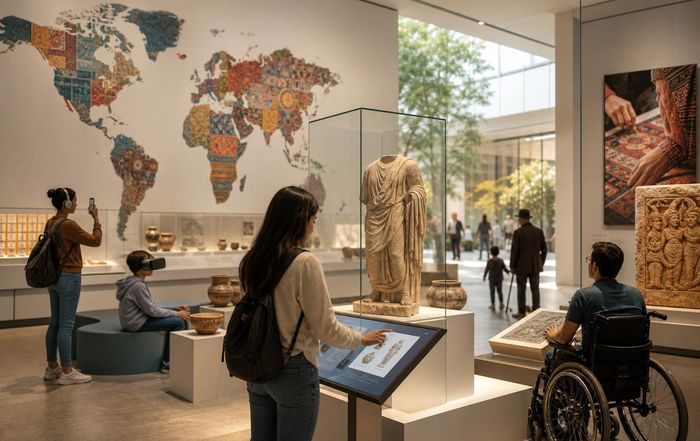
Opening the Doors of Culture: How Museums Can Make Heritage More Accessible
In an era defined by rapid technological change, global mobility, and rising expectations for inclusion, museums are reimagining what it means to be custodians of cultural heritage. No longer seen only as quiet repositories of objects, leading institutions across the United States, Europe, Asia, Africa, and beyond are experimenting with new ways to welcome diverse audiences, share contested histories, and bridge the physical and digital worlds. For the world travelled online community here that are passionate about travel, culture, health, lifestyle, environment, technology, food, society, and education, this transformation speaks to a broader question of how humanity chooses to remember, interpret, and pass on its stories.
Rethinking the Role of Museums in a Connected World
Museums once catered primarily to local or national visitors who could physically enter their buildings, navigate their galleries, and read labels written in a dominant language. Today, as organizations such as the International Council of Museums (ICOM) highlight in their evolving definitions of the museum, these institutions are expected to be more inclusive, participatory, and community-centered, while still maintaining rigorous standards of scholarship and conservation. Readers who follow global cultural developments on platforms like WorldsDoor Culture can see how this shift is reshaping travel itineraries and cultural policies alike.
This redefinition has accelerated in the wake of the COVID-19 pandemic, which forced museums from New York to Tokyo to close their doors and experiment with digital outreach. Reports by bodies such as UNESCO and ICOM describe how closures exposed deep inequalities in access to culture, yet also spurred innovation in virtual programming, multilingual resources, and community partnerships. As travel has resumed, many museums have retained hybrid models that combine on-site visits with digital experiences, expanding their reach to people who may never cross their physical thresholds but can still engage with their collections and narratives.
For travelers, students, and lifelong learners, this means that a museum is no longer just a stop on a city tour; it is increasingly a global platform where stories from Africa, Asia, Europe, North America, and South America intersect and can be explored from home or on the move. This evolution aligns closely with the ethos of WorldsDoor Travel, which emphasizes meaningful encounters with place, history, and local communities rather than superficial sightseeing.
Accessibility as Inclusion: Beyond the Physical Threshold
When discussing accessibility, many people first think of ramps, elevators, and wheelchair-friendly restrooms. Physical access remains fundamental, and organizations such as the World Health Organization and United Nations have repeatedly stressed that built environments must accommodate people with disabilities if societies are to be truly inclusive. Museums in countries including Germany, Canada, Australia, and Japan have been steadily upgrading infrastructure to meet or exceed national accessibility standards, often drawing on guidelines from bodies such as the U.S. Access Board and the UK's Equality and Human Rights Commission.
Yet accessibility today is understood far more broadly. It encompasses sensory access for visitors who are blind, low-vision, deaf, or hard of hearing; cognitive access for people with autism or intellectual disabilities; economic access for those who cannot afford high ticket prices; linguistic access for speakers of multiple languages; and cultural access for communities who may feel that museums do not reflect their histories or values. Many institutions now publish accessibility statements and resources, such as the Smithsonian Institution's detailed guidelines for inclusive design, to help visitors plan their experiences and to signal that all are welcome.
At the same time, experts in health and well-being increasingly emphasize the therapeutic potential of cultural participation. Initiatives like social prescribing programs in the United Kingdom and Canada, where healthcare providers refer patients to museum visits or creative activities, demonstrate how cultural access can support mental health, social connection, and a sense of belonging. Readers interested in the intersection of culture and well-being can explore complementary perspectives on WorldsDoor Health, where the role of art, nature, and community in holistic health is a recurring theme.
Digital Transformation: Virtual Doors to Global Heritage
Perhaps the most visible development in recent years has been the rapid expansion of digital access to collections and exhibitions. Major institutions such as the Louvre Museum in Paris, the British Museum in London, the Metropolitan Museum of Art in New York, and the Uffizi Galleries in Florence now offer extensive online collections, virtual tours, and multimedia content. Initiatives like Google Arts & Culture aggregate digital exhibitions from thousands of museums worldwide, allowing users in Brazil, South Africa, India, or Singapore to explore masterpieces and artifacts in high resolution without leaving home.
Digital transformation, however, is not limited to large, well-funded institutions. Smaller museums from Thailand to Finland are experimenting with low-cost digital tools, such as 360-degree photography, simple virtual tours, and social media storytelling, to share their collections with global audiences. Open-access policies, such as those adopted by the Rijksmuseum in the Netherlands and the National Gallery of Art in Washington, D.C., make high-quality images of artworks freely available for education, research, and creative reuse, thereby democratizing cultural resources that were once restricted to scholars and on-site visitors.
For travelers planning future journeys, these digital experiences serve as both inspiration and preparation. Virtual exploration can help visitors prioritize which museums to see in person, understand cultural contexts before they arrive, and engage more deeply during their visits. For those unable to travel due to financial, health, or visa constraints, digital access ensures that world heritage is not the exclusive domain of the mobile and the affluent. This aligns with broader conversations on equitable access to knowledge and technology, which readers can follow through WorldsDoor Technology and WorldsDoor World.
Inclusive Design: Welcoming Diverse Bodies and Minds
Physical and sensory design is a crucial frontier in making cultural heritage accessible. Museums across Europe, North America, and Asia-Pacific are increasingly adopting universal design principles, which seek to create spaces and experiences usable by as many people as possible without the need for adaptation. This includes wide, unobstructed pathways; clear signage with high-contrast text and pictograms; seating throughout galleries; and lighting that balances conservation needs with visitor comfort.
For visitors who are blind or low-vision, tactile models, raised-line drawings, and audio descriptions are transforming how art and artifacts can be experienced. Institutions such as the Museo del Prado in Madrid and the National Gallery of Canada have developed tactile tours and multisensory programs that invite touch, sound, and even smell, challenging the traditional "do not touch" ethos. For deaf and hard-of-hearing visitors, captioned videos, sign-language tours, and assistive listening devices are becoming more common, guided by best practices shared by organizations like the World Federation of the Deaf and national accessibility agencies.
Museums are also increasingly attentive to the needs of neurodivergent visitors, including people with autism and sensory processing differences. Quiet hours, sensory-friendly maps, social stories that explain what to expect during a visit, and designated calm spaces can make museums less overwhelming and more welcoming. These initiatives reflect a growing recognition that mental health and sensory comfort are integral to cultural participation, a theme that resonates with discussions on WorldsDoor Lifestyle about creating environments that support well-being for all.
Cultural Representation and Community Collaboration
Accessibility is not only about who can enter a museum, but also about whose stories are told inside. Around the world, debates over representation, restitution, and decolonization have pushed museums to examine how their collections were acquired, whose perspectives are centered in their narratives, and how they can engage more respectfully with source communities. Institutions such as the National Museum of African American History and Culture in Washington, D.C., the Apartheid Museum in Johannesburg, and the National Museum of the American Indian have been recognized for involving communities in shaping exhibitions that reflect lived experiences and complex histories.
In countries including France, Germany, and Belgium, discussions around the return of colonial-era artifacts to countries in Africa and Asia have moved from the margins to mainstream policy debates. Governments and museums are exploring legal, ethical, and logistical frameworks for restitution, often guided by international conventions such as the UNESCO 1970 Convention on illicit trafficking of cultural property. While there is no global consensus on all questions of ownership and return, there is growing agreement that transparency, dialogue, and partnership with source communities are essential components of responsible stewardship.
Community collaboration is also reshaping how museums engage with local audiences. Co-curated exhibitions, artist residencies, oral history projects, and community advisory boards allow residents, including marginalized groups, to influence what is displayed and how it is interpreted. This collaborative approach not only enhances trust and relevance but also helps museums serve as spaces for dialogue on contemporary social issues, from migration and climate change to racial justice and gender equality. Readers interested in these intersections can explore related themes on WorldsDoor Society and WorldsDoor Ethics.
Multilingual Storytelling in a Global Era
As travel and migration patterns diversify, museums are increasingly serving multilingual audiences. Institutions in cosmopolitan cities such as London, Toronto, Sydney, Singapore, and Dubai routinely welcome visitors who speak dozens of languages. To make cultural heritage more accessible, many museums are expanding beyond monolingual labels and audio guides, offering core content in several widely spoken languages and, where possible, in local or Indigenous languages that carry deep cultural significance.
Digital tools are making this process more flexible. Mobile apps and web-based guides allow visitors to access translations, extended texts, and multimedia content in their preferred language without crowding gallery walls with dense text. Projects supported by organizations such as the Europeana initiative in the European Union are experimenting with machine translation and multilingual metadata to make digital heritage collections searchable and understandable across language barriers, though human oversight remains essential to ensure accuracy and cultural sensitivity.
Multilingual storytelling is not only a practical convenience; it is an ethical commitment to recognizing that cultural heritage belongs to many communities, not just those who speak a dominant language. For travelers using WorldsDoor as a gateway to global experiences, the availability of multilingual resources can significantly enhance the depth and comfort of museum visits, particularly in regions where language barriers might otherwise limit engagement.
Affordability and Social Equity in Cultural Access
Economic barriers remain among the most persistent obstacles to museum access. In some cities, admission fees can be prohibitive for low-income residents, families, or students, even when tourists from wealthier countries may view them as routine travel expenses. To address this, many museums in countries such as Italy, Spain, Sweden, and Denmark offer free or reduced admission on certain days, discounted rates for local residents, and partnerships with schools and community organizations to provide vouchers or free passes.
Research by cultural policy institutes and organizations like the OECD suggests that free admission policies alone do not guarantee diverse attendance; outreach, programming, and a welcoming atmosphere are equally important. Nonetheless, reducing financial barriers is a crucial step toward ensuring that cultural heritage is not a luxury but a shared resource. Some museums also explore innovative funding models, such as "pay what you wish" systems, corporate partnerships that underwrite free access days, and membership programs that support broader public access.
For smart fans interested in sustainable and equitable business practices, these models raise important questions about how cultural institutions balance financial stability with public service. Exploring resources on WorldsDoor Business and WorldsDoor Sustainable can provide broader context on how organizations in various sectors are rethinking revenue, responsibility, and impact.
Education, Lifelong Learning, and Digital Literacy
Museums have long been valued as educational spaces, complementing formal schooling and providing opportunities for informal learning throughout life. In recent years, educational roles have expanded significantly, with museums offering online courses, teacher training, family programs, and collaborations with universities and research institutes. Platforms like Khan Academy, Coursera, and edX host courses developed in partnership with museums, allowing learners worldwide to study art history, archaeology, science, and cultural studies with direct access to expert curators and high-quality digital collections.
In regions where schools face resource constraints, museum outreach programs-both physical and digital-can help bridge educational gaps, particularly in subjects such as history, geography, and the arts. Mobile exhibitions, traveling teaching kits, and virtual classroom visits are enabling museums to reach students in rural or underserved urban areas who might otherwise have limited exposure to cultural institutions. As digital literacy becomes increasingly essential, these initiatives also help young people navigate and critically assess the vast cultural content available online.
For those who see travel as a form of education, museums serve as immersive classrooms where local histories, global connections, and contemporary issues converge. The synergy between cultural exploration and learning is central to the mission of WorldsDoor Education, which highlights how people of all ages can expand their horizons through thoughtful engagement with the world's cultural and natural heritage.
Sustainability, Climate, and the Future of Heritage
Accessibility to cultural heritage cannot be separated from the environmental context in which museums operate. Climate change poses significant risks to collections and historic sites, from rising sea levels and increased flooding to more frequent heatwaves and extreme weather events. Organizations such as the Intergovernmental Panel on Climate Change (IPCC) and ICOMOS (International Council on Monuments and Sites) have warned that without proactive adaptation and mitigation measures, irreplaceable heritage in regions like the Mediterranean, South Asia, and low-lying coastal areas worldwide may be at risk.
Museums are responding by integrating sustainability into building design, energy use, and conservation strategies. Green building certifications such as LEED and BREEAM encourage energy-efficient lighting, climate control, and materials, while some institutions experiment with more flexible standards for temperature and humidity that balance conservation needs with reduced environmental impact. Public programs increasingly address climate change, biodiversity loss, and environmental justice, positioning museums as spaces where visitors can learn about and discuss the ecological challenges facing their communities and the planet.
These environmental initiatives connect directly with the interests of readers who follow WorldsDoor Environment and WorldsDoor Innovation, as they illustrate how cultural institutions can model responsible stewardship not only of artifacts and artworks but also of the natural systems that sustain them. By foregrounding sustainability, museums help ensure that cultural heritage remains accessible not just to current audiences but to future generations who will inherit both the treasures and the challenges of the twenty-first century.
Technology, Ethics, and Trust in the Age of AI
As museums adopt emerging technologies such as artificial intelligence, augmented reality, and advanced data analytics, questions of ethics and trust come to the forefront. AI tools can assist in tasks such as cataloging collections, translating texts, and creating personalized visitor recommendations, potentially enhancing access and efficiency. Augmented reality applications can overlay digital reconstructions onto archaeological sites or artworks, helping visitors visualize lost structures or original colors and contexts.
However, these technologies also raise concerns related to privacy, bias, and the authenticity of experience. Cultural institutions must navigate how to collect and use visitor data responsibly, avoid reinforcing stereotypes or historical inaccuracies through algorithmic systems, and ensure that digital enhancements do not overshadow the material objects and human stories at the heart of their missions. Guidelines from organizations such as the European Commission on trustworthy AI and cultural heritage provide frameworks, but each museum must interpret and implement these principles in its own context.
For WorldsDoor readers who are attentive to the ethical dimensions of technological change, these debates are part of a larger conversation about how societies can harness innovation without losing sight of human values and cultural integrity. Exploring perspectives on WorldsDoor Ethics and WorldsDoor Technology can deepen understanding of how museums and other institutions are grappling with these complex questions.
A Shared Journey Through the Doors of Culture
Did you know that museums around the world are at a pivotal moment, balancing tradition and transformation as they seek to make cultural heritage more accessible, inclusive, and meaningful. From the grand galleries of Paris and London to community museums in Nairobi, São Paulo, Seoul, and Auckland, institutions are rethinking how they design their spaces, tell their stories, collaborate with communities, and leverage technology to reach people wherever they are.
For the travel community, which spans continents and interests, this evolution offers both inspiration and invitation. Whether planning a journey to explore the art of Italy, the history of Japan, or the contemporary creativity of South Africa, or engaging with digital exhibitions from home, readers can approach museums not only as places to observe but as partners in a shared exploration of what it means to be human. By supporting institutions that prioritize accessibility, representation, sustainability, and ethical innovation, travelers and learners contribute to a cultural ecosystem where more voices are heard, more stories are shared, and more doors are open.
Ultimately, the accessibility of cultural heritage is not a static goal but an ongoing process that requires curiosity, humility, and collaboration. As museums continue to adapt and as sites like this connect people to the richness of global culture, the hope is that every person-regardless of background, ability, or location-can find a welcoming doorway into the shared stories of our world.