

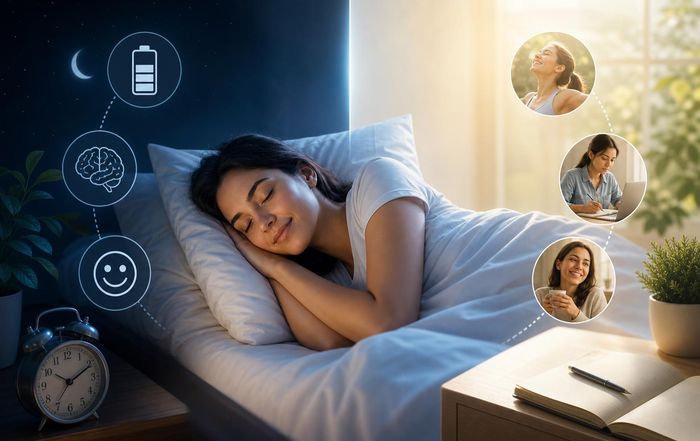
How Sleep Quality Shapes Energy, Mood, and Focus in a Fast-Moving World
Sleep has quietly become one of the most important public health conversations of the decade, joining nutrition, movement, and mental wellbeing as a central pillar of a flourishing life. As research deepens and technology makes it easier to track nightly rest, scientists, clinicians, and everyday travelers are converging on a clear insight: it is not only the number of hours in bed that matters, but the quality of those hours. For active travel fans of WorldsDoor, who often balance demanding work, frequent travel, cultural exploration, and a desire for meaningful, sustainable lifestyles, understanding how sleep quality influences energy, mood, and focus is becoming an essential form of modern literacy.
The Science of Sleep Quality: Beyond "Eight Hours"
While the traditional advice of aiming for around seven to nine hours of sleep per night for most adults remains well supported by organizations such as the U.S. Centers for Disease Control and Prevention and the National Sleep Foundation, contemporary sleep science emphasizes that the architecture of sleep is just as crucial as its duration. Sleep is composed of multiple stages, broadly divided into non-rapid eye movement (NREM) sleep and rapid eye movement (REM) sleep, which cycle several times throughout the night.
Deep NREM sleep (often referred to as slow-wave sleep) is strongly associated with physical restoration, immune functioning, and the consolidation of certain types of memory, while REM sleep is linked to emotional processing, creativity, and learning. Research summarized by Harvard Medical School's Division of Sleep Medicine shows that fragmented sleep, frequent awakenings, or an imbalance in these stages can undermine the benefits of a seemingly adequate time in bed. Thus, two people who each sleep seven hours can wake up with very different levels of energy and clarity depending on how consolidated and restorative their sleep cycles were.
Sleep quality is typically described through factors such as how long it takes to fall asleep, how often a person wakes during the night, how easily they return to sleep, and how refreshed they feel upon waking. The World Health Organization, while focusing more broadly on lifestyle risk factors, has increasingly acknowledged insufficient and poor-quality sleep as an emerging global concern, with implications that extend from individual productivity to societal safety.
Energy: The Daily Fuel Built Overnight
For many people across North America, Europe, Asia, and beyond, the most obvious impact of poor sleep quality is a pervasive sense of low energy that coffee or energy drinks never fully resolve. Physiologically, high-quality sleep helps regulate the body's energy systems by restoring glycogen levels in the brain, balancing hormones involved in appetite and metabolism, and supporting mitochondrial function in muscle and organ tissues. Studies published in journals accessible through PubMed have repeatedly shown that when sleep is restricted or fragmented, people report higher daytime fatigue, reduced physical endurance, and a lower threshold for exhaustion during both mental and physical tasks.
Hormones provide one of the clearest windows into this relationship. Research reviewed by the National Institutes of Health indicates that poor sleep quality can disrupt cortisol, the stress hormone that also helps regulate energy availability, leading to grogginess in the morning and an unwelcome "second wind" late at night. At the same time, ghrelin and leptin, hormones that influence hunger and satiety, become imbalanced, which may contribute to increased cravings for high-calorie foods and a sense of unstable energy throughout the day.
For travelers and professionals who frequently cross time zones, these effects are magnified by circadian misalignment. Jet lag, as described by the Mayo Clinic, stems from the body's internal clock being out of sync with the local environment, leading to poor sleep quality even when time in bed seems sufficient. This is particularly relevant for readers of WorldsDoor who are passionate about exploring new cultures and destinations and who may find that strategic light exposure, carefully timed naps, and gradual schedule adjustments can reduce the energy cost of long-haul travel.
At a broader lifestyle level, better sleep quality supports sustainable energy for movement, adventure, and work. Insights from Sleep Foundation show that people who consistently obtain high-quality sleep are more likely to engage in regular physical activity, which in turn supports deeper sleep, creating a positive feedback loop that benefits overall vitality and longevity.
For those interested in integrating this understanding into a holistic lifestyle, WorldsDoor's own coverage of health and wellbeing and lifestyle choices offers perspectives on how restorative habits can be woven into daily routines, no matter the continent or city.
Mood: Emotional Resilience Built in the Dark
The relationship between sleep quality and mood is one of the most robust findings in contemporary psychology and psychiatry. Numerous longitudinal studies, including those summarized by The Lancet Psychiatry and other peer-reviewed sources, have shown that individuals who experience chronic insomnia or fragmented sleep are at higher risk for depression, anxiety, and irritability. While these associations are complex and bidirectional-poor sleep can worsen mood, and mood disorders can in turn disrupt sleep-the consensus is that improving sleep quality often leads to measurable benefits in emotional stability and resilience.
Neuroscientific research helps explain why. During high-quality sleep, especially REM sleep, the brain appears to replay emotional experiences and process them in a way that reduces their sting the next day. Work from researchers at institutions such as UC Berkeley's Center for Human Sleep Science suggests that sleep acts as an overnight "therapy session" in which the brain reactivates memories but in a neurochemical environment that is less dominated by stress-related neurotransmitters, allowing emotional memories to be integrated more calmly. When sleep is disrupted, this process may be incomplete, leaving individuals more reactive and less able to regulate their emotions.
In daily life, this often shows up as impatience in traffic, lower tolerance for workplace frustrations, and a reduced capacity to enjoy social and cultural experiences. For those exploring new countries or navigating multicultural environments, poor sleep can subtly erode curiosity and openness, making it harder to appreciate unfamiliar customs, cuisines, and perspectives. By contrast, travelers and professionals who protect their sleep quality often report more enthusiasm, empathy, and adaptability, qualities that are central to the global mindset that WorldsDoor seeks to celebrate through its culture and world features.
Public health organizations are taking notice. The World Federation for Mental Health and national health services in regions such as the UK's NHS increasingly highlight healthy sleep as a protective factor for mental health, recommending consistent routines, reduced evening screen exposure, and cognitive-behavioral strategies for insomnia as first-line approaches before medication, whenever appropriate. These recommendations are particularly relevant in 2026 as digital devices, streaming services, and remote work continue to blur the boundaries between day and night across continents.
Focus and Cognitive Performance: The Hidden Cost of a Restless Night
If energy is the fuel and mood the emotional climate, focus is the precision instrument that allows people to learn, create, and make wise decisions. High-quality sleep plays an essential role in attention, working memory, problem-solving, and creativity, all of which are critical not only for knowledge workers in global hubs like London, New York, Singapore, and Berlin, but also for students, entrepreneurs, and innovators in every region.
The American Academy of Sleep Medicine and related professional bodies have compiled extensive evidence showing that sleep deprivation and poor sleep quality impair reaction time, sustained attention, and the ability to filter distractions. Laboratory studies using tasks that measure vigilance and decision-making consistently find that even moderate sleep restriction over several nights can lead to performance declines comparable to, or exceeding, those seen with legal levels of alcohol intoxication. This is particularly concerning for safety-critical professions and for drivers, with organizations such as the National Highway Traffic Safety Administration highlighting drowsy driving as a major global safety issue.
Memory consolidation provides another crucial link between sleep quality and cognitive performance. During deep NREM sleep, the brain appears to transfer information from short-term storage in the hippocampus to more stable networks in the cortex, a process documented in both animal and human studies via techniques reported by sources like Nature Neuroscience. When sleep is fragmented, this transfer may be incomplete, leading to difficulties retaining new information, whether that means vocabulary in a new language, the layout of an unfamiliar city, or the details of a complex business negotiation.
For students and lifelong learners, this means that late-night cramming at the expense of sleep can be counterproductive, a point reinforced by educational organizations and universities worldwide, including guidance from MIT's Division of Student Life. For professionals engaged in innovation, design, and strategy, high-quality sleep appears to support insight and creativity, with some research indicating that REM sleep in particular helps the brain form novel associations between ideas.
Within the WorldsDoor community, where curiosity about education and learning, technology, and innovation is strong, this connection between sleep and cognitive performance underscores a simple but powerful idea: protecting sleep is not a luxury, but a core productivity tool and a foundational investment in long-term intellectual growth.
Sleep, Health, and Lifestyle: A Global Perspective
In cities from Tokyo and Seoul to New York, London, and São Paulo, "sleep deprivation" has often been worn as a badge of honor, associated with ambition and dedication. However, large-scale epidemiological studies, including those referenced by the European Society of Cardiology and the American Heart Association, increasingly link poor sleep quality and short sleep duration with higher risks of cardiovascular disease, obesity, type 2 diabetes, and reduced immune function. While these outcomes are influenced by many factors, including genetics, diet, physical activity, and social determinants of health, sleep has emerged as a modifiable behavior with broad protective effects.
From a lifestyle perspective, high-quality sleep supports healthier dietary choices, more consistent exercise, and more stable stress responses. Research summarized by The BMJ and other medical journals suggests that people who sleep well are more likely to maintain balanced eating patterns and less likely to rely on late-night snacking or sugary drinks for energy. This has implications not only for individual wellbeing, but also for public health systems in countries across Europe, North America, Asia, and beyond, where chronic diseases impose significant social and economic burdens.
The rise of consumer sleep technology, including wearable devices and smart home systems, has provided individuals with unprecedented access to their own sleep data. While experts caution that consumer trackers are not medical devices and can sometimes misestimate sleep stages, organizations such as Consumer Reports and independent sleep researchers note that these tools can still help people recognize patterns, such as the impact of late-night work, alcohol, or heavy meals on sleep quality. For readers of WorldsDoor who enjoy experimenting with technology to enhance their lives, this intersection of digital tools and health offers both opportunities and responsibilities, emphasizing the importance of informed, evidence-based use.
At WorldsDoor, coverage of health, lifestyle, and technology increasingly reflects this integrated view, highlighting not only the promise of new devices and apps, but also the timeless value of simple practices: consistent bedtimes, calming pre-sleep routines, and bedrooms designed for comfort, quiet, and darkness.
Travel, Time Zones, and Cultural Rhythms of Rest
For a globally curious audience, one of the most fascinating dimensions of sleep is how it varies across cultures and geographies. Anthropological and sociological work, some of which is discussed in outlets like Scientific American, has documented diverse sleep patterns, from Mediterranean siesta traditions to segmented sleep in pre-industrial Europe and the flexible, communal sleep arrangements found in some African and Asian communities. These variations illustrate that while the biological need for sleep is universal, the social organization of rest is deeply shaped by culture, climate, and economic structures.
Modern travel can either enrich or disrupt these rhythms. Long-haul flights across the Atlantic or Pacific, common for readers moving between regions such as Europe, North America, and Asia, can challenge circadian systems and temporarily degrade sleep quality. Organizations like Sleep Foundation and Cleveland Clinic recommend strategies such as gradually shifting sleep schedules before travel, seeking morning light exposure at the destination to advance the body clock, and using short, strategic naps rather than long daytime sleep to adjust more quickly.
At the same time, travel can be an opportunity to observe and learn from different attitudes toward rest. In some Scandinavian countries, for example, cultural emphasis on work-life balance and outdoor time, supported by policies documented by organizations such as the OECD, aligns with healthier sleep patterns and lower reported stress levels. In parts of Asia, growing awareness of sleep's importance is leading to public campaigns and corporate wellness initiatives that encourage employees to prioritize rest, a trend reported by international media outlets and health agencies.
WorldsDoor's travel and culture sections are uniquely positioned to highlight these global sleep stories, inviting readers not only to explore landscapes and cuisines, but also to notice how different societies value and protect the night. For many, bringing home a new perspective on rest from abroad can be as transformative as discovering a new dish or tradition.
Environment, Sustainability, and the Nighttime World
Sleep quality does not exist in isolation from the environment. Urbanization, artificial light at night, noise pollution, and climate change all play roles in shaping how well people sleep, especially in dense cities across continents. Organizations such as the International Dark-Sky Association have raised awareness of how excessive artificial lighting can disrupt circadian rhythms in humans and wildlife alike, advocating for smarter, more sustainable lighting that preserves dark skies and supports natural sleep patterns.
Temperature is another critical factor. Research summarized by The Lancet Planetary Health and other climate-health platforms indicates that rising nighttime temperatures associated with global warming can impair sleep quality, particularly in regions that lack widespread air conditioning or where energy costs are high. Poor sleep linked to heat waves can in turn worsen health disparities, affecting vulnerable populations in parts of Africa, Asia, South America, and low-income communities worldwide.
These environmental influences connect sleep quality to broader conversations about sustainability, urban planning, and ethical technology use. Smart building design that incorporates natural ventilation, green spaces that buffer noise, and urban policies that limit unnecessary nighttime light can all support better sleep while also reducing environmental impact. Readers interested in how these themes intersect with global challenges may find deeper context in WorldsDoor's coverage of the environment, sustainability, and society.
From an ethical standpoint, organizations and policymakers are beginning to ask how work schedules, digital platforms, and 24-hour business models affect collective sleep health. Discussions in forums like The World Economic Forum and academic publications touch on questions of fairness, especially for shift workers, gig economy participants, and those in always-on industries. While there is no single solution, a growing consensus suggests that valuing sleep as a shared resource-much like clean air or safe transportation-can support more humane and sustainable societies, a theme that resonates with WorldsDoor's interest in ethics and global responsibility.
Building a Personal Sleep Culture: Inspiration for Everyday Life
Against this backdrop of scientific insight and global trends, the question for individuals becomes how to translate knowledge into meaningful change. While specific recommendations should always be tailored to personal health conditions in consultation with qualified professionals, several principles consistently emerge from reputable sources such as Johns Hopkins Medicine and Cleveland Clinic.
Creating a consistent sleep-wake schedule, even on weekends, helps stabilize the circadian clock and improve sleep quality over time. Designing a bedroom environment that is cool, dark, and quiet supports deeper sleep, as does limiting screens and bright light in the hour before bedtime. Gentle wind-down rituals-reading, light stretching, or mindfulness exercises-can signal to the nervous system that it is time to shift from alertness to rest. For those who travel frequently, carrying small elements of home, such as a familiar sleep mask or pillowcase, can provide continuity and comfort in new environments.
Nutrition and movement also play supporting roles. Balanced meals earlier in the evening, modest caffeine intake timed to avoid late-day stimulation, and regular physical activity, as recommended by authorities such as the World Health Organization and American College of Sports Medicine, all contribute indirectly to better sleep by stabilizing energy and mood. In turn, high-quality sleep reinforces these healthy choices, creating a virtuous cycle that supports long-term wellbeing.
For the WorldsDoor community, integrating these practices can be part of a broader journey toward a more intentional life. Whether exploring a new country, launching a creative project, or simply seeking greater presence with family and friends, sleep becomes a quiet but powerful ally. Articles across WorldsDoor, from food and nutrition to innovation in wellbeing and global lifestyle trends, increasingly reflect this understanding, emphasizing that rest is not an obstacle to achievement, but a foundation for it.
Sleep as a Cornerstone of a Thriving Future!
As time and space unfolds, the world continues to grapple with rapid technological change, shifting work patterns, and the lingering psychological and social effects of recent global challenges. In this context, the emerging consensus around the importance of sleep quality offers both reassurance and direction. Reassurance, because it reminds people that some of the most powerful tools for energy, mood, and focus are still found in everyday practices rather than in expensive interventions. Direction, because it encourages individuals, communities, and institutions to redesign systems in ways that respect human biological needs.
From the perspective of well travelled people, sleep is more than a health topic; it is a lens through which to view travel, culture, environment, technology, and ethics. It shapes how travelers experience sunrise over new horizons, how innovators solve complex problems, how communities respond to stress, and how societies imagine sustainable futures. By paying attention to the quality of the hours spent in darkness, readers can unlock brighter days filled with genuine energy, emotional balance, and clear focus-essentials for exploring not only the world outside, but also the inner landscapes of purpose and possibility.
For those ready to take the next step, exploring WorldsDoor's broader coverage can provide ongoing inspiration, connecting the science of sleep with the art of living well in a connected, ever-evolving world.