

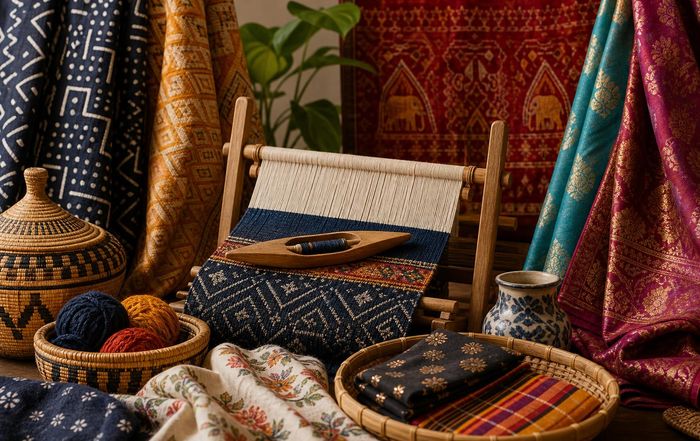
Threads of Memory and Modernity: Traditional Textile Arts Across Africa and Asia
Traditional textile arts across Africa and Asia form one of humanity's most enduring conversations, a dialogue carried not by words but by fiber, color, pattern, and touch. In an era of rapid technological change and globalized fashion, these textiles remain living archives of memory, identity, and innovation, while increasingly becoming platforms for ethical entrepreneurship and sustainable development. For WorldsDoor, whose readers look outward to explore travel, culture, health, lifestyle, environment, technology, food, society, education, sustainability, innovation, business, and the wider world, the story of these fabrics offers a powerful lens into how communities adapt heritage to a changing planet in 2026.
Textiles as Living Archives of Culture and Identity
Across both Africa and Asia, cloth has long served as a visual language that encodes social status, spiritual belief, regional identity, and historical events. Anthropologists and historians have documented how textiles function as portable wealth, ceremonial offerings, and markers of life's milestones, from birth and initiation to marriage and mourning. Institutions such as the Victoria and Albert Museum and the British Museum have shown, through extensive collections and research, that fabrics from Ghana, Nigeria, India, Indonesia, Japan, and many other regions are not simply decorative commodities, but integral components of social systems and cosmologies.
In West Africa, for example, woven and printed textiles traditionally signal lineage and authority, while in parts of South and Southeast Asia, specific motifs can denote caste histories, regional myths, or religious affiliations. Contemporary scholarship, including work shared by UNESCO, emphasizes that safeguarding these practices is not only about preserving objects but also about sustaining the communities of weavers, dyers, embroiderers, and designers who carry the knowledge forward. For readers exploring global culture through WorldsDoor's culture insights, textiles offer a tangible way to understand how heritage is negotiated in daily life rather than frozen in the past.
West African Weaving and Print Traditions: Kente, Aso Oke, and Adire
Among the most globally recognized African textiles is Ghanaian kente, a brilliantly colored strip-woven cloth associated particularly with the Akan and Ewe peoples. Traditionally woven on narrow horizontal looms, kente is composed of many strips sewn together, each strip bearing complex patterns with names that reference proverbs, historical events, or moral values. Research shared by the Ghana Museums and Monuments Board and documentation in museum collections confirm that, historically, certain kente designs were reserved for royalty or for particular ceremonies, although in recent decades the cloth has become more widely worn for celebrations and diasporic identity across the world.
In Nigeria, aso oke, a handwoven cloth of the Yoruba people, occupies a similar place of honor. Often woven from cotton or silk, and increasingly from blended fibers, aso oke is used for special-occasion garments such as agbada robes and gele headwraps. Textile historians and organizations like the Smithsonian National Museum of African Art have highlighted how specific patterns and color combinations can indicate regional origins, family histories, or social status. Meanwhile, adire, the indigo resist-dyed cloth of southwestern Nigeria, demonstrates the technical sophistication of African dyeing traditions. Using methods such as tie-dye (adire oniko) and starch resist (adire eleko), artisans create intricate patterns that have inspired contemporary designers in Lagos, London, and New York.
These West African textiles are not merely relics of precolonial craftsmanship; they are active participants in contemporary fashion and identity politics. Designers across the African continent and diaspora are blending kente, aso oke, and adire with modern silhouettes, while researchers and cultural advocates emphasize the importance of fair compensation and recognition for the communities that maintain these traditions. Travelers who seek to understand the deeper cultural context of such fabrics can find complementary perspectives through WorldsDoor's travel features, which highlight responsible ways to engage with local artisans and markets.
East African Kanga and Kitenge: Cloth as Conversation
Moving eastward, the Swahili coast of Kenya, Tanzania, and neighboring regions has developed its own distinctive textile languages. The kanga, a rectangular cotton cloth printed with bold designs and a proverb or slogan along one edge, is perhaps the most eloquent example. Scholars and organizations such as Africa Center and regional cultural archives have documented how kangas function as a form of social communication; the printed texts can convey affection, critique, political commentary, or spiritual messages, depending on context and choice of phrase.
Closely related is kitenge (also spelled chitenge), a wax-print cotton fabric widely used across East and Central Africa. While some wax prints were historically produced in Europe, today there is growing recognition of locally designed and manufactured textiles, including efforts by African-owned firms to reclaim creative and economic control. The International Trade Centre and other development agencies have noted that supporting regional textile industries can contribute to job creation, especially for women and youth, while also strengthening cultural self-representation. For readers of WorldsDoor's society coverage, kanga and kitenge illustrate how everyday clothing can double as a platform for public discourse and social cohesion.
South Asian Mastery: From Banarasi Brocades to Ajrakh and Ikat
South Asia's textile heritage is both ancient and astonishingly diverse, with archaeological evidence indicating sophisticated cotton weaving and dyeing in the Indus Valley thousands of years ago. In contemporary India, Pakistan, Bangladesh, and Sri Lanka, handloom weaving and traditional dyeing techniques remain vital sources of livelihood and cultural pride, even as they confront competition from mechanized production.
Varanasi (Banaras) in northern India is renowned for Banarasi brocade saris, woven with intricate patterns in silk and often embellished with metallic threads. These textiles, documented by institutions such as the Crafts Council of India and featured in research by the Textile Society of America, are prized for their complexity and association with weddings and religious ceremonies. In western India and Pakistan, ajrakh, a labor-intensive block-printed and resist-dyed textile, showcases deep indigo and madder reds arranged in symmetrical, often geometric patterns; practitioners in Kutch, Gujarat, and Sindh have collaborated with designers and NGOs to revitalize the craft, emphasizing natural dyes and fair labor practices.
Ikat, in which threads are tie-dyed before weaving to create blurred, feathered patterns, appears across the region-from Odisha's bandha to Telangana's pochampally and Indonesian and Central Asian variations. These textiles take weeks or months to produce, and organizations like UNESCO have recognized certain weaving traditions as elements of Intangible Cultural Heritage, underscoring their cultural significance and vulnerability. For readers interested in how craftsmanship intersects with wellbeing and livelihood, WorldsDoor's lifestyle section offers a broader context on how artisans navigate economic pressures while maintaining artistic integrity.
Southeast Asian Batik, Songket, and Supplementary Weaves
Southeast Asia presents another rich tapestry of textile traditions, each deeply embedded in local cosmologies and social structures. Indonesian batik, perhaps the most internationally recognized, involves applying wax to cloth in detailed patterns before dyeing, a process that can be repeated many times to build complex designs. In 2009, UNESCO inscribed Indonesian batik on the Representative List of the Intangible Cultural Heritage of Humanity, citing both its technical sophistication and its role in expressing regional identities across Java, Bali, and beyond.
In Malaysia, batik has evolved with distinct floral and abstract motifs, and in recent years designers have experimented with contemporary color palettes and fashion forms while maintaining hand-drawn (batik tulis) and block-printed (batik cap) methods. Songket, a brocade textile woven with supplementary gold or silver threads, remains central to ceremonial dress in parts of Malaysia and Indonesia; textile experts and institutions such as the National Museum of Indonesia have documented its association with royal courts and rites of passage.
Further north, in Laos, Cambodia, Thailand, and Vietnam, supplementary weft weaving techniques create complex patterns that can represent mythological creatures, ancestral symbols, or cosmological diagrams. Organizations such as Cultural Survival and regional craft cooperatives have worked with village weavers to sustain these skills, often linking them to community-based tourism and fair trade markets. Readers planning journeys through these regions can deepen their understanding of such initiatives through WorldsDoor's travel perspectives, which emphasize respectful engagement and learning from local communities.
East Asian Textiles: From Japanese Kimono to Chinese Silk and Korean Hanbok
East Asia's textile heritage, shaped by centuries of technological innovation and philosophical thought, continues to influence global aesthetics and luxury markets. China's silk production, documented in historical sources and curated by institutions such as the China National Silk Museum, played a central role in the development of the Silk Road, connecting Asia, Europe, and Africa in an early form of globalization. Techniques such as jacquard weaving, brocade, and embroidery evolved in imperial workshops and regional centers, and today contemporary designers in China and abroad draw on this legacy while exploring modern silhouettes and sustainable materials.
In Japan, the kimono exemplifies a sophisticated textile system that encompasses weaving, dyeing, and tailoring. Techniques such as kasuri (ikat), shibori (resist dyeing), yuzen (hand-painted dyeing), and tsumugi (pongee silk) have been thoroughly documented by institutions like the Tokyo National Museum and the Japan Folk Crafts Museum. While everyday kimono use has declined, there has been renewed interest among younger generations in renting or purchasing vintage garments, as well as in upcycling kimono fabric into contemporary clothing and accessories, a trend that aligns with broader concerns about waste reduction and circular fashion.
Korea's hanbok, with its distinctive lines and vibrant colors, has also experienced a revival, aided in part by the global popularity of Korean drama and music. Traditional silk and ramie fabrics, along with natural dyeing methods, are being reinterpreted by designers who create modern hanbok suitable for daily wear. Government-supported institutions and cultural organizations, including the Korea Craft & Design Foundation, have promoted these efforts as part of a broader strategy to strengthen cultural industries. For WorldsDoor readers interested in how cultural heritage intersects with contemporary lifestyle trends, these East Asian developments resonate strongly with the platform's focus on innovation and identity.
Health, Wellbeing, and the Human Dimension of Textile Work
Textile production is not only an economic activity; it also shapes physical and mental wellbeing for millions of artisans, especially women. Studies and reports from organizations like the World Health Organization and the International Labour Organization have highlighted both the health risks associated with certain industrial textile processes-such as exposure to toxic dyes or repetitive strain in factory settings-and the potential wellbeing benefits of more traditional, community-based craft work when properly supported.
Handloom weaving, embroidery, and natural dyeing, when practiced under safe conditions, can provide flexible employment, preserve social networks, and sustain a sense of purpose and identity, particularly in rural communities. Initiatives that combine fair wages, health education, and access to healthcare have shown promise in improving outcomes for artisans, with some projects documented in case studies by UN Women and other development agencies. Readers exploring WorldsDoor's health coverage may find that the story of textiles offers a nuanced example of how economic, social, and physical wellbeing are closely intertwined.
Sustainability and the Environmental Footprint of Textiles
In 2026, the environmental impact of the global fashion and textile industry remains a major concern. Research summarized by the Ellen MacArthur Foundation and the United Nations Environment Programme indicates that textile production contributes significantly to greenhouse gas emissions, water pollution, and waste, particularly through fast fashion and synthetic fibers. Against this backdrop, traditional textile arts across Africa and Asia offer both inspiration and practical strategies for more sustainable practices.
Many heritage techniques rely on natural fibers such as cotton, silk, wool, and bast fibers, as well as plant-based or mineral dyes that, when properly managed, can have a lower environmental footprint than certain synthetic alternatives. However, it is important to acknowledge that not all traditional practices are automatically sustainable; issues such as water use, land management, and chemical inputs must be carefully considered. Projects that integrate scientific research with traditional knowledge, as highlighted in reports by organizations like the International Union for Conservation of Nature, have begun to map out more holistic approaches to sustainable textile production.
Platforms like WorldsDoor, particularly through its environment and sustainable living sections, can help readers navigate these complexities by spotlighting initiatives that prioritize ecosystem health, community resilience, and cultural continuity. By learning more about sustainable business practices and supporting brands that work transparently with artisan communities, consumers can contribute to a shift away from disposable fashion toward more durable, meaningful garments.
Technology, Innovation, and the Future of Heritage Textiles
While traditional textile arts are rooted in manual skills passed down over generations, they are not static; technology has always been part of textile history, from the invention of the loom to the development of synthetic dyes. In the current decade, digital tools are reshaping how heritage textiles are designed, produced, marketed, and preserved. Designers increasingly use computer-aided design to experiment with patterns inspired by kente, batik, or ikat, while digital printing allows for small-batch production that can reduce waste.
E-commerce platforms and social media have opened new markets for artisans in remote regions, enabling them to connect directly with customers worldwide. Reports on digital inclusion and small enterprises from organizations like the World Bank and OECD note both the opportunities and the challenges of this shift, including the need for digital literacy, infrastructure, and equitable value chains. At the same time, heritage preservation efforts increasingly rely on high-resolution imaging, 3D modeling, and online archives, such as those hosted by the Metropolitan Museum of Art, which allow global audiences to study historical textiles in detail.
For WorldsDoor, whose readers are keenly interested in technology and innovation, this intersection of craft and digital tools offers a compelling narrative of how ancient skills can adapt to contemporary realities. The key question is how to ensure that innovation enhances, rather than erases, the agency and intellectual property of the communities that originated these textile traditions.
Ethical Fashion, Fair Trade, and Inclusive Business Models
The rising global interest in "ethical fashion" has brought traditional textiles into the spotlight, but it has also raised complex questions about appropriation, authenticity, and equity. Organizations such as the Fairtrade Foundation and the Fashion Revolution movement advocate for transparency in supply chains, living wages, and respect for cultural heritage. However, the reality on the ground is varied; some collaborations between designers and artisans are genuinely participatory and beneficial, while others replicate extractive patterns in new forms.
Ethical business models in the textile sector often involve long-term partnerships with weaving or dyeing cooperatives, clear agreements on design ownership, and reinvestment in community infrastructure and education. Case studies highlighted by the International Trade Centre's Ethical Fashion Initiative illustrate how such approaches can create stable livelihoods while preserving cultural heritage. Through WorldsDoor's business coverage and its dedicated ethics section, readers can explore how consumer choices intersect with broader debates about justice, representation, and cultural rights.
Education, Transmission, and Youth Engagement
The survival of traditional textile arts depends on intergenerational transmission of skills and knowledge. In many communities, older artisans express concern that younger people may be drawn away by urban employment or perceive craft work as less prestigious. Yet there are also encouraging signs of renewal, as youth-led initiatives, design schools, and community organizations reframe textile arts as sources of creativity, entrepreneurship, and cultural pride.
Educational programs that integrate hands-on weaving or dyeing with broader lessons on history, ecology, and design have been developed in various countries, often with support from cultural ministries, NGOs, or universities. Institutions such as the World Crafts Council and regional design institutes share examples of how curricula can connect traditional techniques with contemporary applications, including sustainable fashion, interior design, and digital storytelling. For readers interested in how education shapes cultural futures, WorldsDoor's education pages provide a broader framework for understanding how learning environments can support both heritage and innovation.
Travel, Taste, and Responsible Cultural Encounter
For many readers of WorldsDoor, encountering traditional textiles is part of a broader journey that includes travel, food, and cultural immersion. Visiting weaving villages in Morocco, indigo dyeing workshops in Japan, batik studios in Yogyakarta, or handloom clusters in India can offer profound insights into local ways of life, especially when framed by respect, curiosity, and a willingness to listen. Responsible tourism organizations and cultural heritage experts emphasize the importance of buying directly from artisans when possible, asking questions about materials and techniques, and avoiding bargaining practices that undermine fair compensation.
Textiles also intersect with culinary and hospitality experiences, from handwoven table linens in rural guesthouses to ceremonial cloths used in food offerings and celebrations. Exploring these connections through WorldsDoor's food stories and global features on world events and cultures can help readers appreciate how cloth, cuisine, and community form an integrated whole, rather than separate domains.
Weaving a Shared Future
As the world navigates environmental crises, technological disruption, and shifting social norms in 2026, traditional textile arts across Africa and Asia stand as both witnesses to history and active participants in shaping the future. They embody a form of knowledge that is tactile, embodied, and relational, reminding observers that culture is not merely something to be consumed, but something to be co-created and cared for.
For WorldsDoor, sharing these stories is part of a broader mission to open doors between worlds: between past and present, local and global, craft and technology, individual choice and collective responsibility. By learning about the people who spin, weave, dye, print, and stitch, and by choosing to support practices that honor both human dignity and ecological balance, readers can help ensure that the world's great textile traditions continue to evolve-resilient, relevant, and radiant with meaning-for generations to come.