

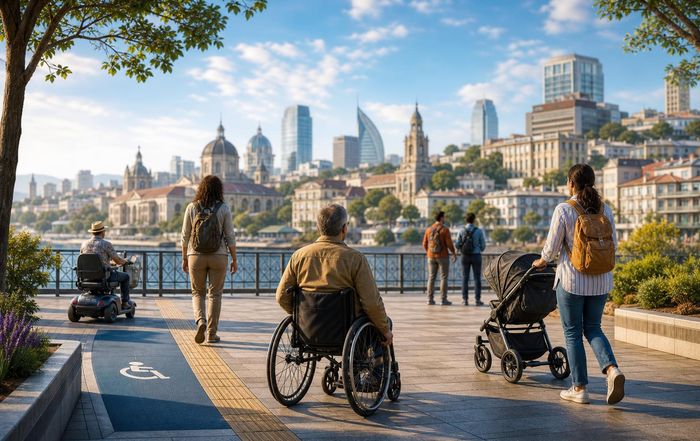
Why Accessible Tourism Matters for Truly Inclusive Cities
Tourism is often framed in terms of economic growth, iconic landmarks, and Instagram-ready skylines. Yet for millions of people with disabilities, older adults, and travelers with temporary or situational limitations, the question is far more basic: can they actually get in the door, onto the tram, or across the street? Accessible tourism sits at the intersection of rights, design, and urban development, and it is increasingly central to how cities define themselves as inclusive. For city planners, tourism boards, and residents, the issue is not simply about ramps and elevators; it is about who gets to participate in urban life, whose spending power is welcomed, and whose presence is quietly excluded.
So why does accessible tourism matters so profoundly for inclusive cities and how are destinations around the world rethinking infrastructure, culture, and policy? It also looks at what travelers and local stakeholders can do to push cities toward more universal, human-centered design. While the focus is on tourism, the implications touch everyday mobility, social equity, and the future of urban living.
From Niche Concern to Human Right
Accessible tourism was once treated as a specialist segment, largely framed around "special needs" or charity-based initiatives. Over the past decade, this has shifted toward a rights-based understanding grounded in international law and demographic reality. The United Nations Convention on the Rights of Persons with Disabilities (CRPD), now ratified by most UN member states, recognizes access to the physical environment, transportation, information, and communication as fundamental rights, including within tourism. The World Tourism Organization (UNWTO) has echoed this by promoting "Tourism for All," emphasizing that accessibility is a quality standard that benefits everyone, not just a minority.
The numbers underline why this is not a marginal issue. The World Health Organization estimates that around 1.3 billion people-roughly 16% of the global population-live with significant disability. When family, friends, and caregivers are included, the potential accessible travel market expands dramatically. In regions with aging populations, such as Europe and parts of East Asia, older adults with mobility or sensory limitations represent a fast-growing share of travelers. Cities that ignore this demographic are not only failing a rights obligation; they are turning away a substantial and often loyal visitor base.
Framing accessibility as a right rather than a favor reshapes expectations. Instead of disabled travelers feeling grateful for basic access, the onus shifts to cities and businesses to comply with standards and remove barriers. This perspective aligns accessible tourism with broader discussions about inclusion, from gender and racial equity to LGBTQ+ rights in urban spaces, and situates it firmly within the ethical and legal fabric of city-making.
Why Cities Should Care: Economic, Social, and Cultural Dividends
For urban leaders focused on budgets and development, accessible tourism is sometimes assumed to be expensive or low-priority. Yet research from organizations such as UNWTO, OECD, and national tourism bodies suggests the opposite: accessibility often generates strong economic returns and deeper social benefits. Travelers with disabilities tend to plan longer stays, travel outside peak seasons, and frequently travel with companions. Studies in Europe and North America have shown that when destinations improve accessibility, they see increased visitor numbers, higher repeat visits, and stronger off-season demand, especially from older travelers.
Beyond direct tourism spending on hotels, restaurants, and attractions, accessible design supports the wider urban economy. Step-free public transport, clear wayfinding, and safe pedestrian crossings make it easier for residents to commute, shop, and access services. This reduces social isolation and can increase labor-force participation among people with disabilities and older adults, feeding into broader economic productivity. Cities that invest in universal design often discover that what benefits visitors also improves daily life for delivery workers, parents with strollers, and anyone carrying luggage or groceries.
There is also a reputational dimension. Cities such as Barcelona, Singapore, and Berlin have built strong brands around being easy to navigate, with accessible metro systems, tactile paving, and inclusive cultural venues. These reputations are reinforced by rankings and guidance from groups like Lonely Planet, AccessibleEU, and disability advocacy networks. As sustainability and social responsibility become more important to travelers, accessible tourism intersects naturally with sustainable travel and urban policy, influencing where people choose to visit and invest.
Inclusive Cities Start with Inclusive Mobility
Transportation is often the make-or-break factor in whether a city feels accessible. Fully accessible hotel rooms or museums are of limited use if travelers cannot get from the airport to the city center or cross a busy intersection safely. For inclusive tourism, urban mobility systems must be designed or retrofitted with a wide range of needs in mind: wheelchair users, people with low vision, neurodivergent travelers, those with hearing impairments, and people with chronic pain or fatigue.
Many cities have made progress through step-free access in metro and rail stations, low-floor buses with ramps, and audio-visual announcements that support both deaf and blind passengers. Transport for London, for example, has invested heavily in level boarding on buses and detailed accessibility mapping, while cities like Stockholm and Seoul have expanded elevator access and tactile guidance in stations. Organizations such as UITP (the International Association of Public Transport) and ITF (International Transport Forum) provide guidance on inclusive public transport, highlighting that consistency is as important as individual upgrades. A single inaccessible station can break an otherwise navigable network.
For visitors, clarity is as important as physical design. Accurate, up-to-date accessibility information for metro lines, bus routes, and taxi services allows travelers to plan realistic itineraries and avoid stressful surprises. Integrating this information into official city apps, tourism websites, and printed maps can make a major difference. This is where urban tourism and technology intersect: real-time elevator status, step-free route planning, and crowdsourced accessibility reviews help bridge gaps while infrastructure catches up.
Built Environments that Welcome Everyone
Streetscapes, public spaces, and buildings shape how visitors experience a city long before they enter a museum or hotel. Sidewalks with uneven surfaces, narrow passages, or cars parked across curb cuts can render an entire neighborhood off-limits. Conversely, thoughtful urban design-wide pavements, dropped kerbs, tactile paving, audible crossing signals, and well-placed seating-can turn historic or dense areas into welcoming environments for a diverse range of bodies and abilities.
Balancing heritage preservation with accessibility is a recurring challenge, particularly in older European and Asian cities. UNESCO's guidance on World Heritage and sustainable tourism emphasizes that accessibility improvements can often be integrated sensitively, using reversible ramps, discreet lifts, or alternative routes without compromising architectural integrity. Cities such as Vienna and Rome have experimented with removable ramps and guided tours that adapt routes to different mobility needs, showing that "historic" does not have to mean "inaccessible."
Hotels, guesthouses, and short-term rentals also play a critical role. Accessibility goes far beyond a single "adapted" room. It includes step-free entrances, accessible bathrooms with roll-in showers, clear corridors, and visual alarms. In many countries, building codes and anti-discrimination laws set minimum standards, but enforcement is patchy and information for travelers is often incomplete or inaccurate. Initiatives from organizations like ENAT (European Network for Accessible Tourism) and national disability councils aim to create clearer labeling and training for hospitality providers, but progress varies widely between regions.
For cities aspiring to inclusive tourism, integrating accessibility standards into building permits, hotel licensing, and urban regeneration projects can have a multiplier effect. When new developments are required to follow universal design principles, the accessible infrastructure grows organically rather than relying on scattered retrofits.
Culture, Events, and Everyday Urban Life
Tourism is not only about seeing monuments; it is about participating in the cultural and social life of a city. Accessible tourism therefore requires that museums, theaters, festivals, sports events, and neighborhood gatherings are designed so that people with different abilities can attend not as exceptions, but as part of the mainstream audience. This includes physical access, but also communication, sensory considerations, and staff attitudes.
Many major museums-such as the Louvre, the British Museum, and the Smithsonian-have developed detailed accessibility programs, including tactile exhibits, sign-language tours, quiet hours for neurodivergent visitors, and loaner wheelchairs. Cultural institutions increasingly collaborate with disability-led organizations to co-design programs, moving beyond compliance toward genuine inclusion. In some cities, inclusive festivals and street events have become showcases for broader urban accessibility, with step-free stages, audio description for performances, and accessible toilets integrated into event planning.
Attitudes and training are as important as physical features. A ramp is far less welcoming if staff are unprepared to assist a wheelchair user or if ticketing websites lack screen-reader compatibility. Tourism boards and city governments can influence this by making accessibility training part of certification schemes, grants, or promotional partnerships. Resources from organizations like VisitEngland, Accessible Canada, and Tourism Australia demonstrate how accessibility audits, staff training, and clear communication can become standard practice rather than optional extras.
For travelers interested in the cultural dimensions of disability and inclusion, accessible tourism also opens windows into local society. Disability arts festivals, inclusive sports clubs, and community-run tours led by people with disabilities can offer richer, more nuanced experiences of a city, aligning with broader interests in culture, society, and social justice.
Digital Accessibility: The New Front Door
Long before a visitor arrives, they interact with a city through screens. Official tourism websites, booking platforms, transport apps, and digital maps function as the new "front door" to urban destinations. If these are not accessible, many travelers will never get far enough to test the physical environment. The World Wide Web Consortium (W3C), through its Web Content Accessibility Guidelines (WCAG), provides widely accepted standards for making digital content accessible to people with visual, auditory, motor, or cognitive disabilities.
Yet audits by advocacy groups and regulators routinely find that tourism websites, airline portals, and hotel booking engines fail basic accessibility checks. Common barriers include images without alternative text, forms that cannot be navigated via keyboard, poor color contrast, and PDF-only information. For blind or low-vision travelers relying on screen readers, or for people with cognitive disabilities who need simple language and clear structure, these barriers can be as exclusionary as a flight of stairs.
Cities aiming to be inclusive destinations should therefore treat digital accessibility as a core part of their tourism and education strategies. This includes ensuring that official tourism sites meet WCAG standards, requiring funded partners to do the same, and involving users with disabilities in usability testing. Technology companies and mapping services, from Google to Apple and OpenStreetMap, also have a role in integrating accessibility data and making it easy to find step-free routes, accessible restrooms, or hearing-loop-equipped venues.
Accessible digital content is also a matter of language and representation. Clear, honest descriptions of accessibility features-what is available, what is not, and any workarounds-build trust. Vague claims of being "disabled-friendly" without specifics are not only unhelpful; they can be dangerous if travelers rely on them and find themselves stranded.
Environmental and Social Sustainability: Accessibility as a Pillar
Sustainable tourism discussions often focus on carbon emissions, over-tourism, and environmental protection. Accessibility might seem like a separate agenda, but in practice it is deeply intertwined with environmental and social sustainability. Compact, walkable cities with robust public transport reduce car dependence and emissions while making life easier for older adults and people with mobility impairments. Investments in green infrastructure-parks, waterfronts, cycling and walking paths-can either deepen inequalities or improve inclusion depending on whether they are designed with universal access in mind.
Organizations such as the Global Sustainable Tourism Council (GSTC) and ICLEI (Local Governments for Sustainability) increasingly highlight social inclusion and human rights within sustainability frameworks. Accessible tourism fits naturally here: it ensures that climate-friendly urban transformations do not inadvertently marginalize those who already face barriers. For example, pedestrianizing a historic center may reduce traffic and pollution, but if new surfaces are uneven or if alternative accessible transport is not provided, disabled residents and visitors may be effectively excluded.
For travelers who care about ethical and sustainable travel choices, considering accessibility is part of responsible decision-making. Choosing destinations, accommodations, and tour operators that invest in inclusive design supports a more equitable tourism economy. It also aligns with the broader shift toward values-based travel, where people seek destinations that reflect commitments to human rights, diversity, and social justice.
Policy, Law, and Governance: How Cities Can Lead
Legal frameworks strongly shape how accessible tourism develops. Countries such as the United States (through the Americans with Disabilities Act), the United Kingdom (via the Equality Act), and many EU member states (under the European Accessibility Act and national building codes) set standards for transport, public spaces, and services. Internationally, the CRPD and guidance from bodies such as UN-Habitat and WHO inform inclusive urban design and public health policy. However, laws alone do not guarantee accessible tourism; enforcement, funding, and political will are crucial.
Cities that have made significant strides often combine regulation with incentives and partnerships. They may offer grants or tax benefits for small businesses to retrofit entrances or accessible toilets, integrate accessibility criteria into tourism marketing campaigns, and create multi-stakeholder councils that include disabled people's organizations, tourism businesses, and planners. Urban development strategies that align tourism with housing, health, and business policy can avoid siloed decision-making where, for example, a new hotel district is built with limited public transport or inaccessible public space.
Data is another critical governance tool. Regular accessibility audits, user satisfaction surveys, and collaboration with civil-society groups help identify gaps and track progress. Open data initiatives can allow developers and community groups to build tools that complement official efforts, such as crowd-mapped accessibility apps or localized guides for particular neighborhoods.
What Travelers, Residents, and Businesses Can Do
While systemic change requires policy and investment, individual choices and practices also matter. Travelers can research and prioritize destinations that take accessibility seriously, using resources from disability organizations, national tourism boards, and travel communities. When barriers are encountered, constructive feedback to hotels, attractions, or city authorities-ideally backed by specific suggestions-can prompt improvements. Sharing detailed, honest reviews about accessibility features helps other travelers make informed decisions and can reward businesses that invest in inclusion.
Local residents play a quieter but important role. Keeping curb cuts clear, supporting neighborhood campaigns for step-free stations, and encouraging local businesses to adopt inclusive practices all contribute to the lived accessibility of a city. Urban advocacy groups that work on cycling, public transport, or public space can benefit from closer collaboration with disability organizations, ensuring that "people-friendly" urban design truly includes everyone.
For businesses, accessible tourism is both an ethical responsibility and a market opportunity. Training staff in disability awareness, conducting accessibility audits, and providing clear, accurate information on websites are practical starting points. Partnerships with local disability groups can help identify priorities and avoid tokenistic or misdirected investments. Integrating accessibility into broader lifestyle and customer-experience strategies tends to yield benefits beyond tourism, improving service quality for residents and repeat visitors.
Toward Cities Where Everyone Is a Welcome Guest
In the end, accessible tourism is a litmus test for how seriously cities take inclusion. A destination cannot credibly claim to be open, creative, or world-class if a significant segment of humanity is effectively barred from its streets, transit, or cultural life. Making tourism accessible is not about designing for a minority; it is about recognizing the diversity of human bodies and minds and planning accordingly.
As populations age and awareness of disability rights grows, the line between "resident" and "tourist" needs also becomes increasingly blurred. A step-free metro that helps a visitor with a suitcase today will support a local using a walker tomorrow. An accessible museum exhibition designed for blind visitors may deepen the experience for sighted audiences as well. When cities treat accessibility as a shared civic asset rather than a specialist add-on, they move closer to becoming places where everyone can not only visit, but belong.
For urban leaders, planners, and travelers, the question is therefore not whether accessible tourism matters, but how quickly they are prepared to act on it. The tools, standards, and examples already exist-from UN guidelines to national accessibility laws and innovative city projects. The remaining challenge is to weave them into the everyday fabric of urban life so that, wherever one travels, the doors of the city are genuinely open.