

Accessible Travel Ideas for Exploring Major World Cities
In an era when global mobility is reshaping how people connect, work, and experience culture, accessible travel has become one of the most meaningful frontiers of inclusion. For our happy readers look to travel not only for leisure but for personal growth and global understanding, the question is no longer whether people with disabilities or reduced mobility can explore the world's great cities, but how those cities can be discovered in ways that are dignified, inspiring, and practical. As urban destinations from New York to Tokyo and from London to Singapore invest in inclusive infrastructure and design, the possibilities for accessible city exploration are expanding in ways that would have been difficult to imagine even a decade ago.
The Evolving Landscape of Accessible Urban Travel
Across continents, major cities are increasingly viewing accessibility not as a niche consideration but as a core element of urban quality of life and visitor experience. The World Health Organization notes that over one billion people globally live with some form of disability, a figure that underscores why inclusive design is not optional but essential for cities that aim to be truly global. Many destinations now publish detailed accessibility information for public transport, cultural institutions, and urban attractions, offering travelers a clearer sense of what to expect before they arrive.
Travelers planning an accessible city break often begin with reliable, neutral information. Resources such as the U.S. Department of Transportation, the European Commission's transport accessibility pages, and the UN World Tourism Organization provide high-level guidance on rights, standards, and emerging best practices. Complementing these are specialized organizations like WheelchairTravel.org and AccessibleGO, which compile city-specific reports and traveler feedback, helping visitors anticipate conditions on the ground.
For readers here, this means that accessible travel is no longer a matter of isolated tips but part of a broader shift toward inclusive urban living, where transportation networks, cultural sites, hotels, and public spaces are increasingly designed to welcome everyone. This evolution is particularly visible in major world cities, where investment, regulation, and public awareness have combined to create more seamless experiences even in complex, historic environments.
Accessible City Breaks in Europe's Cultural Capitals
European cities are often celebrated for their historic charm, walkable centers, and dense concentration of museums, theaters, and culinary experiences. They also present unique accessibility challenges due to centuries-old architecture and narrow streets. Yet, in many of these hubs, determined policy efforts and creative design have transformed how residents and visitors with disabilities can move through and enjoy the urban fabric.
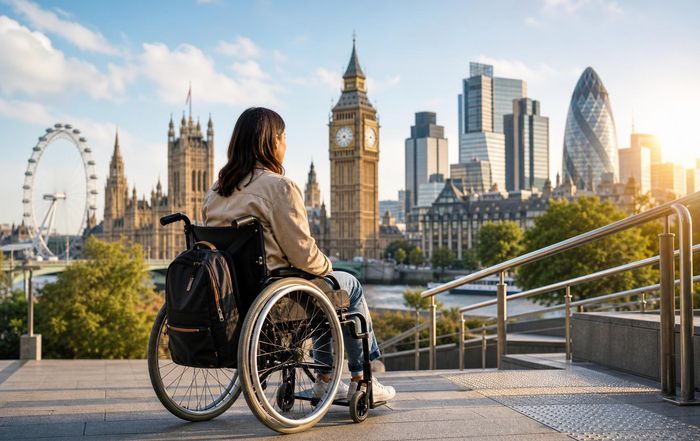
In London, the Transport for London network has made step-free access a central pillar of its modernization plans. An increasing number of Underground and Overground stations offer lifts, level access between trains and platforms, and clearly marked accessible routes, while every London bus is wheelchair-accessible and fitted with ramps. Landmarks such as the British Museum, the Tate Modern, and the National Gallery provide free wheelchairs, step-free entrances, and detailed sensory and mobility information on their websites, allowing travelers to plan their cultural itineraries with confidence. For those interested in the cultural and social dimensions of inclusive travel, WorldsDoor's culture section at worldsdoor.com/culture.html offers context on how cities like London integrate accessibility into their arts and heritage sectors.
In Paris, substantial improvements have been made ahead of recent international events, with a focus on pedestrian areas, accessible buses, and upgraded tram and RER lines. While some older Metro stations remain inaccessible due to structural constraints, the RATP accessibility guide provides updated information on which lines and stations offer lifts, ramps, or level boarding. Major museums such as the Louvre and Musée d'Orsay have prioritized accessible entrances, tactile tours, and services for visitors with visual or hearing impairments, demonstrating how iconic cultural institutions can adapt their spaces without compromising heritage value.
Further north, Stockholm and Copenhagen are frequently cited by accessibility advocates as models of inclusive design in practice. The City of Stockholm highlights its "city for everyone" approach, which includes low-floor buses, accessible metro stations, and thoughtful public space design, while VisitCopenhagen provides clear, practical advice on accessible hotels, attractions, and transport. These Nordic examples align well with the values explored in WorldsDoor's environment and lifestyle coverage at worldsdoor.com/environment.html and worldsdoor.com/lifestyle.html, where sustainability, walkability, and human-centered design are seen as mutually reinforcing goals.
North American Metropolises: Accessibility at Scale
In North America, large-scale urban grids and newer infrastructure have allowed some cities to integrate accessibility more systematically into their transport and public realms, even if gaps and inconsistencies remain. For many travelers, New York City, Toronto, and Vancouver represent compelling examples of how big cities are grappling with both legacy systems and future-proof design.
New York City has long faced criticism for its limited number of accessible subway stations, yet in recent years the Metropolitan Transportation Authority has accelerated station upgrades, adding elevators, tactile warning strips, and improved signage. Almost all city buses are wheelchair-accessible, and services such as Access-A-Ride provide paratransit options for those unable to use fixed-route services. Cultural icons like the Metropolitan Museum of Art, the Museum of Modern Art, and the Lincoln Center maintain robust accessibility programs, ranging from assistive listening devices and captioned performances to accessible seating and guided tours. For readers interested in how major cities balance accessibility with urban density and cultural vibrancy, WorldsDoor's world and society sections at worldsdoor.com/world.html and worldsdoor.com/society.html offer broader perspectives on inclusive urban development.
In Toronto, the Toronto Transit Commission has committed to making all subway stations accessible, with a growing network of elevators, ramps, and accessible streetcars. The city's PATH underground walkway system, a key feature of downtown life, includes multiple accessible entry points, though travelers are advised to consult current maps and signage. Attractions such as the Royal Ontario Museum and the Art Gallery of Ontario provide detailed accessibility information, reflecting a broader Canadian emphasis on inclusion supported by national legislation and human rights frameworks.
On the west coast, Vancouver has earned recognition for its accessible seawall paths, integrated bus and SkyTrain systems, and commitment to universal design. TransLink, the regional transportation authority, outlines services such as low-floor buses, accessible stations, and tactile paving, while tourism resources highlight wheelchair-friendly sections of the seawall, accessible viewpoints in Stanley Park, and inclusive cultural venues. For travelers who value active, outdoor-oriented urban experiences, this combination of natural and built accessibility aligns closely with themes explored in WorldsDoor's travel and health sections at worldsdoor.com/travel.html and worldsdoor.com/health.html.
Asia-Pacific Gateways: Tradition, Innovation, and Inclusion
In the Asia-Pacific region, major cities are blending rapid modernization with long-standing cultural traditions, creating both opportunities and complexities for accessible travel. Governments and city authorities in countries such as Japan, Singapore, South Korea, and Australia have invested heavily in transport and public infrastructure, and this is increasingly reflected in the visitor experience.
In Tokyo, preparations for the 2020 Olympic and Paralympic Games, whose legacy continues to shape the city, drove substantial improvements in accessibility. The Tokyo Metropolitan Government highlights barrier-free initiatives across public transport, including elevators, tactile guidance blocks, and priority seating, while major stations and newer train lines offer level boarding and multilingual signage. Attractions such as the Tokyo National Museum and the Mori Art Museum have introduced step-free access and services for visitors with visual or hearing impairments. Despite these advances, travelers still report variability in smaller stations or older buildings, which is why current, detailed guidance from both official and independent sources remains valuable.
Singapore is often cited as a benchmark for accessible urban design in Asia. The Land Transport Authority notes that all MRT stations and buses are wheelchair-accessible, with lifts, ramps, and priority spaces as standard features. The city's compact size and emphasis on walkable districts make it easier to navigate, while attractions such as Gardens by the Bay and the National Gallery Singapore provide comprehensive accessibility services and information. These developments resonate strongly with the innovation-oriented lens of WorldsDoor's technology and innovation pages at worldsdoor.com/technology.html and worldsdoor.com/innovation.html, where inclusive design is seen as a crucial dimension of smart-city planning.
In Seoul, the Seoul Metropolitan Government has implemented policies to expand barrier-free access to public buildings, sidewalks, and subway stations, and the city's tourism portal offers accessibility information for key attractions such as Gyeongbokgung Palace and Bukchon Hanok Village, noting where ramps, lifts, or alternative routes are available. Meanwhile, in Sydney and Melbourne, Australian accessibility standards and anti-discrimination laws have led to widespread adoption of low-floor trams and buses, accessible ferry terminals, and inclusive cultural venues. The Transport for NSW and Public Transport Victoria websites provide up-to-date details on accessible routes, ensuring that visitors can plan journeys to waterfronts, arts districts, and sports venues with reasonable certainty.
Health, Wellbeing, and the Emotional Dimension of Accessible Travel
Accessible travel is not only a matter of infrastructure and regulation; it is also deeply connected to health, wellbeing, and personal identity. For many travelers with disabilities or chronic conditions, visiting a major world city can be both exhilarating and demanding, requiring careful planning of energy levels, medication schedules, and rest periods. Organizations such as the Mayo Clinic and the Centers for Disease Control and Prevention offer general guidance on managing health while traveling, including recommendations tailored to specific conditions, mobility needs, or assistive devices.
From a psychological perspective, accessible travel can foster autonomy, self-confidence, and social connection, especially when cities are designed to minimize unnecessary barriers and stigmas. Research summarized by institutions such as Harvard Health Publishing indicates that travel and new experiences can support mental health, reduce stress, and strengthen relationships, benefits that are particularly meaningful when they are extended inclusively to people who have historically been excluded from many forms of leisure or adventure. These themes align closely with the holistic perspective found in WorldsDoor's health and lifestyle coverage at worldsdoor.com/health.html and worldsdoor.com/lifestyle.html, where travel is approached as part of a broader journey toward wellbeing and self-discovery.
Inclusive Food and Cultural Experiences in Global Cities
One of the greatest pleasures of exploring major cities is the opportunity to experience diverse food and cultural traditions, and accessible travel increasingly includes attention to these sensory and social dimensions. Many leading restaurants and food markets now incorporate step-free entrances, accessible restrooms, and adaptable seating, while some also provide menus in large print or digital formats. In New York, for example, the NYC & Company tourism site features guidance on accessible dining and nightlife, and similar resources are emerging from organizations such as VisitBritain and Tourism Australia.
Cultural festivals, performing arts venues, and heritage sites are also evolving to welcome a wider range of visitors. Many theaters in London, Toronto, and Sydney now offer captioned or sign-interpreted performances, relaxed performances for neurodivergent audiences, and companion seating options, while museums in cities like Berlin and Amsterdam are developing tactile exhibits and multi-sensory tours. The Smithsonian Institution in Washington, D.C., for instance, provides a detailed accessibility overview across its museums, including services for visitors with cognitive disabilities. For WorldsDoor readers who see food and culture as central to meaningful travel, the site's dedicated sections at worldsdoor.com/food.html and worldsdoor.com/culture.html offer inspiration grounded in respect for local traditions and inclusive experiences.
Technology, Innovation, and the Future of Accessible City Exploration
As of 2026, technology is playing an increasingly central role in bridging remaining gaps in urban accessibility. Navigation apps, digital maps, and crowdsourced platforms now allow travelers to identify step-free routes, accessible entrances, and real-time service disruptions with a level of precision that was previously impossible. Applications such as Google Maps have introduced wheelchair-accessible route options in many cities, while specialized platforms like AccessNow and Wheelmap rely on community input to rate the accessibility of restaurants, shops, and public spaces.
In addition to navigation, assistive technologies such as smartphone-based screen readers, voice assistants, and portable hearing loops are making it easier for travelers to interact with ticket machines, museum exhibits, and digital information displays. Emerging innovations in haptic feedback, augmented reality, and AI-driven translation are being tested in cities like Barcelona, Singapore, and Seoul, often in partnership with universities and research institutes. Readers who follow developments in this area can explore broader discussions of urban technology and ethics through WorldsDoor's technology and ethics sections at worldsdoor.com/technology.html and worldsdoor.com/ethics.html, where questions of data, privacy, and equity are integral to evaluating new tools.
At a policy level, frameworks such as the UN Convention on the Rights of Persons with Disabilities and the Sustainable Development Goals continue to influence how cities think about accessibility, mobility, and inclusion. These global commitments encourage governments and businesses to view accessible travel not as an optional amenity but as a right and a driver of social and economic participation. For travelers and professionals interested in how these principles are applied in practice, WorldsDoor's sustainable and business pages at worldsdoor.com/sustainable.html and worldsdoor.com/business.html provide insight into responsible tourism, inclusive entrepreneurship, and the economic case for universal design.
Practical Considerations and Ethical Reflections for Accessible Travelers
While progress is evident across many major cities, accessible travel still requires careful planning and an honest understanding of potential limitations. Conditions can vary not only between countries but within the same city, and construction, policy changes, or temporary disruptions may affect access. Reputable sources such as national tourism boards, city transport authorities, and established disability organizations generally offer the most reliable, up-to-date information, and travelers are often well served by cross-checking details through more than one channel whenever possible.
Health and travel insurance that explicitly covers mobility aids, medical equipment, and pre-existing conditions can be particularly important, and organizations like Travel Insurance Review and Consumer Reports provide neutral guidance on evaluating policies. Ethical considerations also play a role: many disability advocates emphasize the importance of respecting local contexts, avoiding "inspiration tourism," and recognizing that not all cultures or communities have equal resources to invest in accessibility, even when the desire for inclusion is present. Thoughtful travelers can respond by supporting businesses and institutions that prioritize accessibility, sharing accurate feedback, and engaging with local perspectives in a spirit of humility and learning.
So accessible travel is part of a larger conversation about how societies value diversity and design systems that reflect the full range of human experience. The site's education and world sections at worldsdoor.com/education.html and worldsdoor.com/world.html explore how inclusive thinking in schools, workplaces, and public life can reinforce the progress seen in tourism and urban design, creating virtuous cycles that benefit residents and visitors alike.
An Open Door to the World
Major world cities are complex, layered places, shaped by history, culture, technology, and politics, yet they are increasingly bound together by a shared recognition that accessibility is fundamental to their identity as global centers. From step-free metro stations in London and Singapore to tactile museum exhibits in Washington, D.C., and accessible waterfronts in Vancouver and Sydney, the built environment is slowly but steadily becoming more responsive to diverse needs. Technology, policy, and community advocacy are converging to create new possibilities for exploration, connection, and joy.
For travelers who may once have assumed that city breaks were beyond their reach, this transformation carries profound emotional and symbolic significance. It signals that their presence is anticipated, their experiences valued, and their perspectives essential to the life of the city. For those who travel without disabilities, it offers an opportunity to witness and support a more inclusive vision of urban life, one in which design choices are measured not only in efficiency or aesthetics but in dignity and belonging.
As readers of WorldsDoor consider their next journeys, they can draw on a growing ecosystem of resources, from official transport guides and cultural institution websites to independent accessibility reviews and community-based platforms. By combining practical planning with an openness to learning and dialogue, accessible travelers and their companions can help shape cities that are not only easier to navigate but richer in empathy and shared experience. In this sense, accessible travel is not just about crossing physical thresholds; it is about opening doors-literal and metaphorical-to a world where everyone has a place in the story of urban life.