

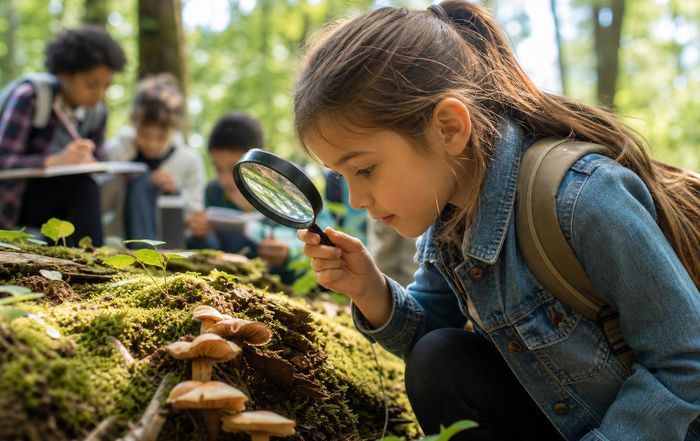
How Outdoor Learning Encourages Student Curiosity
Outdoor learning has moved from the margins of education policy into the mainstream of global discussion, as schools, families and communities search for ways to help young people thrive in an unpredictable world. By taking students beyond the classroom walls and into forests, city streets, school gardens, beaches and community spaces, educators are discovering that curiosity, engagement and resilience can be cultivated in ways that traditional instruction often struggles to achieve. For frequent flying readers of WorldsDoor, who explore how travel, culture, health, environment, technology and society intersect, outdoor learning offers a powerful lens on how the next generation is being prepared to navigate - and care for - an interconnected planet.
The Science of Curiosity and Why It Flourishes Outdoors
Curiosity is increasingly recognised by psychologists and neuroscientists as a core driver of learning rather than a pleasant side effect. Research synthesised by Harvard Graduate School of Education and others describes curiosity as a state of wanting to resolve gaps in knowledge, which activates brain regions linked to reward and memory. When students are genuinely curious, they tend to remember information more deeply, persist longer with challenges and show greater creativity in problem-solving.
Outdoor environments are particularly well suited to triggering this state because they are inherently variable, multi-sensory and unpredictable. A forest trail, an urban park, a riverside path or even a school courtyard constantly changes with light, weather, seasons and human activity. Studies highlighted by University of Cambridge and University College London show that such complex environments invite questioning in ways that static classroom settings often do not, as students notice patterns, anomalies and relationships that prompt spontaneous "why" and "how" questions.
When a group of primary students in Germany compares the shapes of leaves in a city park, or teenagers in Canada test water quality in a local stream, they are not simply following instructions; they are encountering phenomena that resist easy answers. This experience of direct contact with the real world, which cannot be fully controlled or scripted, is one of the reasons outdoor learning has become an important theme in contemporary discussions about education and society on WorldsDoor and beyond.
From Forest Schools to Urban Fieldwork: A Global Movement
The modern outdoor learning movement draws on a long heritage, from early nature education in Scandinavia to experiential philosophies promoted by thinkers such as John Dewey and Maria Montessori. In the Nordic countries, forest schools and "friluftsliv" traditions have long emphasised time in nature as essential to children's development. In the United Kingdom, organisations such as Forest School Association and Learning through Landscapes have helped mainstream outdoor pedagogy, with many schools incorporating regular woodland or park sessions into the curriculum.
In North America, outdoor learning has taken diverse forms. Some schools follow the North American Association for Environmental Education guidelines to embed field-based environmental studies, while others adopt adventure education, outdoor science camps or place-based learning that uses local neighbourhoods as living laboratories. In Asia, initiatives in countries such as Japan, Singapore and South Korea increasingly integrate outdoor components into science, physical education and character education, often supported by ministries of education and local authorities.
The global spread of outdoor learning accelerated following the COVID-19 pandemic, when schools in Europe, North America and parts of Asia and Africa turned to outdoor classes as a safer alternative to crowded indoor spaces. Reports from UNESCO and OECD document how this temporary necessity led many educators to recognise lasting benefits in student engagement, wellbeing and curiosity, prompting some systems to retain or expand outdoor elements even after public-health restrictions eased.
For a travel news platform like WorldsDoor, which connects loyal readers to world developments and innovation, this international convergence is significant: outdoor learning is no longer a niche project but a shared experiment in how education might better reflect the realities of a changing planet.
Curiosity in Action: How Outdoor Learning Changes Student Behaviour
When students move outdoors, their behaviour and participation often shift in ways that are striking to teachers and researchers. Observational studies summarised by Education Endowment Foundation in the UK and by Edutopia in the US have found that students who are quiet or disengaged in classrooms may become more vocal and inquisitive outside, while those who struggle with abstract tasks sometimes excel when problems are embedded in tangible contexts.
In a school garden project in Italy, for example, students who previously showed little interest in science became deeply engaged when asked to design experiments on soil moisture and plant growth, adjusting variables such as shade, watering frequency and soil type. In such settings, curiosity is not limited to verbal questioning; it appears in the way students handle tools, test hypotheses, observe details and compare their findings with peers.
Outdoor learning also tends to encourage collaborative curiosity. When a group of students in Australia conducts an urban biodiversity survey, for instance, they must negotiate which sites to include, how to classify species and how to interpret unexpected findings, such as a rare bird appearing in a city centre. This collective problem-solving fosters social skills and shared ownership of learning, which in turn reinforces motivation.
At WorldsDoor, where travel and culture are central themes, readers can recognise parallels between outdoor learning and the curiosity sparked by exploring a new city or landscape. Just as travellers ask questions about unfamiliar customs, architecture or ecosystems, students outdoors are prompted to inquire about the histories, processes and relationships that shape the places they inhabit.
Health, Wellbeing and the Curiosity-Wellness Connection
Researchers have increasingly linked outdoor learning not only to academic curiosity but also to physical and mental health, which in turn supports sustained engagement with learning. Studies compiled by World Health Organization and Centers for Disease Control and Prevention indicate that regular time outdoors is associated with improved cardiovascular health, reduced stress indicators and better sleep in children and adolescents. Exposure to natural light and moderate physical activity, even in urban green spaces, appear to contribute to these outcomes.
Mental health is particularly relevant in 2026, as many countries report ongoing concerns about youth anxiety, depression and social isolation. Research summarised by American Psychological Association suggests that contact with nature and meaningful outdoor experiences can reduce rumination, enhance mood and improve attention regulation. When students feel calmer and more centred, they are more likely to approach new topics with an open, exploratory mindset rather than defensiveness or fear of failure.
Curiosity itself may function as a protective factor. Studies in positive psychology, including work highlighted by Greater Good Science Center at UC Berkeley, propose that curious individuals often report higher life satisfaction, stronger relationships and a greater sense of purpose. Outdoor learning that nurtures curiosity can therefore contribute to broader wellbeing, aligning with the holistic view of health and lifestyle that WorldsDoor frequently explores.
Cultural and Place-Based Learning: Curiosity about People and Stories
Outdoor learning is not limited to forests, mountains or remote reserves; it also includes city streets, historic neighbourhoods, markets, museums and community spaces. In these environments, curiosity extends beyond ecology and science to encompass culture, history and social dynamics. Place-based education, championed by scholars and practitioners documented through resources such as Promise of Place, encourages students to investigate the stories, traditions and challenges of the places where they live.
In a multicultural city like Toronto or London, students might explore how different immigrant communities have shaped neighbourhoods through food, language, architecture and festivals. Guided walks, interviews with local residents and visits to markets or cultural centres can spark questions about migration, identity and belonging. Such activities resonate with the emphasis on culture and society that shapes much of WorldsDoor's coverage.
Outdoor cultural learning can also support reconciliation and understanding in countries grappling with difficult histories. In Canada, for example, some schools collaborate with Indigenous elders to conduct land-based learning on traditional territories, where students learn about Indigenous knowledge systems, languages and stewardship practices. Similar initiatives exist in New Zealand, South Africa and parts of Scandinavia, often documented by organisations like UNICEF, which highlight how this work can strengthen respect, empathy and a sense of shared responsibility for the future.
By engaging with living communities rather than abstract textbook descriptions, students experience curiosity as a bridge to human connection rather than as a purely academic exercise. They learn to ask questions with humility and to listen to stories that challenge their assumptions, which is vital in an era of polarisation and misinformation.
Environmental Stewardship: Curiosity as a Path to Climate Action
Outdoor learning has become closely intertwined with environmental education and climate literacy, as schools and organisations seek ways to help young people understand and respond to ecological crises. Programmes supported by organisations such as WWF, The Nature Conservancy and Earthwatch often use field experiences to introduce students to local ecosystems, biodiversity and the tangible impacts of climate change, from shifting species ranges to coastal erosion.
When students in the Netherlands monitor water levels and discuss flood management, or when teenagers in Thailand observe coral bleaching on supervised marine excursions, their curiosity about the causes and consequences of environmental change becomes deeply personal. They are no longer reading distant statistics but witnessing transformations in places they can touch and remember. This experiential grounding can make abstract concepts such as carbon cycles, feedback loops or climate justice more accessible and urgent.
Outdoor environmental projects often culminate in student-led initiatives, such as school gardens, habitat restoration, energy audits or waste-reduction campaigns. These activities align with the daily created themes of sustainability and environment that WorldsDoor highlights, showing how curiosity can evolve into agency. Rather than framing young people as passive victims of global crises, outdoor learning invites them to see themselves as investigators and problem-solvers who can contribute to local solutions.
Technology Outdoors: Blending Digital Tools with Real-World Exploration
As digital technology permeates education, some observers worry that screens will further disconnect students from the physical world. However, many outdoor learning initiatives now integrate technology in ways that enhance, rather than replace, direct experience. Mobile devices, sensors and mapping tools can serve as instruments of inquiry, helping students document, analyse and share their discoveries.
Citizen-science platforms such as iNaturalist and eBird allow students to upload observations of plants, insects and birds, contributing to real research databases used by scientists worldwide. Geographic information systems (GIS), promoted in education by organisations like Esri, enable students to create layered maps of environmental or social data, visualising patterns such as air pollution hotspots, access to green spaces or cultural landmarks.
In some schools, students use simple environmental sensors to measure air quality or noise levels in different parts of a city, combining fieldwork with data literacy and coding. These projects illustrate how technology and innovation can support curiosity about real-world systems rather than confining young people to virtual environments. The key, educators emphasise, is to treat devices as tools in service of questions, not as ends in themselves.
Travel, Mobility and Global Perspectives on Outdoor Learning
For many readers of WorldsDoor, travel is a central way of exploring the world, and outdoor learning shares a similar spirit of discovery even when it occurs close to home. School exchanges, field trips and study-abroad programmes often incorporate outdoor components, from walking tours of historic districts to visits to national parks, farms or cultural heritage sites.
Responsible travel organisations and education providers, including those highlighted by National Geographic Education, emphasise that such experiences can cultivate global citizenship when they are designed with respect for local communities and environments. Students who hike in the Alps, snorkel on the Great Barrier Reef or participate in community projects in rural Kenya are exposed to diverse ecosystems and cultures, prompting questions about conservation, equity and interdependence.
Even when international travel is not feasible, virtual exchanges combined with local outdoor projects can foster a sense of global connection. A class in Spain might share data from their school garden with peers in Canada, comparing growing seasons and climate conditions, while students in Singapore and Sweden might collaborate on urban heat-island studies in their respective cities. These initiatives resonate with WorldsDoor's commitment to global perspectives and lifestyle, demonstrating how curiosity about one's immediate surroundings can open doors to understanding distant places.
Equity, Access and Ethical Considerations
While the benefits of outdoor learning are widely acknowledged, access is not evenly distributed. Students in under-resourced schools, dense urban areas or communities facing environmental hazards may have fewer opportunities for safe, high-quality outdoor experiences. Reports from organisations such as Children & Nature Network and Brookings Institution highlight disparities in access to green spaces and outdoor programmes, often aligned with socio-economic and racial inequalities.
Ethical outdoor education therefore requires attention to inclusion, safety and community partnership. Schools and organisations must consider how to provide transportation, equipment and trained staff, as well as how to design experiences that respect cultural norms and local knowledge. In some contexts, outdoor spaces may carry histories of exclusion or trauma, which need to be acknowledged and addressed sensitively.
There is also an ethical dimension to the content of outdoor learning. Educators must balance the urgency of environmental crises with a responsibility not to overwhelm young people with despair. Many programmes now emphasise "active hope," encouraging students to connect their curiosity about problems with examples of solutions, from renewable energy projects to regenerative agriculture. This approach aligns with WorldsDoor's focus on sustainable futures and ethics, which seeks to inspire constructive engagement rather than fatalism.
Integrating Outdoor Learning into Mainstream Education
One of the central challenges for outdoor learning in 2026 is integration: how to move from occasional trips or projects to a sustained, curriculum-aligned practice that benefits all students. Policy discussions documented by Education International and national education ministries indicate growing recognition that outdoor learning can support core objectives in science, literacy, mathematics, arts and social studies, as well as cross-cutting competencies such as collaboration and critical thinking.
Some school systems embed outdoor components into official curricula, specifying learning outcomes related to field investigations, local history or environmental stewardship. Teacher-education programmes increasingly offer modules on outdoor pedagogy, risk management and community partnership, preparing new educators to design and facilitate such experiences. Non-profit organisations and universities provide training, resources and evaluation tools to help schools measure the impact of outdoor initiatives on academic achievement and wellbeing.
For platforms like WorldsDoor, which follow innovation and sustainable education, this trend reflects a broader shift toward experiential, interdisciplinary learning. Outdoor education is not presented as a replacement for indoor classrooms but as a complementary mode that can bring subjects to life, connect them to real-world issues and foster the curiosity that underpins lifelong learning.
How Families and Communities Can Support Outdoor Curiosity
While schools play a crucial role, families and communities are equally important in nurturing children's curiosity outdoors. Parents, caregivers and local organisations can encourage exploration in parks, community gardens, markets, libraries and cultural festivals, even when time or resources for travel are limited. Simple activities such as neighbourhood walks, birdwatching from balconies, or documenting local street art can open conversations about nature, culture and history.
Many cities and regions maintain public resources that support this kind of engagement, including urban trails, nature centres, outdoor museums and community science projects. Information from local authorities, often accessible through municipal websites or national park services such as US National Park Service or Parks Canada, can help families identify safe and educational outdoor spaces. Community organisations, libraries and cultural centres also frequently host guided walks, festivals and workshops that blend outdoor experiences with arts, storytelling and heritage.
By participating in these opportunities, families reinforce the message that curiosity is valued not only in school but as a way of life. This perspective resonates with the holistic vision of food, culture and lifestyle that WorldsDoor promotes, where learning is woven into everyday experiences, from tasting new cuisines at outdoor markets to observing seasonal changes in local landscapes.
Travelling Ahead: Outdoor Learning as a Doorway to a Curious Future
As societies confront complex challenges - climate change, technological disruption, public-health pressures and social fragmentation - the capacity for informed, compassionate curiosity becomes ever more valuable. Outdoor learning, in its many forms across continents and cultures, offers a practical and inspiring way to cultivate this capacity in young people. By stepping beyond classroom walls into forests, streets, shorelines and community spaces, students encounter the richness and complexity of the real world, which no textbook or screen can fully replicate.
For the WorldsDoor kind and travelled community, which is drawn to stories of travel, environment, technology, society and business, outdoor learning reflects a broader aspiration: to live in ways that are attentive, engaged and responsible. Whether a child in Sweden tracking seasonal changes in a nearby forest, a teenager in Brazil mapping urban heat islands, or a class in South Africa interviewing elders about local history, each outdoor learning experience opens a door to new questions and connections.
In this sense, outdoor learning is not simply a pedagogical technique but a way of orienting to the world - one that values observation over assumption, dialogue over division and stewardship over indifference. As more schools, families and communities embrace this approach, the hope is that the next generation will not only acquire knowledge but also develop the curiosity, empathy and courage needed to navigate a changing planet. WorldsDoor will continue to follow and share these stories, inviting readers to step outside, look closely and let the world itself become a teacher.