

How to Build a Balanced Exercise Routine for Lasting Health
Designing a balanced exercise routine has become one of the most powerful ways individuals can protect their physical and mental well-being, extend healthy life expectancy, and maintain independence into older age. By 2026, a substantial body of research from organizations such as the World Health Organization (WHO) and U.S. Centers for Disease Control and Prevention (CDC) has converged on a clear message: long-term health is less about extreme performance and more about consistent, varied movement that fits real lives. For well travelled followers of WorldsDoor, who are curious about how travel, culture, lifestyle, environment, and innovation intersect, exercise is not just a clinical prescription but also a gateway to exploring the world and one's own potential.
This article brings together current evidence, global guidelines, and practical strategies to help people in different countries and life situations build a sustainable, enjoyable routine that supports lasting health rather than short-lived resolutions.
Why a Balanced Routine Matters More Than a Perfect One
Health experts increasingly emphasize that a "balanced" routine is more protective than an "ideal" routine that cannot be maintained. According to the WHO's latest physical activity guidelines, adults should aim for at least 150 to 300 minutes of moderate-intensity aerobic activity per week, or 75 to 150 minutes of vigorous activity, along with muscle-strengthening activities on two or more days and balance or flexibility work, especially for older adults. Readers can explore these recommendations in detail through the WHO guidelines on physical activity.
Research summarized by the CDC shows that regular exercise reduces the risk of heart disease, stroke, type 2 diabetes, certain cancers, depression, and anxiety, while improving sleep, cognitive function, and quality of life. Those interested can review the CDC's overview of the benefits of physical activity. Studies from institutions such as Harvard T.H. Chan School of Public Health have further linked moderate daily movement to increased life expectancy and reduced all-cause mortality, underlining that "some is good, more is better, and consistency is crucial."
For the global audience of WorldsDoor, this balanced approach acknowledges different cultural norms, climates, and urban designs, from walkable European city centers to car-dependent suburbs in North America, and from densely populated Asian metropolises to rural communities in Africa or South America. The core principles stay the same, but how they are expressed can be deeply local and personal, a theme that resonates with the site's unique focus on lifestyle and world perspectives.
The Core Components of a Balanced Exercise Routine
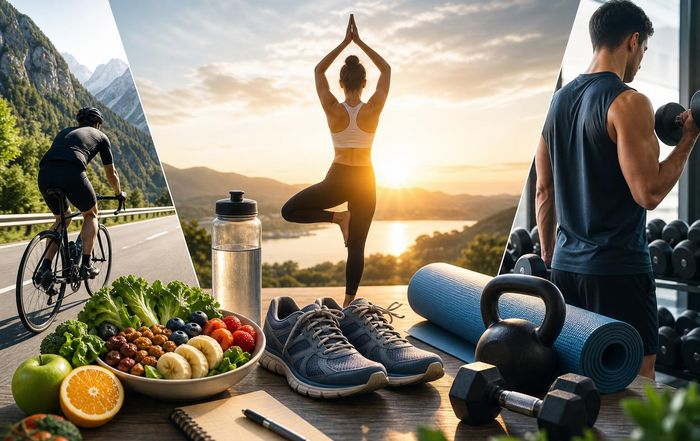
Most public health and sports medicine organizations now agree that a well-rounded routine includes four main components: aerobic (cardio) training, strength training, flexibility and mobility work, and balance or coordination exercises. Each contributes uniquely to long-term health and resilience.
Aerobic Activity: The Foundation of Cardiovascular Health
Aerobic exercise, often called "cardio," is any activity that increases heart rate and breathing for a sustained period. Walking, running, cycling, swimming, dancing, and many sports fall into this category. The American Heart Association (AHA) emphasizes that regular aerobic activity improves cardiovascular fitness, lowers blood pressure, helps regulate blood sugar, and supports healthy cholesterol levels. Readers can learn more about heart-healthy exercise through the AHA's resources.
A balanced routine does not require high-intensity workouts every day. In fact, many studies suggest that moderate-intensity activities-such as brisk walking-can deliver substantial benefits when done consistently. The NHS in the United Kingdom highlights that even short bouts of movement, such as 10-minute brisk walks, can accumulate into meaningful health gains across the week; this is particularly encouraging for busy professionals or parents who cannot commit to long sessions. Details on this cumulative approach are provided via the NHS physical activity guidelines.
For readers who enjoy travel, integrating aerobic activity into exploration can transform the experience: walking tours through historic European districts, cycling along Dutch canals, hiking in Canadian national parks, or swimming in Australia's coastal waters all contribute to weekly cardio targets while deepening cultural and environmental connection. This aligns closely with the spirit of WorldsDoor and its emphasis on active discovery through travel and culture.
Strength Training: Protecting Muscle, Bone, and Metabolism
Strength or resistance training is now recognized as essential rather than optional. According to the American College of Sports Medicine (ACSM), adults should perform muscle-strengthening activities involving major muscle groups at least two days per week, with sufficient intensity to challenge the muscles. Evidence compiled by the National Institutes of Health (NIH) shows that strength training helps preserve lean muscle mass, supports bone density, improves insulin sensitivity, and can enhance mental health and confidence. Those interested can review NIH guidance on strength training for health.
For older adults, maintaining muscle and bone is particularly important in preventing falls, fractures, and functional decline. Programs that combine resistance exercises with balance and mobility work have been linked to improved independence and lower healthcare utilization. The Mayo Clinic offers practical advice on strength training for different fitness levels, emphasizing body-weight exercises, resistance bands, and free weights as accessible options.
Strength training does not require a gym membership. In many parts of Asia, Africa, and Latin America, people use household objects, outdoor fitness parks, or calisthenics in public spaces. In Nordic countries and Germany, community sports clubs and outdoor gyms have increased opportunities for resistance training in nature. This adaptability makes strength work compatible with diverse lifestyles and environments, whether one is living in a compact Tokyo apartment, a New York high-rise, or a rural village in South Africa.
Flexibility and Mobility: Preserving Ease of Movement
Flexibility and mobility exercises help maintain the ability of joints and muscles to move through their full range of motion, reducing stiffness, discomfort, and risk of injury. Practices such as stretching, yoga, Pilates, and mobility drills are supported by research indicating benefits for posture, functional movement, and perceived well-being. The Cleveland Clinic notes that regular stretching can improve performance in physical activities, decrease risk of injuries, and enable joints to move through their full range. The sporty and active community can explore evidence-based stretching recommendations.
In countries such as India, where yoga has deep cultural roots, and in global urban centers from London to Singapore, mind-body practices have become a central part of many people's exercise routines. Clinical studies, including those summarized by Johns Hopkins Medicine, suggest that yoga can help manage stress, support mental health, and improve sleep quality, particularly when combined with other forms of physical activity. Those seeking more detail can learn about yoga's health benefits.
Within a balanced routine, flexibility and mobility work are most effective when integrated both as short daily practices-such as a 5- to 10-minute morning stretch-and as part of warm-up and cool-down around more intense sessions. For wellness loving fans of WorldsDoor interested in health and lifestyle, this dimension of exercise aligns with broader self-care, stress management, and sustainable living goals.
Balance and Coordination: An Often-Overlooked Pillar
Balance and coordination exercises are crucial for preventing falls and maintaining functional independence, especially in midlife and older age, but they also benefit younger adults by improving athletic performance, body awareness, and injury resilience. The National Institute on Aging highlights that balance exercises such as single-leg stands, heel-to-toe walking, tai chi, and certain forms of dance can significantly reduce fall risk in older populations. Their guidance on balance exercises for older adults offers practical examples.
In East Asian countries such as China and South Korea, early-morning group tai chi or qigong in parks has long served as a form of community-based balance and coordination training, blending tradition, social connection, and health promotion. In Scandinavia and parts of Europe, outdoor activities like cross-country skiing, trail running, and hiking on uneven terrain naturally challenge balance and proprioception. For younger audiences in North America and elsewhere, sports such as skateboarding, surfing, and rock climbing provide dynamic ways to train coordination while cultivating a sense of adventure, a theme that resonates strongly with WorldsDoor's travel and society coverage.
Tailoring Exercise to Life Stages and Health Conditions
A truly balanced routine respects the reality that bodies and circumstances change over time. While general guidelines provide a starting point, individualization is essential for safety, motivation, and long-term adherence.
Young Adults: Building Habits and Exploring Movement
For teenagers and young adults, the priority is often to establish a positive relationship with movement rather than chasing extreme performance. The World Health Organization recommends that young people accumulate an average of 60 minutes per day of moderate-to-vigorous physical activity, mainly aerobic, with at least three days per week including vigorous intensity and muscle-strengthening activities. This can be achieved through sports, active commuting, structured workouts, or informal play. Those interested can review WHO guidance for children and adolescents.
Universities and workplaces in countries such as the United States, Canada, the United Kingdom, and Australia increasingly recognize the role of physical activity in mental health, stress management, and academic or professional performance. Campus recreation centers, workplace wellness programs, and community leagues offer opportunities to experiment with different activities, from rowing clubs to dance classes. For readers exploring student life or early-career transitions, integrating movement into daily routines can be a powerful protective factor against burnout and lifestyle-related health issues.
Midlife: Managing Time, Stress, and Emerging Risks
In midlife, competing responsibilities-career demands, caregiving, and financial pressures-often make exercise feel like a luxury. Yet research from organizations such as The Lancet Public Health and European Society of Cardiology has shown that physical activity during these decades is strongly associated with reduced risk of cardiovascular disease, dementia, and premature mortality. Even those who become active later in life can significantly reduce their risk compared with those who remain sedentary, underscoring that it is rarely "too late" to benefit.
In practice, balanced routines for people in their 30s, 40s, and 50s often prioritize efficiency and integration. Short, structured sessions of high-intensity interval training (HIIT), when appropriate and medically safe, can provide cardiovascular benefits in less time, while walking meetings, cycling commutes, or active family outings help embed movement into daily life. The American College of Sports Medicine and other organizations advise that individuals with existing health conditions consult healthcare professionals before beginning vigorous programs, ensuring that routines are safe and adapted to personal risk profiles.
Older Adults: Preserving Independence and Quality of Life
For adults over 60 or 65, the central aim of a balanced routine often shifts toward preserving mobility, independence, and social engagement. The WHO recommends that older adults follow the same general activity targets as younger adults but place particular emphasis on balance and strength training to prevent falls and functional decline. Multicomponent programs that combine aerobic, strength, and balance work have been associated with improved outcomes for older populations across diverse regions.
Examples include community walking groups in the United Kingdom, mall-walking programs in North America, structured exercise classes in Scandinavian senior centers, and intergenerational activity initiatives in Japan and Singapore. The National Health Service and other public health systems provide tailored advice for older adults, with the NHS offering guidance on exercise for seniors. For readers of WorldsDoor considering active retirement lifestyles, these routines can be integrated with travel, cultural volunteering, and nature-based experiences, supporting both physical and social well-being.
Exercise and Chronic Conditions: Moving Safely and Confidently
A growing body of evidence indicates that, for many chronic conditions, appropriately prescribed exercise functions almost like a medication, improving outcomes and quality of life. The American Diabetes Association, for example, recommends regular aerobic and resistance training for people with type 2 diabetes to improve glycemic control and cardiovascular health. Similarly, cardiac rehabilitation programs across Europe, North America, and parts of Asia use structured exercise to help patients recover after heart events and surgeries.
However, safe participation depends on individual circumstances. Reputable health organizations consistently advise that people with heart disease, uncontrolled hypertension, severe arthritis, or other significant conditions consult a healthcare professional before starting or intensifying exercise. The Mayo Clinic, Cleveland Clinic, and national health services offer detailed resources on exercising with specific conditions, helping individuals and families make informed decisions. For those following WorldsDoor's health and innovation sections, advances in digital health tools, remote cardiac rehab, and adaptive fitness programs illustrate how technology is expanding access to tailored movement support.
Building a Routine That Lasts: Motivation, Environment, and Culture
Understanding what to do is only part of the challenge; sustaining a routine requires attention to psychology, environment, and social context. Here, the intersection of exercise with culture, technology, and travel becomes particularly relevant for the WorldsDoor community.
Making Movement Enjoyable and Meaningful
Behavioral science research, including work summarized by Stanford University and University College London, suggests that people are more likely to maintain exercise habits when they find activities enjoyable, socially rewarding, or aligned with personal values rather than driven solely by external pressure or appearance goals. Activities that connect individuals to nature, culture, or community-such as group hikes, dance classes, martial arts, or community sports-often carry intrinsic motivation that endures.
For global citizens and travelers, integrating movement into exploration can transform it from a chore into a source of joy and curiosity. Walking food tours in Italy or Spain, cycling holidays in the Netherlands or Denmark, surf retreats in Portugal or Australia, or trekking adventures in South Africa, Brazil, or New Zealand are examples of experiences that combine fitness with cultural immersion. Loyal readers can explore more such ideas in WorldsDoor's travel and food sections, where local traditions, flavors, and landscapes often go hand in hand with active experiences.
Designing Supportive Environments: Cities, Nature, and Home
The built environment strongly influences how easy or difficult it is to maintain an active lifestyle. The World Economic Forum and urban planning research institutions have highlighted how walkable neighborhoods, safe cycling infrastructure, accessible parks, and public transportation encourage daily movement, while car-centric designs and lack of green space tend to discourage it. Learn more about how cities can promote active living.
Countries such as the Netherlands and Denmark, known for their extensive cycling infrastructure, demonstrate how policy and design can normalize active commuting. In contrast, many rapidly growing cities in Asia, Africa, and South America are grappling with how to balance motorization with health-promoting urban design. For individuals, this broader context suggests practical strategies: choosing housing near parks or paths when possible, advocating for better sidewalks and bike lanes, or creatively using indoor spaces and online platforms when outdoor environments are limited or unsafe.
Nature itself also plays a role. Studies from University of Exeter and other institutions suggest that exercising in natural environments can enhance mood, reduce stress, and increase the likelihood of repeating the activity. This has spurred interest in "green exercise" and "blue exercise" (near water) across Europe, North America, and parts of Asia and Oceania. For readers following WorldsDoor's environment and sustainable content, this connection between personal health and environmental stewardship offers a compelling motivation to protect natural spaces.
Technology, Wearables, and Digital Communities
In 2026, technology continues to reshape how people design and monitor their exercise routines. Wearable devices from companies such as Apple, Garmin, Fitbit (owned by Google), and Samsung track steps, heart rate, sleep, and sometimes more advanced metrics like heart rate variability or VO2 max estimates. While accuracy varies and should not replace medical assessments, these tools can help individuals observe patterns, set realistic goals, and stay accountable. The American Heart Association has discussed both the promise and limitations of wearables in motivating physical activity and supporting heart health.
Digital fitness platforms, from streaming workout services to mobile apps, have expanded access to guided exercise for people who prefer home-based routines or lack local facilities. Research published in journals such as JMIR mHealth and uHealth indicates that app-based interventions can modestly increase physical activity, particularly when they incorporate goal setting, feedback, and social features. However, digital tools are most effective when they complement, rather than replace, intrinsic motivation and real-world support.
Online communities and social media can provide encouragement and shared challenges, but experts also caution against unrealistic comparisons or overemphasis on appearance. For readers of WorldsDoor, whose interests span society, technology, and ethics, the key is to use technology intentionally: selecting platforms that promote inclusivity, evidence-based guidance, and respect for diverse bodies and abilities.
Aligning Exercise with Sustainable and Ethical Living
As conversations about climate change, sustainability, and social justice intensify, many people are looking for ways to align their personal health routines with broader values. Exercise is no exception, and this alignment speaks directly to the mission of WorldsDoor.
Active transportation-walking, cycling, or using public transit combined with walking-reduces carbon emissions while improving individual health. Organizations such as the Intergovernmental Panel on Climate Change (IPCC) and UN Environment Programme (UNEP) have highlighted active mobility as a key co-benefit strategy for climate and health. Individuals who choose to walk or cycle for short trips not only meet part of their weekly exercise goals but also contribute to cleaner air and quieter, more livable cities. Learn more about sustainable mobility strategies.
Community-based exercise programs, from free park runs to neighborhood dance or sports initiatives, can also foster social cohesion and reduce inequities in access to health resources. In many low- and middle-income countries, grassroots organizations are working to create safe, inclusive spaces for women, children, and marginalized groups to be active. These efforts align with the principles of health equity and ethical responsibility that WorldsDoor explores in its ethics and world reporting.
At the same time, the fitness industry itself faces questions about environmental impact, labor practices, and representation. From the materials used in sportswear and equipment to the energy consumption of large fitness centers, consumers are increasingly attentive to how their choices affect the planet and other people. Responsible brands are responding with recycled materials, fair labor commitments, and inclusive marketing, though independent verification and transparency remain important for building trust. Readers interested in these intersections can learn more about sustainable business practices through the United Nations' Sustainable Development resources.
Bringing It All Together: A Personal Journey Through a Global Lens
Building a balanced exercise routine for lasting health is ultimately a personal journey, shaped by one's body, culture, environment, and aspirations. Yet it is also part of a larger global story about how societies value movement, design cities, protect nature, and harness technology. For the diverse audience of WorldsDoor, spanning continents from North America and Europe to Asia, Africa, and South America, this journey offers an opportunity to connect self-care with curiosity about the wider world.
A sustainable routine does not need to be complex. It might involve brisk walks through a local park, simple strength exercises at home twice a week, stretching before bed, and occasional weekend hikes or bike rides. It might take the form of joining a community dance class in Spain, practicing tai chi in a Singapore park, cycling to work in the Netherlands, surfing on Australia's coast, or exploring urban trails in Canada or the United States. What matters most is that movement becomes a regular, rewarding part of life, rather than an occasional obligation.
As research continues to evolve and as cities, technologies, and cultures change, the core message remains remarkably consistent: the human body is designed to move, and when it does so regularly in varied, enjoyable ways, nearly every system benefits. By weaving together science, culture, environment, and personal experience, WorldsDoor aims to support readers in crafting routines that not only extend life but also enrich it-step by step, breath by breath, and journey by journey.