

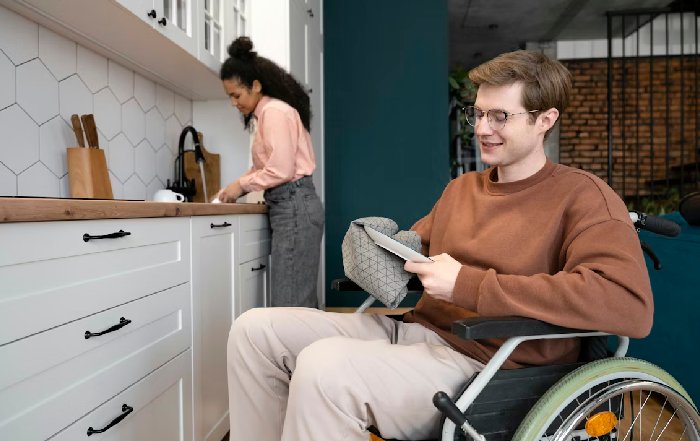
Innovations in Assistive Technology: Redefining Inclusion in a Connected World
A New Era of Assistive Technology
Assistive technology has moved from the margins of specialized healthcare into the mainstream of global innovation, reshaping how societies think about inclusion, productivity, and human potential. What was once a niche segment of medical devices has become a strategic priority for technology leaders, policymakers, and investors across North America, Europe, Asia, and beyond. For Worldsdoor and its readers, whose interests span technology, health, business, and society, the story of assistive technology is no longer simply about tools for people with disabilities; it is about the redesign of products, environments, and digital experiences so that they work better for everyone.
The World Health Organization estimates that over 2.5 billion people need at least one form of assistive product, a figure expected to rise significantly as populations age and chronic conditions increase worldwide. Readers can explore the broader context of global disability and aging through resources from the World Health Organization. This demographic shift has turned accessibility into a fundamental driver of innovation rather than a compliance obligation, and in 2026, the most forward-looking companies understand that designing for difference is a pathway to competitive advantage, social impact, and long-term resilience.
From Medical Devices to Everyday Experiences
Historically, assistive technology was largely confined to clinical environments and specialized suppliers, covering tools such as wheelchairs, hearing aids, and communication devices. While these remain essential, the last decade has seen a profound change: mainstream consumer technology companies, including Apple, Microsoft, Google, and Samsung, now embed accessibility features directly into their flagship devices. Users can explore how these companies describe inclusive design in their own ecosystems by visiting resources such as Apple's accessibility overview or Microsoft's accessibility hub.
This shift from standalone devices to integrated platforms is particularly visible in smartphones, wearables, and smart home systems. Features such as real-time captioning, screen readers, voice control, and haptic feedback are now standard across operating systems, not paid add-ons. In the United States, the Americans with Disabilities Act (ADA) and evolving case law have encouraged companies to expand digital accessibility, while in Europe, the European Accessibility Act has accelerated similar momentum. Interested readers can review how the European Commission explains accessibility requirements to understand the regulatory backdrop shaping design choices.
For Worldsdoor, whose mission is to open doors to global perspectives across culture, world events, and innovation, this integration of assistive features into everyday experiences is a powerful reminder that accessibility is not a separate domain. Instead, it is a lens through which health, travel, education, and business are all being reimagined.
AI and the Rise of Intelligent Assistance
The most transformative force in assistive technology since 2020 has been the rapid maturation of artificial intelligence and machine learning. AI-powered tools now interpret speech, images, gestures, and even environmental context in real time, enabling forms of assistance that were previously impossible or prohibitively expensive. Platforms such as OpenAI, Google DeepMind, and research groups at institutions like MIT and Stanford University have contributed foundational advances in natural language processing and computer vision that underpin many assistive solutions. Readers interested in the broader AI landscape can review the OECD's work on trustworthy AI for a policy-oriented view of these developments.
For people with visual impairments, AI-based applications can describe scenes, read printed text, and recognize faces or objects using a smartphone camera. For those with hearing loss, real-time transcription and translation services convert spoken language into readable text across dozens of languages, dramatically improving participation in meetings, classrooms, and public events. Resources such as Gallaudet University's technology center provide insight into how these tools are being integrated into deaf and hard-of-hearing communities.
The convergence of AI with cloud computing has also allowed assistive services to scale globally. A student in Brazil, a remote worker in Canada, and a retiree in Japan can all access similar AI-driven tools, provided they have connectivity and a compatible device. This global reach aligns closely with Worldsdoor's cross-regional audience, where readers from the United States, United Kingdom, Germany, India, Singapore, and South Africa increasingly expect technology that adapts to their abilities, languages, and cultural contexts.
Wearables, Exoskeletons, and the Augmented Body
Beyond software, the hardware landscape of assistive technology has advanced considerably, particularly in the realm of wearables and exoskeletons. What began as experimental robotics projects in research labs has evolved into commercially viable solutions for rehabilitation, mobility support, and workplace safety. Organizations such as ReWalk Robotics, Ekso Bionics, and CYBERDYNE have developed powered exoskeletons that help individuals with spinal cord injuries stand and walk, while also being tested for use in logistics, manufacturing, and healthcare to reduce strain-related injuries.
Readers can explore how exoskeletons are being regulated and evaluated through guidance from agencies such as the U.S. Food and Drug Administration and research summaries from the National Institutes of Health. In Europe and Asia, universities and startups collaborate to develop lighter, more affordable systems that integrate AI-based gait analysis and personalized rehabilitation plans, illustrating how innovation is spreading across regions from Germany and Sweden to South Korea and Japan.
Wearables have also become more sophisticated, moving beyond basic fitness tracking to provide continuous monitoring of vital signs, movement, and even cognitive patterns. Smartwatches and sensor-embedded clothing can detect falls, seizures, or cardiac irregularities, alert caregivers, and share data with clinicians, contributing to preventive care and independent living. Readers interested in the intersection of health and lifestyle can explore complementary coverage on Worldsdoor's lifestyle section, where the implications of such technologies for everyday routines and wellbeing are examined.
Smart Homes and Ambient Accessibility
As the Internet of Things has matured, homes, offices, and public spaces have become more responsive to the needs of occupants. Voice-activated assistants, smart lighting, automated doors, and connected appliances are now being configured deliberately to support people with mobility, sensory, or cognitive challenges. Companies such as Amazon, Google, and Philips have adapted their smart home ecosystems to include accessibility presets, routines, and integrations with specialized assistive devices.
Urban planners and policymakers in cities from Amsterdam and Singapore to Toronto and Sydney are beginning to view smart infrastructure as a tool for inclusion, not just efficiency. The World Economic Forum and UN-Habitat have both highlighted inclusive smart cities as a priority, emphasizing that digital systems must be designed with disability communities from the outset. This perspective resonates with Worldsdoor's focus on sustainable and ethical innovation, where technology is judged not only by its novelty but also by its contribution to equitable societies.
In practical terms, ambient accessibility means that a person with limited mobility can control their environment through voice or eye tracking, a person with cognitive impairments can receive gentle reminders and prompts to support daily tasks, and visitors to public buildings can receive real-time navigation assistance tailored to their needs. These capabilities are increasingly relevant to aging populations in Europe, North America, and East Asia, where the desire to age in place is reshaping housing, healthcare, and community planning.
Assistive Technology in Education and Work
Education and employment are two domains where assistive technology has perhaps the greatest potential to transform life trajectories. The shift to digital and hybrid learning, accelerated by the COVID-19 pandemic and sustained through 2026, has forced schools and universities to reconsider how accessible their platforms, materials, and teaching methods truly are. Organizations such as UNESCO and UNICEF have emphasized inclusive education as a global priority, and their resources on inclusive education practices provide a valuable framework for understanding the role of technology.
Screen readers, alternative input devices, captioning tools, and adaptive learning platforms are now essential infrastructure rather than optional supports. For students in the United States, the United Kingdom, Canada, and Australia, legal frameworks such as the Individuals with Disabilities Education Act and equivalent policies ensure that educational institutions must provide reasonable accommodations, increasingly delivered through digital means. For readers interested in the broader education landscape, Worldsdoor provides ongoing analysis in its education section, examining how technology can both bridge and widen gaps in opportunity.
In the workplace, assistive tools are reshaping hiring, retention, and productivity strategies. Employers in sectors ranging from finance and technology to hospitality and manufacturing are adopting accessible collaboration platforms, ergonomic tools, and AI-based communication aids. Organizations such as the International Labour Organization and Disability:IN offer guidance on inclusive employment practices, and their resources on disability-inclusive workplaces underscore the business case for accessibility. As remote and hybrid work become entrenched across Europe, North America, and Asia-Pacific, assistive technology is being recognized as a cornerstone of flexible, diverse, and resilient workforces.
Ethics, Data, and Trust in Assistive Innovation
As assistive technology becomes more intelligent, connected, and pervasive, ethical questions move to the forefront. Data collected by wearables, smart home devices, and AI platforms can reveal intimate details about a person's health, behavior, and environment. The challenge for innovators and regulators is to ensure that these data are used to empower individuals rather than to surveil, discriminate, or exploit. Organizations such as the Electronic Frontier Foundation and Access Now have highlighted the risks of intrusive data practices, and readers can explore broader digital rights issues through resources such as Access Now's work on privacy and surveillance.
In 2026, trustworthiness in assistive technology is judged by transparency, user control, and robust security. Developers are increasingly expected to follow privacy-by-design principles, provide clear consent mechanisms, and allow users to access, correct, and delete their data. Regulatory frameworks such as the European Union's General Data Protection Regulation and emerging AI regulations in the EU, United States, and other regions are shaping compliance expectations. The European Data Protection Board and similar bodies offer guidance that is particularly relevant for companies operating across borders.
Ethical considerations also extend to algorithmic bias and representation. If AI systems are trained primarily on data from certain populations, they may perform poorly for others, leading to misrecognition, misdiagnosis, or exclusion. For assistive technology, where errors can have serious consequences, inclusive datasets and participatory design processes are essential. Worldsdoor's coverage of ethics and society consistently emphasizes that technological sophistication must be matched by moral responsibility, especially when serving communities that have historically faced marginalization.
Global Markets, Investment, and Policy Momentum
The economic landscape for assistive technology has changed dramatically as well. Market analysts project sustained double-digit growth in the sector, driven by demographic trends, regulatory pressure, and corporate diversity commitments. Reports from organizations such as McKinsey & Company, Deloitte, and the World Bank highlight the intersection of disability inclusion and economic development, particularly in emerging markets. Readers can review the World Bank's disability inclusion overview to understand how assistive technology fits within broader development strategies.
Governments in regions including the European Union, the United States, Canada, Australia, Japan, and Singapore are funding research, subsidizing assistive devices, and standardizing accessibility requirements for public procurement. These policies create more predictable demand, encouraging startups and established firms to invest in research and development. For businesses, assistive technology is no longer only a corporate social responsibility initiative; it is a growth market with strong alignment to broader trends in aging, digital transformation, and healthcare innovation.
At the same time, there is a growing recognition that affordability and access remain major barriers, particularly in low- and middle-income countries across Africa, South Asia, and parts of Latin America. International NGOs and public-private partnerships are experimenting with new distribution models, open-source designs, and localized manufacturing to reduce costs and adapt products to local contexts. Organizations like CBM Global, Light for the World, and the Global Disability Innovation Hub collaborate with governments and communities to scale solutions, and their work is often highlighted in global forums such as the Global Disability Summit.
Cultural Shifts and the Narrative of Ability
Technology alone cannot transform inclusion without parallel shifts in culture, language, and expectations. Over the past decade, disability advocates, artists, and thought leaders have challenged societies in Europe, North America, Asia, and Africa to rethink assumptions about ability, productivity, and normality. The growing visibility of disabled leaders in politics, business, sports, and the arts has contributed to a more nuanced understanding of disability as a natural part of human diversity rather than a deficit to be hidden or fixed.
Media organizations, including Worldsdoor, play a critical role in shaping this narrative by framing assistive technology not as a story of pity or charity, but as one of innovation, rights, and shared benefit. In the realms of culture and world affairs, coverage that centers lived experience and expertise from disabled communities helps ensure that assistive solutions are not imposed from the outside but co-created with those who use them. International bodies such as the United Nations reinforce this perspective through the Convention on the Rights of Persons with Disabilities, and readers can explore its principles via the UN's disability rights portal.
This cultural evolution is particularly important for younger generations in countries such as the United States, United Kingdom, Germany, India, and Brazil, where digital tools are deeply embedded in daily life. For them, assistive features are not unusual or stigmatizing; they are simply part of how technology works. This normalization has profound implications for how future products, workplaces, and public spaces will be designed, making inclusive design the default rather than the exception.
Sustainability, Circular Design, and Long-Term Impact
As the world grapples with climate change, resource constraints, and widening inequality, the sustainability of assistive technology has come under greater scrutiny. Devices that rely on rare materials, complex supply chains, or short product lifecycles can create environmental burdens and exacerbate e-waste challenges. Organizations such as the Ellen MacArthur Foundation and the United Nations Environment Programme have promoted circular economy principles that are increasingly relevant to medical and assistive devices. Readers can explore how circular design applies to technology through resources such as the Ellen MacArthur Foundation's circular economy overview.
In response, designers and manufacturers are experimenting with modular components, repairable designs, and recyclable materials that extend device lifespans and reduce environmental impact. Open-source hardware initiatives in regions such as Europe, India, and South America are enabling local adaptation and maintenance, lowering costs while building technical capacity. For Worldsdoor, whose coverage of the environment and sustainable innovation emphasizes systemic thinking, assistive technology offers a compelling case study of how social and ecological priorities can be aligned rather than traded off.
Sustainability also encompasses financial and social dimensions. For assistive technology to deliver long-term impact, funding models must ensure that devices are not only purchased but also maintained, upgraded, and supported over time. Insurance systems, public healthcare programs, and philanthropic initiatives in countries such as Canada, France, Sweden, and Japan are exploring new reimbursement models that recognize assistive devices as essential infrastructure for participation, not discretionary extras.
The Role of Worldsdoor in an Accessible Future
As assistive technology continues to evolve today and beyond, Worldsdoor is positioned at a unique intersection of technology, business, health, and society, with a global readership that spans continents and cultures. By curating in-depth analysis, cross-regional perspectives, and stories that highlight both breakthrough innovations and everyday experiences, the platform can help decision-makers, entrepreneurs, policymakers, and citizens understand not only what is possible, but what is responsible and necessary.
For executives considering investments in inclusive products, for educators rethinking digital classrooms, for urban planners designing accessible cities, and for families navigating care and independence, assistive technology is no longer a peripheral concern. It is central to how societies will manage aging populations, labor shortages, global mobility, and digital transformation. By examining these developments through the lenses of ethics, sustainability, and cultural change, Worldsdoor can support readers in making informed choices that align innovation with human dignity.
Ultimately, the future of assistive technology will be measured not just by technical sophistication, but by the extent to which it expands real freedoms: the ability to travel, to learn, to work, to participate in culture, to enjoy food and leisure, and to shape one's own life. As new devices, platforms, and policies emerge across Europe, Asia, Africa, and the Americas, the most meaningful innovations will be those that listen to the people they aim to serve, respect their agency, and recognize that accessibility benefits everyone. In telling that story, Worldsdoor is not merely reporting on change; it is helping to open the door to a more inclusive, connected, and humane world.