

Innovations in Public Transportation Across Asia: A New Mobility Blueprint for the World
Public transportation across Asia has entered a decisive period of reinvention, in which dense urbanization, rapid technological progress, and growing environmental pressures are converging to reshape how hundreds of millions of people move every day. From the fully automated metro lines of Singapore to the high-speed rail corridors of China and Japan, and from integrated mobility platforms in South Korea to experimental electric bus networks in India and Southeast Asia, the region is building what many analysts now regard as a global reference model for urban and intercity mobility. For the readers of Worldsdoor, who follow developments in health, travel, culture, lifestyle, business, technology, environment, and society, these transformations are not abstract infrastructure stories; they are lived experiences that influence how people commute, work, explore, and connect across cities and borders, and they offer practical lessons for policymakers and businesses from the United States, Europe, and beyond who are seeking to modernize their own systems.
Asia's Urbanization Challenge and the Strategic Role of Transit
Asia's transportation renaissance cannot be understood without acknowledging the unprecedented urbanization that has taken place over the past three decades. Cities such as Shanghai, Mumbai, Bangkok, Jakarta, and Ho Chi Minh City have expanded at extraordinary speed, often outpacing the capacity of traditional road networks and leading to chronic congestion, air pollution, and productivity losses. According to data from the World Bank, Asian cities now account for a substantial share of global urban population growth, and this demographic pressure has forced governments and city authorities to view public transportation not merely as a service, but as a strategic lever for economic competitiveness, social inclusion, and environmental resilience. For readers exploring the broader global context of these shifts, the analysis of urban development trends on the Worldsdoor world section provides valuable background on how mobility interacts with wider societal changes.
The strategic importance of public transit in Asia is also reflected in the way it is integrated into national development plans and regional economic corridors. High-capacity metro networks in China, India, and Indonesia, high-speed rail in Japan and South Korea, and bus rapid transit systems in cities across Thailand, Malaysia, and Vietnam are designed not only to move people efficiently, but to underpin housing policies, tourism strategies, trade flows, and labor market integration. As a result, transportation planning increasingly overlaps with issues that readers of Worldsdoor encounter in sections on business, culture, and lifestyle, illustrating how mobility is now embedded in the fabric of everyday life and long-term economic strategy.
High-Speed Rail: Redefining Intercity Connectivity
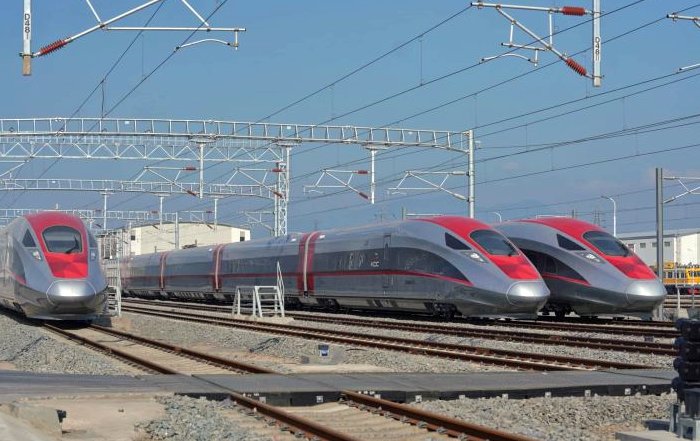
One of the most visible and influential innovations in Asian public transportation has been the rise of high-speed rail. Japan's iconic Shinkansen, launched in the 1960s, set the early benchmark, but the past fifteen years have seen China build the world's largest high-speed rail network, connecting major metropolitan regions with services that rival air travel in speed and reliability. According to data from the International Union of Railways, China's high-speed rail lines now span tens of thousands of kilometers, linking cities such as Beijing, Shanghai, Guangzhou, and Shenzhen, and forming the backbone of a new era of domestic mobility that has reshaped business travel, tourism, and regional development patterns.
These networks have become powerful tools for economic integration, enabling companies in second-tier cities to access markets and talent pools that were previously dominated by coastal hubs, and allowing travelers to choose rail over short-haul flights, reducing both travel stress and carbon emissions. Studies referenced by the International Energy Agency highlight that high-speed rail, when powered by increasingly decarbonized electricity grids, can offer substantial lifecycle emissions advantages compared with aviation, a factor that resonates strongly with the environmental priorities of policymakers in Europe, North America, and Australia who are seeking scalable models for sustainable intercity travel. For Worldsdoor readers interested in how such systems influence tourism and business travel choices, the dedicated travel section offers further perspectives on multimodal journeys that combine rail, local transit, and active transport options.
Beyond China and Japan, countries such as South Korea and Taiwan have built or expanded their own high-speed services, while emerging projects in Thailand, Indonesia, and India point to a future in which large parts of Asia will be connected by fast, reliable rail corridors. These initiatives are not without challenges, including high capital costs, complex land acquisition processes, and the need for long-term ridership to justify investments, yet they signal a strong commitment to rail as a strategic alternative to congested highways and domestic air routes. International financial institutions such as the Asian Development Bank have increasingly supported rail and mass transit projects, recognizing their potential to drive inclusive growth, reduce emissions, and support more balanced regional development.
Metro Systems and Urban Rail: The Backbone of Asian Megacities
If high-speed rail is transforming intercity travel, metro systems and urban rail networks are redefining daily mobility within Asia's megacities. Singapore, Hong Kong, Seoul, Tokyo, and Osaka have long been recognized for efficient, high-frequency metro systems that set global standards in punctuality, cleanliness, and safety. These networks, many of which are documented in detail by organizations such as the International Association of Public Transport, are now being joined by rapidly expanding systems in Beijing, Shanghai, Delhi, Bengaluru, Bangkok, and Jakarta, where new lines are opening almost every year.
A key innovation in these systems lies in their integration with land use planning and real estate development. Hong Kong's MTR, for example, is widely studied for its "rail plus property" model, in which transit-oriented developments provide both ridership and revenue, creating a virtuous cycle that supports network expansion and maintenance. This approach resonates with urban planners worldwide, as it demonstrates how transportation can be financially sustainable while also shaping compact, walkable neighborhoods that reduce car dependency. Professionals following sustainable city design can explore broader frameworks on platforms such as UN-Habitat, which often reference Asian case studies as exemplars of integrated urban mobility.
Metro innovations in Asia also extend to automation, digital ticketing, and passenger experience. Singapore's driverless metro lines, Seoul's advanced fare integration systems, and Tokyo's real-time congestion information exemplify how technology is used to manage high passenger volumes while maintaining service quality. In many cities, contactless smart cards and mobile payment platforms have replaced paper tickets, and journey planning apps provide multimodal options that combine metro, bus, and shared mobility services. These digital layers align closely with the interests of readers who follow emerging mobility technologies in the technology section of Worldsdoor, where discussions about data, artificial intelligence, and user-centric design intersect with practical mobility solutions.
Bus Rapid Transit and the Reinvention of the Urban Bus
While rail systems often capture the most attention, bus networks remain the backbone of public transportation in many Asian cities, especially in rapidly growing urban areas where rail infrastructure is still under development. Over the past decade, Bus Rapid Transit (BRT) has emerged as a cost-effective and flexible solution that can deliver metro-like capacity and speed using dedicated lanes, priority signaling, and high-quality stations. Cities in China, India, Indonesia, and Thailand have deployed BRT systems with varying degrees of success, learning from early models in Latin America while adapting them to local conditions.
Organizations such as the Institute for Transportation and Development Policy have documented how well-designed BRT corridors can significantly reduce travel times, improve air quality, and provide reliable services for lower-income communities that often have limited access to formal transit. In Jakarta, the TransJakarta network has grown into one of the largest BRT systems in the world, while in Ahmedabad and Pune in India, BRT has been integrated into wider urban mobility strategies that include non-motorized transport infrastructure. These developments are particularly relevant for cities in Africa, South America, and South Asia that face similar constraints and are seeking scalable models for inclusive mobility.
The reinvention of bus systems in Asia is also closely tied to the transition toward cleaner propulsion technologies. A growing number of cities, including Shenzhen and Guangzhou, have adopted large fleets of electric buses, supported by domestic manufacturers such as BYD and Yutong, and enabled by national industrial policies that promote electric vehicle adoption. Analyses by the World Resources Institute highlight how these transitions can drastically cut local air pollutants and greenhouse gas emissions, while also stimulating innovation in battery technology, charging infrastructure, and fleet management software. For readers of Worldsdoor who follow environmental and sustainable business issues, the environment section and sustainable section offer broader discussions of how such technological shifts align with global climate goals and corporate responsibility agendas.
Digital Platforms, Integrated Ticketing, and Mobility as a Service
One of the most transformative trends in Asian public transportation has been the rapid emergence of digital mobility platforms that integrate trip planning, ticketing, and payments across multiple modes of transport. In cities such as Seoul, Singapore, and Tokyo, passengers can use a single app or card to access metro lines, buses, suburban rail, and even micro-mobility services such as bike sharing and e-scooters. This integrated approach, often referred to as Mobility as a Service (MaaS), is reshaping user expectations and encouraging a shift away from private car ownership, particularly among younger urban residents in Japan, South Korea, China, and Singapore.
Technology firms and transit agencies are collaborating to build ecosystems in which data sharing and interoperability are central. Research from the OECD and its International Transport Forum emphasizes that such integration can reduce transaction costs, improve network efficiency, and support more personalized mobility options, while also generating valuable anonymized data for planning and service optimization. However, these benefits come with challenges related to data privacy, cybersecurity, and governance, which require robust regulatory frameworks and transparent public-private partnerships.
For a global audience that includes readers in the United States, United Kingdom, Germany, Canada, Australia, and New Zealand, Asia's experience with digital mobility platforms offers important lessons on how to design user-centric systems that are both technologically advanced and socially inclusive. The intersection of digital innovation and mobility aligns closely with the themes covered in Worldsdoor's innovation section, where case studies from Asia can inform ongoing debates about smart cities, platform regulation, and the future of urban services.
Sustainability, Health, and the Human Experience of Transit
Beyond efficiency and technology, innovations in Asian public transportation are increasingly evaluated through the lenses of sustainability, public health, and overall quality of life. The dense, transit-oriented urban forms of cities such as Tokyo, Seoul, and Singapore contribute to lower per-capita transport emissions compared with many car-dependent cities in North America and parts of Europe, and they support more active lifestyles in which walking and cycling are integral parts of daily routines. Health organizations, including the World Health Organization, have underscored the links between public transportation, reduced air pollution, and lower rates of respiratory and cardiovascular diseases, reinforcing the argument that investment in transit is also an investment in population health.
In many Asian cities, transit agencies and urban planners are now prioritizing the passenger experience, recognizing that comfort, accessibility, safety, and inclusiveness are critical to maintaining and increasing ridership. This includes designing stations with barrier-free access for people with disabilities, providing clear multilingual signage for international visitors, enhancing lighting and surveillance for safety, and integrating green spaces and public art to create more pleasant environments. These human-centered design principles resonate strongly with readers who follow health and lifestyle trends, and they connect with broader discussions in the health section and society section of Worldsdoor about how built environments shape well-being and social cohesion.
The COVID-19 pandemic accelerated some of these shifts, prompting transit agencies across Asia, Europe, and North America to rethink ventilation, cleaning protocols, crowd management, and digital communication with passengers. While ridership initially fell sharply, many Asian cities have experienced a robust recovery, supported by strong public confidence in safety measures and the essential nature of transit for everyday life. This experience has influenced global debates on resilience and crisis preparedness, with institutions such as the World Economic Forum highlighting Asian case studies as examples of adaptive governance and rapid operational innovation in the face of unprecedented disruption.
Ethics, Equity, and the Governance of Mobility
The rapid pace of innovation in Asian public transportation also raises important ethical and governance questions that resonate with policymakers and citizens worldwide. Decisions about where to build new lines, how to price services, and which technologies to deploy can have profound implications for social equity, access to opportunities, and the distribution of public resources. In cities where informal settlements and lower-income neighborhoods are located on the periphery, the routing of metro or BRT lines can determine whether residents gain meaningful access to jobs, education, and healthcare, or remain excluded from the benefits of urban growth.
Organizations such as UNESCAP have emphasized the importance of inclusive transport policies that prioritize accessibility for women, older adults, people with disabilities, and marginalized communities, and many Asian cities are beginning to incorporate these principles into their planning frameworks. At the same time, the increasing role of private operators and technology platforms in delivering mobility services raises questions about accountability, transparency, and long-term public interest. For readers of Worldsdoor who explore the ethical dimensions of innovation, the ethics section provides a space to examine how governance models can balance efficiency, profitability, and social justice in the design and operation of public transportation systems.
Data governance is another critical area, as integrated mobility platforms generate vast quantities of information about travel patterns, personal preferences, and location histories. Ensuring that this data is used responsibly, with robust safeguards against misuse and discrimination, is essential to maintaining public trust and preventing new forms of digital exclusion. International guidelines and best practices, such as those discussed by the World Economic Forum's Global Future Council on Mobility, can inform Asian and non-Asian policymakers alike as they navigate the complex trade-offs inherent in data-driven transit systems.
Lessons for the World and the Role of Worldsdoor
For decision-makers and citizens in regions such as North America, Europe, Africa, and South America, the evolution of public transportation in Asia offers a rich source of practical insights and cautionary tales. The region demonstrates that sustained investment, long-term planning, and a willingness to experiment with new technologies can transform mobility systems at scale, yet it also reveals the importance of aligning infrastructure projects with broader social, environmental, and economic objectives. High-speed rail, metro networks, BRT systems, and digital platforms are most effective when they are part of an integrated vision that includes housing, land use, environmental protection, and inclusive economic development.
For a global readership that spans the United States, United Kingdom, Germany, Canada, Australia, France, Italy, Spain, Netherlands, Switzerland, China, Sweden, Norway, Singapore, Denmark, South Korea, Japan, Thailand, Finland, South Africa, Brazil, Malaysia, and New Zealand, Worldsdoor serves as a curated gateway to these complex stories, connecting innovations in Asian public transportation with broader themes in education, food, culture, and global lifestyle trends. By presenting in-depth, cross-disciplinary analysis, Worldsdoor helps readers understand not only the technical aspects of new transit systems, but also their implications for everyday experiences, from the commuter in Tokyo navigating crowded platforms to the entrepreneur in Bengaluru whose business model depends on reliable metro access.
As cities and countries around the world grapple with climate change, demographic shifts, and the digital transformation of daily life, the innovations emerging from Asia's public transportation systems will continue to influence global standards and expectations. International organizations such as the United Nations and the World Bank are increasingly integrating lessons from Asian cities into their guidance on sustainable urban development, while technology firms and infrastructure investors from Europe and North America are forming partnerships with Asian counterparts to co-develop new solutions. In this dynamic landscape, Worldsdoor positions itself as a trusted platform that brings together these diverse perspectives, offering readers a nuanced understanding of how mobility innovations are reshaping not only the way people travel, but the way they live, work, and relate to one another.
Looking Ahead: A Shared Mobility Future
It has become evident that public transportation in Asia is not a finished project, but an evolving ecosystem that will continue to adapt to new technologies, social expectations, and environmental constraints. Autonomous vehicles, advanced traffic management systems, hydrogen-powered trains and buses, and deeper integration between freight and passenger networks are already being tested or deployed in various contexts, often with support from research institutions and industry consortia documented by organizations such as the International Transport Forum. At the same time, societal debates about privacy, labor impacts, and the right to the city will shape how these technologies are governed and who benefits from them.
For global readers following these developments through Worldsdoor global news, the story of public transportation in Asia illustrates a broader narrative about innovation, resilience, and shared responsibility. Mobility is no longer a purely technical issue; it is a central component of sustainable development, public health, cultural exchange, and economic opportunity. By engaging with these themes across sections dedicated to business, technology, environment, ethics, and society, Worldsdoor invites its audience to see public transportation not simply as a means of getting from one point to another, but as a foundational element of a more connected, equitable, and sustainable world.