

Opening New Doors: Sustainable Architecture's Global Transformation
Sustainable architecture in 2026 stands at the heart of global economic, social, and environmental strategy, and this shift is captured with particular clarity through the editorial lens of WorldsDoor. As a platform that interweaves business, technology, environment, culture, and lifestyle, WorldsDoor has evolved into a trusted hub for understanding how sustainable architecture is reshaping cities, communities, and industries across continents. What began as a focus on energy-efficient buildings has matured into a comprehensive reimagining of how people live, work, learn, travel, and eat, with architecture emerging as a visible and measurable expression of experience, expertise, authoritativeness, and trustworthiness in a rapidly changing world.
The Global Imperative Behind Sustainable Architecture
The momentum behind sustainable architecture in 2026 is inseparable from the broader climate and resource crisis. Repeated assessments from the Intergovernmental Panel on Climate Change (IPCC), accessible through the IPCC reports, underscore that buildings and construction account for a significant share of global greenhouse gas emissions and resource consumption, forcing policymakers and businesses to reconsider the fundamentals of how the built environment is planned, financed, and managed. In parallel, the United Nations climate agenda, outlined on the UN climate portal, has framed the coming decade as decisive for keeping global warming within manageable limits, placing unprecedented scrutiny on building performance, land use, and urban form.
Major economies such as the United States, United Kingdom, Germany, China, Japan, Canada, and Australia are tightening building codes, mandating energy disclosure for large properties, and introducing carbon pricing mechanisms that directly affect construction and real estate. The Paris Agreement continues to serve as a global reference point, while national net-zero commitments in Europe, Asia, and North America are increasingly backed by legally binding frameworks. Organizations like the World Green Building Council, which maintains a global network of councils and case studies on the WorldGBC website, have become authoritative voices in setting benchmarks for low-carbon, healthy buildings. For WorldsDoor readers from North America, Europe, Asia, Africa, and South America, these developments are not abstract policy shifts but tangible signals that architecture is now central to climate responsibility, social equity, and long-term economic value.
Beyond Efficiency: The Rise of Regenerative and Climate-Positive Design
While the early wave of green buildings in the 2000s and 2010s focused on reducing energy consumption and achieving certifications such as LEED or BREEAM, 2026 is defined by a more ambitious aspiration: regenerative design. Under this paradigm, buildings are designed to restore ecosystems, generate more renewable energy than they consume, manage water in closed loops, and contribute positively to community health and biodiversity. The Living Building Challenge, administered by the International Living Future Institute, remains one of the most demanding frameworks for such projects, and professionals regularly consult the Living Future Institute resources to understand performance requirements and real-world precedents.
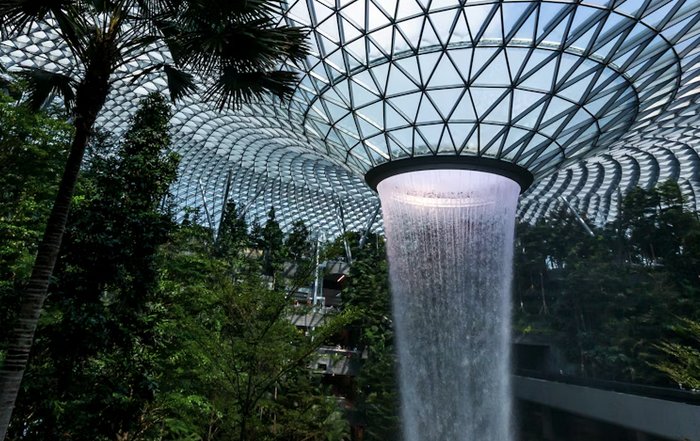
Across Scandinavia, particularly in Norway, Sweden, and Denmark, energy-positive buildings and climate-resilient districts integrate high-performance envelopes, on-site renewables, district heating, and nature-based solutions such as green roofs and restored wetlands that mitigate flooding and urban heat. In high-density hubs like Singapore, Seoul, Tokyo, and Hong Kong, sky gardens, vertical forests, and integrated water management systems blur the lines between buildings and landscapes, showing how compact cities can still support ecological function. For a global audience that follows innovation and sustainable development through WorldsDoor, these projects highlight not only technical excellence but a deeper cultural shift toward coexisting with natural systems rather than merely exploiting them.
Materials, Embodied Carbon, and the Circular Construction Revolution
The conversation around sustainable architecture in 2026 has expanded beyond operational energy to encompass embodied carbon and material circularity. Engineered timber has moved from novelty to mainstream in markets as diverse as the United States, Canada, Germany, Austria, Japan, and Australia, where cross-laminated timber (CLT) and glued laminated timber (glulam) are used in mid- and high-rise structures that store carbon and reduce construction time. Technical guidance from organizations such as WoodWorks in North America, available via WoodWorks resources, has helped accelerate adoption by providing engineering support and documented case studies.
At the same time, bio-based and low-carbon materials-ranging from hempcrete and straw-based panels to mycelium composites and recycled aggregates-are moving from experimental prototypes to commercial projects in France, Netherlands, Italy, Spain, and United Kingdom. This shift is reinforced by the rise of circular economy principles, championed by the Ellen MacArthur Foundation, whose analyses and frameworks on the Ellen MacArthur Foundation website have become essential references for architects, developers, and policymakers seeking to reduce waste and design for disassembly. For WorldsDoor readers engaged with environment, business, and ethics, the materials revolution is understood not only as a technical response to climate targets but as an ethical and strategic choice that affects supply chain resilience, local employment, and resource sovereignty in regions from Europe and Asia to Africa and South America.
Smart Buildings, Digital Twins, and Data-Driven Performance
The convergence of sustainable architecture with digital technology has accelerated markedly by 2026. Buildings are increasingly embedded with networks of sensors, smart meters, and IoT devices that feed into cloud-based platforms and digital twins, enabling real-time monitoring, predictive maintenance, and continuous optimization of energy, water, and indoor environmental quality. In innovation-driven markets such as the United States, United Kingdom, Germany, Singapore, South Korea, and Japan, large commercial portfolios and public buildings are now managed as dynamic assets that respond to occupancy patterns, weather forecasts, and grid signals rather than as static structures.
Authoritative analyses from the International Energy Agency (IEA), accessible through the IEA buildings and efficiency pages, demonstrate how digitalization can unlock deep energy savings and support the integration of variable renewable energy into national grids. For WorldsDoor, which regularly explores the intersection of technology and society, smart buildings are portrayed not simply as gadgets-laden showcases, but as part of a broader shift toward evidence-based decision-making, where transparent data underpins claims of sustainability performance and fosters trust among tenants, investors, and regulators.
Urban Regeneration, Adaptive Reuse, and the 15-Minute City in Practice
In 2026, sustainable architecture is as much about reimagining existing urban fabric as it is about new construction. Many cities in Europe, North America, and parts of Asia-Pacific face aging building stock, shifting work patterns, and the legacy of car-centric planning, which together create both challenges and opportunities for regeneration. Adaptive reuse-transforming obsolete offices, factories, and retail centers into mixed-use, energy-efficient, and socially inclusive spaces-has become a cornerstone of urban sustainability strategies in cities such as London, Berlin, Barcelona, Amsterdam, Toronto, New York, and Melbourne.
The 15-minute city concept, first popularized in Paris and now influencing planning in Spain, Italy, China, Brazil, and Mexico, emphasizes neighborhoods where most daily needs-work, education, healthcare, food, and leisure-are reachable by foot or bicycle within a short time. Networks like C40 Cities, whose knowledge hub and case studies can be explored on the C40 Cities website, provide detailed documentation of how mayors and planners are implementing these ideas to reduce car dependency, cut emissions, and enhance social cohesion. Through its world and travel coverage, WorldsDoor presents these urban experiments as lived experiences, showing readers how redesigned streetscapes, revitalized public spaces, and adaptive reuse projects are changing the way residents and visitors move through and feel about their cities.
Health, Well-Being, and Human-Centered Building Design
The lessons of the COVID-19 pandemic continue to shape architectural priorities in 2026, with health and well-being now integral to the definition of a sustainable building. Certifications such as the WELL Building Standard and research from the Harvard T.H. Chan School of Public Health, particularly the Healthy Buildings program, have highlighted the profound impact of indoor air quality, ventilation rates, daylight, acoustics, and biophilic design on cognitive performance, productivity, and mental health. This evidence base has strengthened the business case for human-centered design in offices, schools, hospitals, and homes from New York, San Francisco, and Chicago to London, Zurich, Singapore, Sydney, and Johannesburg.
Architects are now expected to integrate strategies such as operable windows, low-emission materials, generous daylighting, access to nature, and flexible layouts that accommodate hybrid work and evolving family structures. In Australia, New Zealand, Canada, and South Africa, growing recognition of Indigenous knowledge systems has added further depth to design approaches that emphasize connection to land, community, and cultural continuity. For readers exploring health and lifestyle content on WorldsDoor, sustainable architecture is therefore presented as a direct contributor to everyday quality of life, bridging scientific evidence with lived experience in homes, workplaces, schools, and public spaces.
Policy, Finance, and the Maturing Business Case for Green Buildings
By 2026, the business rationale for sustainable architecture has matured from a reputational advantage to a core element of risk management and value creation. Governments around the world are tightening regulations through mandatory energy performance standards, whole-life carbon assessments, and disclosure requirements that affect how buildings are financed, valued, and insured. In the European Union, the European Green Deal and the Energy Performance of Buildings Directive continue to drive deep renovation strategies across member states such as Germany, France, Italy, Spain, Netherlands, Sweden, and Denmark, with updated guidance available via the European Commission's energy pages.
Financial markets have responded with a rapid expansion of green bonds, sustainability-linked loans, and real estate funds that prioritize assets aligned with environmental, social, and governance (ESG) criteria. Frameworks developed by organizations such as the Global Reporting Initiative (GRI) and the Task Force on Climate-related Financial Disclosures (TCFD), which can be explored through the Global Reporting Initiative website, provide standardized approaches for measuring and communicating climate-related risks and opportunities in property portfolios. For the business-oriented readership of WorldsDoor, these shifts affirm that sustainable architecture is no longer a discretionary upgrade but a central expectation of regulators, tenants, and investors in markets from United States and Canada to Brazil, South Africa, Malaysia, Singapore, and New Zealand.
Education, Skills, and Cross-Disciplinary Expertise
The rapid transformation of architecture, engineering, and construction is reshaping educational pathways and professional development worldwide. Leading universities in United States, United Kingdom, Germany, Netherlands, Switzerland, Singapore, Japan, and China have updated curricula to integrate climate science, building physics, digital modeling, lifecycle assessment, and social equity into architectural and urban design programs. Institutions such as Massachusetts Institute of Technology (MIT) and ETH Zurich are recognized as authorities in advanced materials, computational design, and resilient urban systems, and their research outputs, accessible through platforms like MIT Architecture, influence practitioners well beyond academia.
Continuous learning has become essential for professionals navigating evolving standards, technologies, and expectations. Online courses, professional certifications, and interdisciplinary collaborations between architects, engineers, data scientists, sociologists, and public health experts are increasingly common, reflecting the complexity of designing truly sustainable environments. Positioned at the intersection of education and innovation, WorldsDoor serves as a bridge between cutting-edge research and practical application, translating technical advances into accessible insights for decision-makers in real estate, finance, public policy, and community leadership.
Culture, Ethics, and Social Equity in the Built Environment
Sustainable architecture in 2026 is understood as inherently cultural and ethical, not merely technical. In Africa, South America, and parts of Asia, rapid urbanization and the growth of informal settlements present distinct challenges that cannot be addressed solely by importing solutions from Europe or North America. Architects and planners working in cities are experimenting with community-driven design, incremental housing models, and climate-adaptive strategies that respect local traditions, resource constraints, and social realities. Organizations such as UN-Habitat, whose guidance and case studies are available via the UN-Habitat website, provide authoritative frameworks for inclusive and sustainable urban development in diverse contexts.
Ethical questions also arise in mature markets, where green redevelopment can trigger gentrification and displacement if not carefully managed. The most respected practitioners and organizations now recognize that environmental performance must be aligned with social justice, cultural preservation, and participatory processes that give voice to residents and local businesses. Through its coverage of ethics, society, and world issues, WorldsDoor emphasizes that trust in sustainable architecture is earned not only through technical credentials and certifications but through transparent engagement, fair outcomes, and respect for the histories and identities embedded in places.
Food, Urban Agriculture, and Integrated Ecological Systems
Another defining dimension of sustainable architecture's evolution involves integrating food systems and ecological functions into buildings and urban districts. Rooftop farms in New York, London, and Toronto, vertical farming projects in Singapore, Tokyo, and Shanghai, and community gardens in cities across Europe, North America, and Asia-Pacific are demonstrating how architecture can support local food production, reduce supply-chain emissions, and create new educational and economic opportunities. The Food and Agriculture Organization (FAO) of the United Nations has documented the potential of urban agriculture and circular food systems, and readers can learn more about sustainable food systems in the context of climate resilience and urban planning.
For WorldsDoor, which connects themes of food, environment, and lifestyle, these integrated projects illustrate how buildings can function as active nodes in broader ecological and social networks. Green roofs that support pollinators, water-sensitive landscapes that manage stormwater, and composting systems that close nutrient loops are increasingly seen in mixed-use developments from Netherlands and Switzerland to United States, Brazil, and Thailand, reinforcing the notion that sustainable architecture extends beyond energy metrics to encompass biodiversity, diet, and community interaction.
WorldsDoor's Role in a Connected, Sustainable Architectural Future
As sustainable architecture continues to evolve in 2026, platforms capable of synthesizing technical expertise, cultural insight, and global perspective are essential. WorldsDoor occupies this role by offering its international readership-from United States, United Kingdom, Germany, Canada, and Australia to France, Italy, Spain, Netherlands, Switzerland, China, Sweden, Norway, Singapore, South Korea, Japan, Thailand, South Africa, Brazil, Malaysia, and New Zealand-a coherent narrative of how architecture intersects with health, travel, culture, lifestyle, business, technology, environment, education, and food. Through its homepage and dedicated sections on sustainable futures, innovation, and business, WorldsDoor curates stories and analyses that foreground experience, expertise, authoritativeness, and trust.
The buildings and cities showcased across WorldsDoor's coverage are not presented as isolated icons, but as tangible manifestations of broader societal values and strategic choices. Whether examining a timber high-rise in Vancouver, a net-positive district in Copenhagen, an adaptive reuse project in Berlin, a climate-resilient waterfront in Singapore, or a community-led housing initiative in Cape Town, the platform traces the connections between design decisions, policy frameworks, financial instruments, cultural narratives, and everyday human experience. In doing so, it helps readers-from executives and policymakers to educators, students, and travelers-understand how their own decisions and expectations shape the future of the built environment.
Looking ahead from 2026, sustainable architecture appears less as a finished destination and more as an ongoing, collaborative project that will continue to evolve with advances in science, technology, and social understanding. Through rigorous attention to credible sources, a commitment to cross-disciplinary dialogue, and a focus on the lived realities of communities worldwide, WorldsDoor positions itself not merely as an observer of this transformation but as an active participant in opening new doors toward healthier, more resilient, and more equitable places to live, work, and explore.