

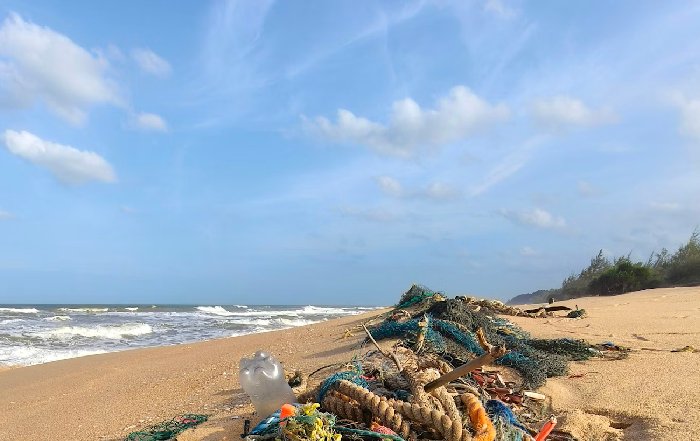
Ocean Plastic Cleanup Technologies: Innovation, Responsibility, and the Future of a Cleaner Blue Planet
Opening the World's Door to a New Ocean Era
Ocean plastic pollution has moved from being a distant environmental concern to a central test of global responsibility, innovation, and governance, and for WorldsDoor, whose readers are in business, technology, lifestyle, health, and culture across continents, the story of ocean plastic cleanup technologies is not simply a tale of engineering ingenuity but a window into how societies choose to balance economic growth, ethical responsibility, and long-term planetary health. From the coasts of the United States and United Kingdom to the archipelagos of Japan and Indonesia, and from bustling ports in Germany, Singapore, and Brazil to fragile ecosystems in South Africa and the Arctic, the technologies that seek to remove plastic from oceans, rivers, and coastlines are reshaping how governments, companies, and communities understand their role in the global commons, even as they reveal the limits of technology when decoupled from systemic change.
Readers who follow WorldsDoor's coverage of world affairs, technology, and sustainability will recognize ocean plastic as a cross-cutting issue that touches public health, global trade, consumer behavior, and corporate strategy, and increasingly, it is a barometer of Experience, Expertise, Authoritativeness, and Trustworthiness among institutions that claim to lead on environmental issues. The rise of ocean cleanup technologies therefore deserves to be examined not only as a series of technical solutions, but as an evolving ecosystem of ideas, actors, and incentives that will determine whether the world can transition from a throwaway culture to a regenerative, circular, and ethically grounded global economy.
The Scale of the Problem: Why Cleanup Technologies Matter, But Are Not Enough
Research from organizations such as UNEP and OECD has made it clear that millions of tonnes of plastic enter the oceans each year, with projections suggesting that without systemic intervention, plastic pollution could nearly triple in coming decades, and while readers can explore broader environmental context in WorldsDoor's environment section, the specific dynamics of ocean plastic demand special attention because of the complex way plastics interact with marine ecosystems, food chains, and human health. Microplastics and nanoplastics have now been detected from the depths of the Pacific Ocean to the ice of the Arctic, and from seafood markets in China, Spain, and Italy to tap water in North America and Europe, raising questions about long-term effects that scientists are only beginning to understand; institutions such as the World Health Organization and European Environment Agency continue to investigate potential links to inflammation, endocrine disruption, and other health risks, while platforms like WorldsDoor help connect these findings to everyday consumer and policy decisions.
The sheer volume and dispersion of plastic make cleanup technologies inherently partial: even the most ambitious systems now operating in the Great Pacific Garbage Patch or in polluted rivers in Asia and Africa can only remove a fraction of the total load, and studies from bodies such as the Ellen MacArthur Foundation and World Economic Forum repeatedly emphasize that without substantial reduction at source-through design, regulation, and behavior change-cleanup efforts risk becoming symbolic gestures rather than transformative solutions. Yet this does not diminish their importance; instead, it places them within a broader strategy where ocean plastic cleanup technologies serve as highly visible catalysts for public awareness, as testbeds for new materials and business models, and as early exemplars of the kind of cross-border collaboration that will be required for any serious attempt to restore marine health.
From Boom to Blueprint: The Evolution of Ocean Cleanup Technologies
The rapid evolution of ocean plastic cleanup technologies over the past decade reflects a convergence of engineering, data science, materials research, and social entrepreneurship, with early prototypes giving way to more sophisticated, data-driven systems that aim to operate safely, efficiently, and at scale. High-profile initiatives such as The Ocean Cleanup, founded by Boyan Slat, have captured public imagination with large-scale systems designed to concentrate and extract floating plastic from major gyres, while also deploying river interception technologies in countries such as Malaysia, Vietnam, and India; these efforts, while sometimes controversial, have pushed the field toward more rigorous measurement, environmental impact assessment, and iterative design.
At the same time, numerous smaller companies, research consortia, and non-governmental organizations-from Surfrider Foundation and Ocean Conservancy to regional innovators in Australia, Canada, and Norway-have experimented with localized solutions ranging from harbor skimmers and trash traps to AI-guided drones and autonomous surface vessels. Readers interested in the broader innovation landscape can explore WorldsDoor's innovation coverage, which frequently highlights how emerging technologies move from proof-of-concept to mainstream adoption, often revealing that the most impactful solutions are not always the most spectacular, but those that integrate seamlessly into existing infrastructure and governance structures, and that can be replicated across diverse cultural and regulatory contexts.
River Interceptors and Coastal Barriers: Tackling Plastic Before It Reaches the Sea
One of the clearest lessons emerging from recent research is that preventing plastic from reaching the ocean is significantly more efficient than attempting to remove it once dispersed across vast marine areas, which is why river-based and nearshore interception technologies have become a central focus for both public and private actors. Systems such as floating barriers, conveyor-based trash traps, and strategically placed booms are now being deployed in major rivers including the Yangtze, Ganges, and Mississippi, often supported by partnerships between municipal authorities, global companies, and environmental organizations that recognize the business and reputational risks of unmanaged plastic leakage.
In Europe, initiatives supported by the European Commission and national governments in Germany, France, Netherlands, and Denmark are testing how river interception can be integrated with advanced waste sorting and recycling facilities, while in North America, ports and coastal cities are adopting harbor skimming technologies that capture floating debris before it drifts offshore. Interested readers can explore how such approaches intersect with broader urban lifestyle and sustainability trends, where city planners, entrepreneurs, and citizens increasingly view clean waterways as indicators of both environmental quality and economic vitality, influencing everything from tourism and real estate values to public health and recreational culture.
Robotics, Drones, and AI: The Digital Transformation of Ocean Cleanup
The integration of robotics, autonomous systems, and artificial intelligence has begun to redefine what is possible in monitoring and removing marine plastic, allowing for continuous, data-rich operations that are less dependent on human crews and can function in hazardous or remote environments. Autonomous surface vessels equipped with cameras, sensors, and AI algorithms can now identify and collect floating debris, optimizing their routes based on real-time data and long-term modeling, while aerial drones and satellite imagery from agencies such as NASA and ESA provide increasingly accurate maps of plastic accumulation zones, enabling more targeted deployment of cleanup resources.
In Asia-Pacific, where coastal megacities in China, Japan, South Korea, Thailand, and Australia face intense plastic pressures, governments and companies are piloting robotic systems that can navigate crowded harbors and complex river deltas, often in collaboration with research institutions and technology partners that see ocean cleanup as a proving ground for broader maritime autonomy. For readers tracking the intersection of digital transformation and environmental action, WorldsDoor's technology insights offer context on how AI and robotics, when combined with ethical governance and robust data standards, can enhance the transparency, efficiency, and accountability of cleanup programs, while also raising questions about data ownership, algorithmic bias, and equitable access to technology.
Materials, Sorting, and Advanced Recycling: Turning Ocean Plastic into Value
A critical challenge for ocean plastic cleanup technologies is not just collecting debris, but managing what happens after retrieval, since much of the material is degraded, mixed, and contaminated, making conventional recycling difficult and often uneconomic. This has spurred a wave of innovation in materials science and advanced recycling, including chemical recycling, depolymerization, and solvent-based purification techniques that seek to convert low-quality plastic waste into feedstocks for new materials, fuels, or specialty chemicals; companies in Switzerland, Netherlands, United States, and Japan have been particularly active in this space, working alongside multinationals in packaging, textiles, and consumer goods that are under pressure to demonstrate credible circularity strategies.
Some brands have launched high-profile product lines using "ocean plastic" or "ocean-bound plastic" in apparel, footwear, and packaging, often in partnership with organizations like Parley for the Oceans, but scrutiny from consumer advocates and regulators in Europe, Canada, and Australia has highlighted the need for rigorous traceability and clear definitions to avoid misleading claims. For business leaders and sustainability professionals, the key question is how to integrate recovered plastics into supply chains in ways that genuinely reduce virgin plastic production and environmental impact, which aligns closely with themes explored in WorldsDoor's business coverage, where circular economy models are increasingly framed as strategic levers for competitiveness, innovation, and risk management rather than mere corporate social responsibility initiatives.
Health, Food, and Society: Why Ocean Cleanup Is a Human Story
While much attention is directed toward the technical aspects of ocean plastic cleanup, the deeper significance of these efforts lies in their connection to human health, food security, and social equity, since marine plastic pollution does not distribute its harms evenly across populations or regions. Coastal communities in Southeast Asia, West Africa, and parts of South America often face the dual burden of being located downstream of global supply chains while lacking robust waste management infrastructure, meaning that plastic accumulates on beaches, in mangroves, and in nearshore fisheries that support local livelihoods; this reality has prompted partnerships between international organizations, local governments, and community groups to combine cleanup technologies with education, job creation, and infrastructure investment.
The presence of microplastics in seafood and salt, documented by research institutions and public health agencies, adds another dimension, as consumers in Europe, North America, and Asia become increasingly aware that the health of oceans is directly tied to the quality and safety of their diets; readers can explore related perspectives in WorldsDoor's health and food sections, where nutrition, environmental exposure, and lifestyle choices are examined as interconnected systems. In this context, ocean cleanup technologies serve not only as environmental tools but as instruments of social justice, helping to restore ecosystems that are essential for subsistence fishing, tourism, and cultural identity, particularly in small island developing states and Indigenous coastal communities whose voices have historically been underrepresented in global environmental governance.
Governance, Ethics, and the Politics of Ocean Cleanup
The deployment of large-scale ocean cleanup technologies inevitably raises governance and ethical questions, as no single nation owns the high seas, yet all are implicated in both the causes and consequences of plastic pollution. International frameworks such as the United Nations Convention on the Law of the Sea and ongoing negotiations toward a global plastics treaty, supported by entities like UNEP, are beginning to clarify responsibilities around plastic production, waste management, and transboundary pollution, but the rapid emergence of new technologies often outpaces regulatory adaptation, creating gray areas around liability, environmental impact, and data sharing.
Ethical debates also arise around the potential unintended consequences of large cleanup systems, including risks to marine life, interference with shipping routes, or the displacement of responsibility from producers and regulators to technologists and philanthropists; critics argue that an overemphasis on cleanup may enable "greenwashing" if companies use sponsorships to deflect attention from continued high levels of single-use plastic production. For readers interested in how ethics and governance shape technological futures, WorldsDoor's ethics and society sections provide a broader lens on how environmental innovations intersect with power, accountability, and public trust, reminding decision-makers that legitimacy depends not only on technical performance but on transparent, inclusive, and equitable processes.
Regional Perspectives: Different Oceans, Different Realities
Although ocean plastic is a global issue, regional contexts in North America, Europe, Asia, Africa, and South America shape both the nature of the problem and the types of technologies that are most viable and impactful. In the United States and Canada, relatively advanced waste management systems coexist with high per-capita plastic consumption, leading to a focus on upstream measures such as extended producer responsibility, packaging redesign, and bans on certain single-use items, complemented by targeted cleanup technologies in rivers like the Anacostia and Los Angeles River and along heavily used coastlines. In Europe, the European Green Deal and related directives have pushed companies toward circularity and recyclability, while coastal nations such as Netherlands, Norway, and Sweden invest in both marine litter monitoring and offshore cleanup pilots that align with broader maritime and renewable energy strategies.
In rapidly growing economies across Asia, including China, India, Thailand, and Malaysia, the challenge is often one of scale and speed, as urbanization and rising consumption outpace the development of waste collection and recycling infrastructure, making river interception and community-based coastal cleanup programs particularly critical; organizations in Singapore and Japan are emerging as regional hubs for marine technology innovation, exporting solutions and expertise to neighboring countries. Meanwhile, in Africa and parts of Latin America, international development agencies and local entrepreneurs are experimenting with low-cost, modular technologies that can be maintained with limited resources, often integrating ocean cleanup with livelihood programs in fishing and tourism. These diverse approaches underline a core theme familiar to WorldsDoor readers: global challenges demand locally adapted solutions that respect cultural, economic, and ecological differences while sharing knowledge and best practices across borders.
Education, Culture, and Behavioral Change: Beyond Technology
Even the most advanced ocean plastic cleanup technologies cannot succeed without parallel shifts in culture, education, and consumer behavior, since the flow of new plastic into the environment continues as long as linear, disposable models dominate production and lifestyle patterns. Educational initiatives in schools and universities across United Kingdom, Germany, France, Italy, Spain, and Netherlands are incorporating ocean literacy and plastic pollution into curricula, often combining classroom learning with citizen science and coastal cleanup activities that give students tangible experience of environmental stewardship; similar programs in Japan, South Korea, Australia, and New Zealand leverage strong maritime traditions to connect national identity with ocean protection.
Media, art, and storytelling also play a powerful role, as documentaries, exhibitions, and digital campaigns translate complex scientific data into emotionally resonant narratives that can shift social norms and consumer expectations, encouraging reduced plastic use, support for policy reforms, and greater scrutiny of corporate practices. For readers seeking deeper engagement with these cultural dimensions, WorldsDoor's culture and education content explores how values, narratives, and learning ecosystems shape the adoption of sustainable behaviors, reinforcing the idea that technology is most effective when embedded in a broader cultural transformation that redefines what responsible consumption and modern prosperity look like in the twenty-first century.
Business Strategy and Investment: Ocean Cleanup as a Catalyst for Sustainable Value
For businesses and investors in United States, United Kingdom, Germany, Switzerland, Singapore, and beyond, ocean plastic cleanup technologies have become a focal point for discussions about environmental, social, and governance performance, as well as a proxy for broader shifts toward circular economy models and impact-oriented investment. Asset managers and financial institutions increasingly scrutinize corporate exposure to plastic-related risks, from regulatory tightening and litigation to reputational damage and supply chain disruptions, and some have begun to channel capital into funds and bonds that support waste infrastructure, recycling innovation, and marine restoration projects; organizations such as UN Principles for Responsible Investment and CDP provide frameworks and disclosure platforms that help standardize how these issues are assessed.
At the same time, entrepreneurial ventures in sectors ranging from maritime robotics to advanced materials and digital traceability are attracting interest from venture capital and corporate investors who see ocean cleanup as both a moral imperative and a market opportunity, particularly in regions where policy signals, such as the EU's circular economy action plans or extended producer responsibility schemes in Canada and Australia, create predictable demand for solutions. For executives and investors navigating this evolving landscape, WorldsDoor's business and innovation coverage offers analysis of how environmental technologies, including ocean cleanup systems, can be integrated into core strategy, risk management, and brand positioning, moving beyond philanthropy toward long-term value creation aligned with planetary boundaries.
A Door to the Future: Integrating Technology, Ethics, and Global Cooperation
Ocean plastic cleanup technologies, embody both the promise and the limitations of technological responses to complex global challenges, demonstrating that while engineering ingenuity can achieve remarkable feats-from autonomous debris-collecting vessels to advanced recycling plants capable of processing previously unusable waste-the deeper transformation required to restore ocean health depends on aligning technology with ethics, policy, culture, and economic incentives. The most credible and impactful initiatives are those that combine robust scientific methods, transparent reporting, and genuine community engagement, while situating cleanup within a hierarchy of actions that prioritizes reduction, reuse, and redesign, recognizing that the cleanest plastic is the plastic that never becomes waste.
For our global audience, living in continents from North America and Europe to Asia, Africa, and South America, the story of ocean plastic cleanup is ultimately a story about how humanity chooses to manage shared resources in an era of planetary interdependence; it is about whether businesses, governments, and citizens can move beyond fragmented, reactive measures toward coordinated strategies that honor both ecological limits and human dignity. As readers continue to explore related themes across WorldsDoor's interconnected coverage of world affairs, environment, sustainability, society, and lifestyle, ocean plastic cleanup technologies will remain a vivid and evolving example of how innovation, when guided by experience, expertise, authoritativeness, and trustworthiness, can help open the door to a future in which healthy oceans are recognized not as optional amenities, but as foundational infrastructure for life, prosperity, and cultural flourishing on a truly global scale.