

Street Food Culture from Bangkok to Mexico City: How Global Cities Are Redefining Everyday Dining
Street Food as a Mirror of Global Urban Life
Street food has moved far beyond the realm of casual snacks and late-night indulgences; it has become a powerful lens through which to understand health, culture, business, technology, ethics, and sustainability in the world's most dynamic cities. From the bustling markets of Bangkok to the vibrant avenues of Mexico City, street food culture reflects how societies negotiate tradition and innovation, local identity and global influence, informality and regulation. For WorldsDoor.com, whose readers explore the intersections of health and wellbeing, travel and culture, and business and innovation, street food offers a uniquely tangible way to experience how cities live, adapt, and evolve in real time.
The global rise of food-focused travel, supported by platforms such as Airbnb, Tripadvisor, and culinary media giants like Netflix, has elevated street vendors into cultural ambassadors and small-scale entrepreneurs, whose stalls and carts now carry the weight of national branding as much as personal livelihood. Urban planners, public health experts, economists, and technologists increasingly recognize that street food is not a marginal phenomenon but a central component of urban ecosystems, shaping how residents and visitors eat, work, move, and socialize. As organizations such as the World Bank highlight the importance of informal economies in emerging and advanced markets, understanding street food culture becomes essential for anyone seeking to grasp the realities of twenty-first-century cities.
Bangkok: The Informal Capital of Culinary Innovation
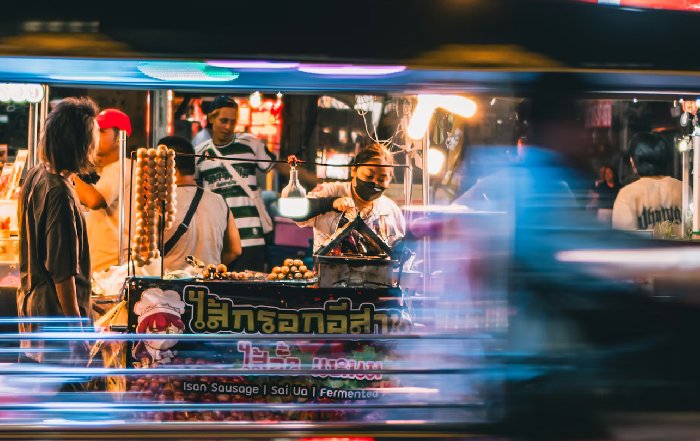
Bangkok's street food scene has long been cited by outlets like CNN Travel as one of the world's most exciting urban food experiences, with entire neighborhoods functioning as open-air dining rooms where office workers, tourists, and families converge around steaming woks and charcoal grills. From the aromatic boat noodles of Victory Monument to the fiery som tam along Sukhumvit, Bangkok's pavements illustrate how informal enterprise, urban density, and culinary heritage can combine to create a living, breathing food economy. For readers planning a visit, exploring global travel and lifestyle insights helps contextualize how Bangkok's food culture fits into wider patterns of urban living.
What distinguishes Bangkok is the density and diversity of offerings that operate with remarkable efficiency despite limited formal infrastructure. Vendors often specialize in one or two dishes perfected over decades, relying on early-morning wholesale markets and intricate supply chains that connect rural producers to urban consumers. Research from organizations such as the Food and Agriculture Organization (FAO) has underscored how such systems help secure affordable nutrition for low- and middle-income populations, while simultaneously providing income for thousands of micro-entrepreneurs. Moreover, Bangkok's street food has become an exportable cultural asset, influencing restaurant concepts in cities from London to Los Angeles.
Yet the city also illustrates the tensions between informality and regulation. Municipal authorities periodically attempt to reorganize or relocate vendors in the name of hygiene, traffic flow, and tourism branding, prompting debates over who owns public space and whose interests take priority. Public health agencies, including the World Health Organization (WHO), have emphasized that instead of eliminating street food, cities should focus on structured training, water and sanitation improvements, and transparent standards to reduce food-borne risks without destroying livelihoods. In Bangkok, pilot programs that provide basic infrastructure, such as shared washing stations and waste systems, show how a balanced approach can preserve culinary vibrancy while addressing health concerns.
Mexico City: Tradition, Identity, and the Power of the Streets
On the other side of the world, Mexico City offers a parallel yet distinct narrative. Its sprawling urban landscape is punctuated by taco stands, tamale carts, and puestos selling quesadillas, tlacoyos, and fresh jugos, each reflecting centuries of culinary evolution rooted in Indigenous, Spanish, and regional Mexican traditions. Influential chefs like Enrique Olvera have drawn global attention to Mexican gastronomy, but it is often the anonymous taquero or tamalera who shapes the daily food experience of millions of residents. Those seeking deeper context can explore how food, culture, and society intersect in shaping national identity.
Mexico City's street food culture is tightly bound to social ritual and community identity. The daily ritual of stopping at a favorite stand on the way to work or during late-night hours after social gatherings creates long-term relationships between vendors and customers, producing a form of neighborhood cohesion that sociologists and urbanists increasingly recognize as critical to resilient communities. Institutions such as UNESCO, which has inscribed "Traditional Mexican cuisine" on its list of Intangible Cultural Heritage, indirectly validate the importance of street-level culinary practices in preserving cultural memory and knowledge.
At the same time, Mexico City confronts challenges related to informality, food safety, and urban planning similar to those in Bangkok. Studies by public health authorities and academic institutions such as the National Autonomous University of Mexico (UNAM) have highlighted both the nutritional benefits and risks of street food, urging policies that promote cleaner preparation environments, transparent sourcing, and consumer education. When managed effectively, street food can support more balanced diets rich in corn, beans, vegetables, and fresh salsas, but when unchecked, it can contribute to rising rates of obesity and non-communicable diseases across Mexico and Latin America.
Health, Nutrition, and the Everyday Food Economy
For a global audience concerned with wellbeing, the health implications of street food are increasingly central. While stereotypes often portray street food as inherently unsafe or unhealthy, research from institutions such as the Harvard T.H. Chan School of Public Health suggests that the reality is more nuanced. In many cases, street food provides affordable, freshly prepared meals that are nutritionally superior to ultra-processed packaged foods, especially when vendors rely on whole ingredients, traditional recipes, and minimal industrial additives. Readers can explore broader perspectives on health, diet, and lifestyle to understand how street food fits into balanced living.
The challenge lies not in the concept of street food itself, but in the conditions under which it is produced and consumed. Access to clean water, refrigeration, waste disposal, and training in safe handling practices are decisive factors in determining health outcomes. Organizations like the Centers for Disease Control and Prevention (CDC) and European Food Safety Authority (EFSA) have developed guidelines that, when adapted locally, can support safer street food ecosystems without eroding their accessibility or cultural authenticity. Successful programs in cities from Singapore to Lima demonstrate that vendor licensing, regular inspections, and collaborative training initiatives can raise standards while keeping prices affordable and offerings diverse.
Nutrition experts increasingly advocate for integrating street food policies into broader urban health strategies, especially in regions where large segments of the population rely on street vendors for daily sustenance. In this context, Bangkok and Mexico City serve as case studies in how to balance regulation, support, and respect for existing culinary traditions. By recognizing vendors as partners rather than obstacles, city governments can leverage street food to promote healthier dietary patterns, encourage consumption of fruits and vegetables, and reduce reliance on industrial fast food chains.
Street Food as a Driver of Urban Business and Entrepreneurship
Beyond nutrition, street food is a powerful engine of entrepreneurship, employment, and local economic development. Informal vendors often operate with minimal capital, flexible hours, and adaptive business models, making street food a vital entry point into the urban economy for migrants, women, and lower-income workers. Institutions such as the International Labour Organization (ILO) have documented how informal food vending contributes to livelihoods across Asia, Latin America, and Africa, often serving as a stepping stone toward more formalized businesses. For readers interested in the business dimension, WorldsDoor's business coverage provides additional context on how small enterprises shape global markets.
In Bangkok, generations-old family stalls have evolved into multi-branch restaurants or franchised concepts, sometimes expanding internationally. In Mexico City, street vendors have leveraged social media platforms and delivery apps to reach new customer segments, blurring the line between traditional street stands and tech-enabled food startups. Companies like Uber Eats, DoorDash, and Rappi have integrated street vendors into their platforms, though often in ways that raise questions about margins, data ownership, and long-term sustainability of vendor livelihoods.
The entrepreneurial spirit embedded in street food culture extends beyond individual vendors to entire neighborhoods and cities. Culinary districts become tourism magnets, attracting visitors who contribute to hotel, transport, and retail revenue. Organizations such as the World Tourism Organization (UNWTO) have emphasized gastronomy as a key driver of destination branding, noting that travelers increasingly choose itineraries based on food experiences rather than landmark attractions alone. For WorldsDoor.com, whose readers explore global travel and culture, street food thus represents both an entry point into local life and a strategic asset for urban economies.
Technology, Data, and the Digital Transformation of the Street
Technology is reshaping street food in ways that would have been unthinkable a decade ago. In Bangkok, QR-code payments via platforms like PromptPay have become ubiquitous, enabling cashless transactions even at the most modest stalls and generating valuable data on consumer behavior. In Mexico City, vendors increasingly rely on messaging apps such as WhatsApp and social networks like Instagram and TikTok to announce locations, daily specials, and pop-up collaborations, turning what was once a purely local phenomenon into a digitally amplified experience. Readers can follow broader developments in technology and innovation to see how similar trends affect other sectors.
The rise of food delivery platforms has also changed the geography of street food. During and after the COVID-19 pandemic, many vendors in both cities turned to delivery as a survival strategy, partnering with or independently organizing logistics to reach customers confined at home. This shift has led to hybrid models where traditional street stands operate alongside "cloud kitchens" or home-based preparation spaces, raising new regulatory and ethical questions around worker protections, platform accountability, and food safety oversight. Organizations such as the OECD have begun examining how digital platforms reshape informal work, offering insights relevant to the future of street food economies.
Data-driven approaches are emerging as tools for urban planners and public health officials seeking to understand and support street food ecosystems. Mapping projects and open-data initiatives led by universities and civic tech groups enable cities to identify clusters of vendors, analyze access to healthy options, and plan infrastructure investments. In Bangkok and Mexico City, such efforts can inform where to install public seating, sanitation facilities, or improved lighting, enhancing both vendor operations and consumer experience. As readers explore innovation and sustainable urban development, street food provides a concrete example of how data and design can improve everyday life.
Sustainability, Ethics, and the Future of Urban Eating
Sustainability and ethics now occupy a central place in any serious discussion of food systems, and street food is no exception. From packaging waste to sourcing practices, Bangkok and Mexico City face similar questions about how to reduce environmental impact while maintaining affordability and convenience. Environmental organizations such as the United Nations Environment Programme (UNEP) have highlighted single-use plastics in food service as a critical challenge, prompting cities and vendors to experiment with biodegradable containers, reusable schemes, and incentives for customers who bring their own containers. Readers interested in environmental implications can explore WorldsDoor's environment and sustainability coverage for broader perspectives.
Ethical considerations also extend to labor conditions, gender dynamics, and social inclusion. In many cases, women are the backbone of street food economies, yet they may lack access to credit, legal protections, or formal recognition. Initiatives supported by groups such as UN Women and local NGOs in Thailand and Mexico aim to provide training, microfinance, and legal assistance to women vendors, helping them transition from precarious livelihoods to more secure and profitable enterprises. Ensuring that the benefits of street food's global popularity are shared fairly across gender, class, and migrant status is becoming a priority for policymakers and advocacy organizations alike.
Sustainability further involves examining how ingredients are sourced and how street food contributes to or alleviates pressure on local ecosystems. Programs that connect urban vendors with regional smallholder farmers, supported by institutions like the International Fund for Agricultural Development (IFAD), can create more resilient supply chains while preserving biodiversity and traditional agricultural practices. In both Bangkok and Mexico City, growing consumer interest in organic, local, and seasonal produce is slowly influencing vendor offerings, though price sensitivity remains a major constraint. For readers who follow sustainable and ethical trends, street food offers a pragmatic test case of how high-level ideals translate into everyday purchasing decisions.
Culture, Education, and the Transmission of Culinary Knowledge
Street food is not merely a commercial transaction; it is a vehicle for cultural transmission and informal education. Each dish carries stories of migration, adaptation, and resilience, teaching diners about history, geography, and social change in ways that are immediate and sensory. In Bangkok, dishes like pad kra pao or khao man gai tell of Chinese, Indian, and regional Thai influences converging in a single wok. In Mexico City, tacos al pastor encapsulate a history of Lebanese migration, local maize culture, and urban reinvention. For those exploring how culture and society shape everyday life, street food stands act as open classrooms.
Educational institutions are increasingly recognizing the value of street food as a subject of serious study. Universities in Asia, Europe, and the Americas now offer courses on food anthropology, urban studies, and gastronomy that include fieldwork with street vendors and market communities. Organizations such as Slow Food International advocate for preserving traditional recipes and techniques, often collaborating with local vendors to document and celebrate their knowledge. In Mexico, culinary schools partner with street cooks to ensure that classic preparations of nixtamalized corn, salsas, and regional stews are preserved for future generations.
Digital media further amplifies this educational role. Documentaries, podcasts, and online courses from platforms like Coursera and edX introduce global audiences to the complexities of street food economies, while social media creators showcase behind-the-scenes preparation, ingredient sourcing, and vendor stories. Such content not only entertains but also informs, shaping consumer expectations and encouraging more mindful engagement with food. Readers interested in how learning and food intersect can explore WorldsDoor's education-focused content to see how culinary knowledge fits within broader educational trends.
A Global Perspective: From Bangkok and Mexico City to the World
Although this article centers on Bangkok and Mexico City, the dynamics described resonate across continents. From New York food trucks and London markets to the night bazaars of Taipei and the hawker centers of Singapore, street food represents a shared global language of taste, convenience, and creativity. It also reflects local variations shaped by regulation, climate, migration, and economic structure. Organizations like the World Economic Forum have noted that as cities grow and diversify, street food will remain a vital component of inclusive urban economies, particularly in regions like Africa, South America, and Southeast Asia where informal work is a major source of employment.
In Europe and North America, the rise of curated food markets and regulated street trading has created new opportunities but also risks diluting the spontaneity and affordability that characterize traditional street food. Meanwhile, in Asia, Latin America, and Africa, vendors continue to operate under varying degrees of legal uncertainty, even as they serve essential functions in feeding urban populations. For readers of WorldsDoor.com, who follow developments across world affairs and global trends, the contrast between formal and informal systems raises important questions about equity, governance, and the right to the city.
WorldsDoor.com and the Evolving Story of Global Street Food
For WorldsDoor, documenting street food culture from Bangkok to Mexico City is not only a culinary journey but also a way to connect multiple themes that define contemporary life: health, business, technology, environment, ethics, education, and identity. By examining how a bowl of noodles in Bangkok or a taco in Mexico City embodies complex networks of labor, regulation, innovation, and tradition, the platform offers its readers a richer understanding of how global cities function and how everyday choices reflect broader societal shifts. Those seeking to explore these intersections further can navigate across WorldsDoor's interconnected sections, where street food appears not as an isolated topic but as a thread linking travel, lifestyle, and global change.
So as street food continues to adapt to new realities: climate pressures affecting harvests, digital tools transforming payment and promotion, regulatory reforms reshaping public space, and evolving consumer expectations around health and sustainability. Bangkok and Mexico City, each in their own way, demonstrate that while the form and context of street food may change, its core function as a social, economic, and cultural anchor remains remarkably resilient. For business leaders, policymakers, travelers, and citizens alike, paying attention to what happens at the street stall or taco stand is no longer a niche interest; it is an essential part of understanding the future of cities and the everyday lives of the people who inhabit them.
In this sense, street food culture is not merely about what is on the plate; it is about how societies negotiate change while preserving continuity, how informal creativity coexists with formal systems, and how global influences are absorbed, reinterpreted, and served back in forms that feel unmistakably local. From Bangkok's alleys to Mexico City's avenues, the story of street food is the story of urban humanity itself, unfolding one meal at a time.