

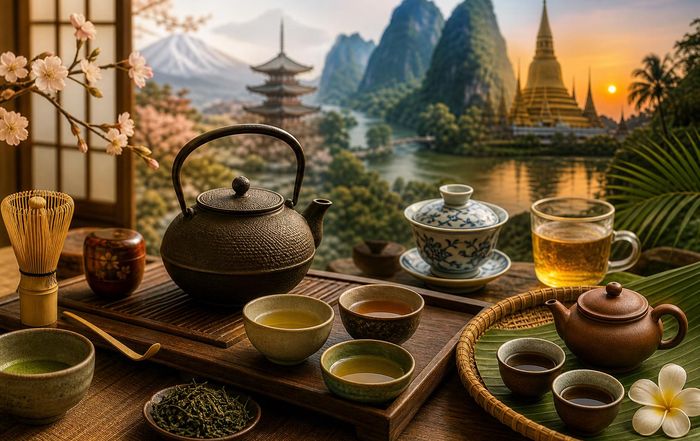
The Cultural Meaning of Tea Across East and Southeast Asia
Tea, in much of East and Southeast Asia, is far more than a beverage; it is a language of hospitality, a vehicle of philosophy, a marker of identity and memory, and an evolving bridge between tradition and modern life. As the world in 2026 becomes ever more interconnected, the quiet rituals surrounding a single cup of tea continue to offer a powerful counterpoint to speed and distraction, inviting reflection on how people live, relate, and care for one another. For the news team here, which explores how cultures, journeys, and everyday choices shape a shared global future, tea provides a uniquely revealing lens into the values and aspirations of societies from China and Japan to Vietnam, Thailand, and beyond.
Origins: From Medicinal Brew to Cultural Foundation
Most historical scholarship traces the earliest use of tea to what is now southwest China, where leaves of the plant Camellia sinensis were first boiled for medicinal purposes. Archaeobotanical evidence and early written references, discussed by institutions such as The British Museum and UNESCO, suggest that tea culture began to take recognizable shape during the Tang dynasty (618-907 CE), when it spread along trade routes and gradually shifted from a herbal remedy to a social and spiritual drink. As tea moved outward from China to Korea, Japan, and later to Vietnam and other parts of Southeast Asia, it was repeatedly reinterpreted, shaped by local beliefs, climates, and social structures.
Across the region, the shared botanical origin of tea never produced a single uniform culture; instead, each society integrated tea into its own worldview. In Confucian contexts it became associated with filial piety and respect; in Buddhist monasteries it was valued for supporting meditation and wakefulness; in courtly and mercantile circles it became a symbol of refinement and status. These multiple strands form the backdrop for the rich diversity of tea practices that WorldsDoor fans encounter when they explore culture, travel, or lifestyle across East and Southeast Asia today.
China: Tea as Everyday Philosophy
In China, where tea first emerged, its cultural meaning is layered and pervasive. Tea appears in classical poetry, painting, and philosophy, and it remains a daily ritual in homes and workplaces from Beijing to Guangzhou. The traditional art of tea preparation, often referred to as gongfu cha, emphasizes attentiveness to water temperature, leaf quality, and timing, not as rigid rules but as a disciplined mindfulness that turns an ordinary act into a form of contemplation.
According to research from The Tea Association of the USA and historical overviews by Harvard's Fairbank Center for Chinese Studies, tea in China became deeply intertwined with literati culture during the Song dynasty, where tea gatherings were occasions for poetry, calligraphy, and philosophical debate. Today, tea houses in cities such as Chengdu and Kunming still serve as informal community centers, where people play mahjong, negotiate business, or simply watch the world pass by, a living illustration of how social and spiritual life remain interwoven.
In contemporary Chinese society, tea is also a language of respect and reconciliation. Serving tea to elders during holidays, weddings, or family gatherings expresses gratitude and filial piety; offering tea to someone with whom one has had conflict can be a gesture of apology and renewed connection. This symbolism aligns closely with the values of harmony and relational responsibility that the team highlights in its stories of society and ethics, demonstrating how a seemingly simple practice can sustain complex social bonds.
Japan: The Way of Tea and the Aesthetics of Impermanence
In Japan, tea found an especially distinctive expression through the chanoyu, often translated as "the way of tea." While powdered green tea, or matcha, arrived from China with Buddhist monks, Japanese cultural leaders over centuries transformed tea preparation into a codified yet deeply spiritual art form. The tea ceremony, influenced by Zen Buddhism, centers on principles of harmony, respect, purity, and tranquility, and it is often conducted in a carefully designed tearoom that emphasizes natural materials and deliberate simplicity.
Scholars and cultural organizations such as The Japan Foundation and Tokyo National Museum highlight how the aesthetics of the tea ceremony embody the concept of wabi-sabi, an appreciation for imperfection, impermanence, and understated beauty. Every element, from the slightly irregular tea bowl to the seasonal flower arrangement and hanging scroll, encourages participants to savor the unrepeatable nature of the moment. This aesthetic sensibility has influenced Japanese design, architecture, and even modern hospitality, shaping how the country presents itself to visitors and how it negotiates the tension between tradition and innovation.
In everyday Japanese life, tea is far more than a ceremonial event. Green tea is served in homes, offices, and restaurants as a standard gesture of welcome, and bottled teas line the shelves of convenience stores and vending machines. Health research summarized by organizations such as Mayo Clinic and National Institutes of Health has helped popularize green tea's potential benefits, including antioxidant properties and possible support for cardiovascular health, although researchers emphasize that such benefits depend on overall diet and lifestyle rather than any single drink. For our well travelled readers exploring health and wellness, Japanese tea culture offers a reminder that nourishment can be both physiological and philosophical, blending ritual, taste, and mindfulness into a coherent daily practice.
Korea: Tea, Confucian Values, and Quiet Revival
Korea's tea culture has experienced cycles of flourishing, decline, and revival. Historical records and research from institutions such as The National Museum of Korea indicate that tea was present in the peninsula as early as the Three Kingdoms period, and it became closely linked with both Buddhist monasteries and Confucian court rituals. Over time, political upheavals, wars, and changing tastes diminished its centrality, yet in the modern era, there has been a deliberate effort to rediscover and reinterpret traditional tea practices.
The darye, or "etiquette for tea," emphasizes modesty, gratitude, and respect for guests, reflecting broader Confucian values that prioritize harmonious social relations and attentiveness to hierarchy. Unlike some highly formalized tea ceremonies, Korean tea gatherings often feel relatively relaxed, with a focus on sincere conversation and seasonal appreciation. Modern tea houses in cities such as Seoul and Busan blend traditional architecture and ceramics with contemporary design, attracting younger generations who seek calm spaces away from digital overload.
Korea's experience illustrates how cultural practices can be renewed rather than simply preserved. As WorldsDoor examines issues of innovation and continuity in fast-changing societies, Korean tea culture stands as an example of how heritage can be adapted to modern sensibilities without losing its core ethical and aesthetic values.
Vietnam: Street Stalls, Lotus Fragrance, and Everyday Connection
In Vietnam, tea is deeply woven into daily rhythms, from rural villages to bustling cities. Historically influenced by Chinese tea traditions yet distinct in flavor and setting, Vietnamese tea culture often centers on simple green teas served in small cups, whether in family courtyards, tiny street-side stalls, or office break rooms. Tea is a standard accompaniment to conversation, negotiation, and reflection, symbolizing sincerity and openness.
One of the most emblematic expressions is lotus tea, in which green tea leaves are scented with lotus blossoms, a process that can be labor-intensive and highly prized. Cultural and culinary sources such as Vietnam Tourism and regional food scholars note that lotus tea is associated with purity and elegance, reflecting the lotus flower's wider symbolic role in Vietnamese art and spirituality. At the same time, the ubiquity of strong iced teas and simple hot brews at street vendors underscores tea's democratic character; it belongs not only to elites or ceremonial contexts but to everyone.
Vietnam's tea landscapes, from the highland plantations of Thai Nguyen to newer organic farms, also intersect with broader questions of rural development and environmental stewardship. Readers who follow WorldsDoor's coverage of environment and sustainable practices can see in Vietnamese tea production the challenges and opportunities of balancing export markets, local traditions, and ecological responsibility.
Thailand, Malaysia, and Singapore: Blending Traditions in the Glass
In parts of Southeast Asia, tea has taken on hybrid forms that reflect centuries of cultural exchange and migration. In Thailand, for instance, cha yen, often known internationally as Thai iced tea, blends strong black tea with sugar and milk, sometimes flavored with spices, and is served over ice in bright orange hues. While its exact origins are debated, food historians and regional media, including sources like BBC Travel, point to the influence of Chinese tea-drinking habits, European colonial trade, and local taste preferences. The result is a drink that is both distinctly Thai and globally recognizable, illustrating how tea can be a canvas for creative adaptation.
In Malaysia and Singapore, teh tarik, literally "pulled tea," is a beloved symbol of everyday multicultural life. Strong black tea, sweetened and mixed with condensed milk, is repeatedly poured between two vessels to create a frothy texture, often performed with theatrical flair in open-air eateries known as mamak stalls. Organizations such as Singapore Tourism Board and Tourism Malaysia highlight teh tarik as a culinary icon that brings together Malay, Indian, and Chinese influences in a single cup, mirroring the region's complex social fabric.
These sweet, milky teas differ markedly from the austere infusions of East Asian monastic traditions, yet they share a core function: they create spaces of conviviality where people from different backgrounds can gather, talk, and negotiate everyday life. For WorldsDoor, which consistently explores how food and drink shape society and food cultures, such examples demonstrate that authenticity in tea culture is not about purity or isolation, but about the lived experiences and shared stories that develop around the cup.
Health, Well-Being, and the Science of Tea
As interest in wellness grows globally, scientific research on tea has expanded, and reputable institutions have sought to clarify both the potential benefits and the limits of what tea can provide. Studies compiled by organizations such as World Health Organization and National Library of Medicine suggest that regular consumption of unsweetened tea, especially green and oolong varieties, may be associated with certain positive health markers, including cardiovascular support and antioxidant intake. However, researchers caution that many findings are observational, that individual responses vary, and that no beverage can substitute for a balanced diet, sufficient sleep, and regular physical activity.
In East and Southeast Asia, traditional medical systems have long treated tea as a supportive element in maintaining balance and vitality. In Chinese herbal frameworks, for example, different teas are believed to have warming or cooling properties, making them suitable for particular seasons or constitutions. While not all such beliefs have been tested by modern clinical trials, they inform everyday choices and rituals, underscoring how health is understood holistically, integrating body, mind, and environment.
This holistic perspective resonates with WorldsDoor's focus on health as a multidimensional experience. Tea, whether sipped slowly in a Japanese tearoom or enjoyed on a bustling Vietnamese street corner, encourages a pause in the day, a moment of sensory awareness that can support mental clarity and emotional grounding. In an era of constant digital stimulation, such small rituals can play a meaningful role in personal resilience and community well-being.
Sustainability and Ethical Tea Production
Behind every cup of tea lies a chain of cultivation, processing, and distribution that stretches across landscapes and livelihoods. In recent years, sustainability has become a central concern in many tea-growing regions, as climate change, soil degradation, and market volatility place pressure on farmers and ecosystems. Reports by organizations such as Rainforest Alliance and Fairtrade International document both the risks and the progress being made toward more responsible tea production, including initiatives to promote biodiversity, reduce pesticide use, and ensure fairer wages and working conditions.
In countries like China, India, Vietnam, and Sri Lanka, shifting weather patterns have begun to affect harvest cycles and flavor profiles, prompting research collaborations and adaptation strategies. Sustainable tea initiatives often involve training smallholder farmers in agroforestry techniques, water management, and diversification of crops, helping communities become more resilient. Consumers, in turn, are increasingly aware of certification labels and origin stories, using purchasing decisions to support more ethical supply chains.
For WorldsDoor, which dedicates significant attention to environment, sustainable, and business practices, tea offers a concrete example of how global demand intersects with local realities. Readers who want to learn more about sustainable business practices can explore resources from organizations like World Resources Institute, which analyze how agriculture, climate policy, and trade shape the future of crops such as tea. In this broader perspective, choosing a cup of tea becomes not only a cultural or personal preference but also a small act within a larger ethical and environmental story.
Tea, Travel, and Cross-Cultural Encounters
For travelers, tea often serves as an accessible gateway into unfamiliar cultures. Sitting in a teahouse in Kyoto, a cha chaan teng in Hong Kong, or a roadside stall in Chiang Mai, visitors are invited into local rhythms and values that might otherwise remain hidden. Organizations such as UN World Tourism Organization note that culinary and beverage experiences have become central to contemporary tourism, with tea trails, plantation homestays, and cultural workshops increasingly popular among those seeking deeper engagement rather than superficial sightseeing.
In many East and Southeast Asian destinations, tea experiences are being thoughtfully curated to balance authenticity with accessibility. Local hosts explain the symbolism of gestures, the historical context of specific teas, and the etiquette that shapes interactions, turning a simple tasting into a form of informal education. This aligns closely with WorldsDoor's mission to connect travel with education and cultural understanding, encouraging readers not only to consume experiences but to participate respectfully and reflectively.
At the same time, there is ongoing discussion about how to prevent the commodification of tea traditions in ways that dilute their meaning or marginalize local communities. Cultural heritage organizations, academic researchers, and community leaders debate how to share tea culture with the world without reducing it to a marketing image. These debates, covered by sources such as UNESCO Intangible Cultural Heritage, remind observers that cultural exchange requires sensitivity, transparency, and genuine collaboration.
Digital Age, Innovation, and the Future of Tea Culture
In the current decade, tea culture across East and Southeast Asia is also being reshaped by technology and innovation. Online platforms and social media enable small tea producers to reach global audiences directly, while digital communities exchange brewing techniques, historical insights, and tasting notes with unprecedented speed. Start-ups and established brands alike experiment with new formats, from cold-brewed teas and sparkling infusions to tea-based cocktails and functional blends that claim specific wellness benefits, although such claims must be evaluated carefully against scientific evidence.
At the same time, there is a counter-movement that emphasizes slowness and depth, with young tea practitioners in China, Japan, Korea, and elsewhere reviving traditional methods and aesthetics as a form of quiet resistance to hyper-speed culture. Articles from outlets like Nikkei Asia and South China Morning Post describe how urban professionals are turning to tea not just as a drink but as a structured practice of digital detox and mindful presence. This dual trend-innovation on one side, intentional simplicity on the other-illustrates the flexibility of tea as a cultural medium.
For followers are interested in technology and innovation as well as tradition, tea offers a compelling case study in how heritage can coexist with experimentation. The same plant that once traveled along ancient caravan routes now moves through e-commerce platforms and virtual tastings, yet the core experience of sitting with a warm cup, noticing its aroma and taste, remains remarkably constant.
A Shared Cup in a Fragmented World
Across East and Southeast Asia, the cultural meaning of tea cannot be reduced to a single narrative. It is at once a marker of national identity and a transnational thread, a symbol of spiritual discipline and a casual everyday refreshment, a focus of aesthetic refinement and a staple of street food culture. In China, it may evoke philosophical reflection; in Japan, a heightened awareness of impermanence; in Korea, a quiet revival of Confucian values; in Vietnam, the fragrance of lotus and the warmth of neighborhood conversation; in Thailand, Malaysia, and Singapore, a sweet, shared language of multicultural life.
Yet amid this diversity, certain themes recur: hospitality, attentiveness, respect for nature, and the importance of slowing down long enough to truly encounter others and oneself. These are precisely the themes that WorldsDoor seeks to illuminate as it explores how people travel, eat, work, and dream in different corners of the globe. By following the journey of tea-from mountain terraces and urban teahouses to family kitchens and contemporary cafés-readers can gain insight not only into specific cultures but into the universal human desire for connection, meaning, and balance.
As the world continues to face rapid change, environmental pressures, and social fragmentation, the enduring rituals around tea suggest that some of the most powerful responses may be surprisingly simple. To sit down, to pour carefully, to listen more than one speaks, and to share what one has: these gestures, repeated across generations from East Asia to Southeast Asia and far beyond, offer a quiet but profound vision of how everyday practices can sustain both cultural memory and hopeful futures. In that sense, every thoughtful cup of tea can become, for the travel community online, a small doorway into a larger, more connected world.