

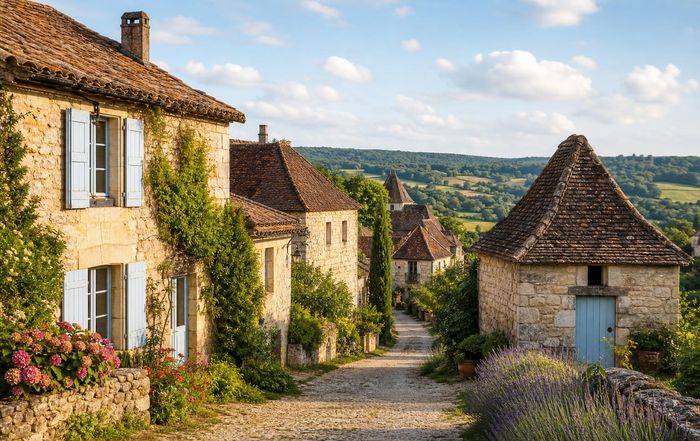
Traditional Architecture That Defines Rural France
Rural France has long captivated travelers, scholars, and dreamers with its quiet villages, stone farmhouses, and church spires rising above patchwork fields, and in 2026 this fascination is only deepening as more people seek slower, more rooted ways of living. For us whose many expat readers look for meaningful encounters with place, culture, and people, the traditional architecture of rural France offers a powerful lens through which to understand not only the country's history, but also contemporary movements in sustainability, craftsmanship, and regional identity.
The Living Tapestry of French Rural Landscapes
Unlike many countries where rural building styles have been heavily standardized, rural France remains a mosaic of distinct architectural regions, each shaped by local geology, climate, agriculture, and cultural history. From the granite farmsteads of Brittany to the half-timbered houses of Alsace and the sun-baked mas of Provence, the countryside forms what the French Ministry of Culture describes as a "vernacular heritage" that is both fragile and deeply embedded in daily life. Travelers who explore beyond the major cities quickly discover that architecture in the French countryside is not a backdrop but a lived environment, one that continues to influence how people farm, cook, celebrate, and relate to the land.
The French government and regional authorities have increasingly recognized this value. Initiatives such as the "Sites patrimoniaux remarquables" program and the protection of "Monuments historiques" documented by the French Ministry of Culture seek to safeguard rural churches, farmhouses, mills, and village centers. These efforts sit alongside community-led associations and local artisans who restore buildings using traditional methods, ensuring that rural architecture remains a living tradition rather than a static museum piece. For readers planning immersive journeys, exploring these villages complements broader cultural interests highlighted in WorldsDoor's coverage of travel experiences and cultural heritage.
Stone Villages and Farmsteads: The Backbone of Rural Identity
In many parts of France, stone is the defining material of rural architecture, and its character changes dramatically from region to region. In Brittany and Normandy, thick granite walls, slate roofs, and small openings protect homes from Atlantic storms; in Burgundy and the Dordogne, warm limestone creates honey-colored villages that glow at sunset; in the south, pale, porous stone helps keep interiors cool under intense summer heat. The Architectes des Bâtiments de France, a body of state architects responsible for heritage protection, often emphasize that these materials were historically sourced within a few kilometers of each site, anchoring buildings in their immediate landscape.
Scholars of vernacular architecture, such as those contributing to the École du Louvre and the CNRS (France's National Centre for Scientific Research), have shown how rural houses evolved around agricultural needs. Farmsteads typically combined living quarters, barns, stables, and storage under one roof or around a shared courtyard, a layout still visible in many regions. In the Dordogne and Lot, for example, traditional "fermes à cour fermée" (closed courtyard farms) reflect a need to protect livestock and grain, while in the Alps, long linear houses allowed people and animals to share warmth in harsh winters. Readers who want to understand how architecture and rural life intertwine can explore broader reflections on lifestyle and place through WorldsDoor's related features.
International organizations such as ICOMOS (International Council on Monuments and Sites) underscore the global significance of this rural heritage, noting in various reports that France's countryside offers some of the most coherent historic rural landscapes in Europe. At the same time, demographic change, agricultural restructuring, and climate pressures pose challenges, making it essential to balance preservation with the realities of contemporary rural life. The UNESCO World Heritage Centre highlights several French cultural landscapes, such as the vineyards of Burgundy and the Loire Valley, where architecture and agriculture form an inseparable whole, demonstrating the country's commitment to protecting these environments.
Regional Signatures: From Alsace to Provence
While the overall impression of rural France is one of harmony, each region has its own distinctive architectural vocabulary. In Alsace, near the German border, villages such as Riquewihr and Eguisheim are famous for their brightly painted half-timbered houses, known as "maisons à colombages." These structures, with their exposed wooden frames and infill of wattle and daub or brick, reflect centuries of cross-border influence and adaptation to local timber resources. Heritage organizations and regional tourism boards, such as Visit Alsace, emphasize that the colors and decorative patterns often once indicated a family's trade or social status, turning villages into a kind of open-air archive of community life.
In Provence and the Luberon, the archetypal rural dwelling is the "mas", a stone farmhouse oriented to shield itself from the mistral wind, with thick walls, small north-facing openings, and larger windows and terraces facing south or east. These houses often integrate agricultural functions, including wine or olive production, and their simple, elongated silhouettes have inspired architects and designers worldwide. The Association Maisons Paysannes de France, a national organization dedicated to vernacular buildings, provides guidance on restoring mas and other rural houses using traditional methods, emphasizing the environmental logic embedded in their design. Those interested in the intersection of traditional architecture and modern sustainability can delve deeper into sustainable living insights curated by WorldsDoor.
In the Basque Country, whitewashed houses with red or green timber details, steep roofs, and deep eaves reflect both Atlantic weather conditions and a strong sense of cultural identity. In the Alps and the Pyrenees, chalets and "maisons en pierre et bois" combine stone ground floors with timber upper levels and balconies, creating a blend of solidity and warmth that has become iconic in mountain tourism. Each of these regional styles is not only aesthetically distinctive but also a response to precise environmental and social conditions, a point repeatedly underlined in studies by institutions such as the École nationale supérieure d'architecture de Grenoble and the Université de Strasbourg.
Roofs, Windows, and Details: Reading the Language of Buildings
For travelers attentive to detail, rural French architecture offers a rich visual language that can be "read" in roof shapes, window designs, and small decorative features. Roof pitches vary according to rainfall and snow: steep slate roofs in the Massif Central and the Alps shed heavy precipitation, while gentler terracotta-tiled roofs in the Mediterranean south suit drier climates. In central France, particularly in regions like Berry and Bourbonnais, the "toits à coyaux"-roofs with flared lower slopes-help protect walls from rain and give villages a distinctive profile.
Windows also tell stories. Deeply set openings with wooden shutters in stone houses provide insulation and shading, while small attic windows, or "lucarnes," reveal the presence of former granaries or servants' quarters. In many villages, carved stone lintels, ironwork balconies, and painted shutters display local craftsmanship, with motifs ranging from religious symbols to agricultural tools. Organizations such as Maisons Paysannes de France and regional heritage councils often publish guides to these features, encouraging owners and visitors alike to recognize and respect the original character of buildings.
Academic research and conservation practice, documented by bodies such as the French National Institute for Preventive Archaeological Research, show that these details are not mere decoration but part of a coherent environmental strategy. Thick masonry walls regulate indoor temperatures, small north-facing windows reduce heat loss, and deep eaves protect façades from rain and sun. As contemporary architects seek to design low-energy buildings, many look back to these vernacular solutions for inspiration, aligning with broader European efforts in sustainable construction promoted by organizations such as the European Commission's Joint Research Centre and the International Energy Agency.
Rural Churches, Chapels, and Communal Spaces
Beyond farmhouses and barns, rural France is defined by its religious and communal architecture, which often predates surrounding houses and anchors village identity. Romanesque and Gothic churches, many listed as protected monuments, dot the countryside, marking centuries of faith, power, and artistry. The Basilica of Vézelay, the churches of Auvergne, and countless smaller parish churches, catalogued by the Inventaire général du patrimoine culturel, illustrate how even modest communities invested in stone vaults, sculpted capitals, and bell towers that could be seen for miles around.
In many villages, the church square remains a focal point of community life, hosting markets, festivals, and gatherings that link present-day residents with their medieval and early modern predecessors. Chapels, calvaries, and wayside crosses, especially in Brittany and southwestern France, form part of a devotional landscape that blends architecture and spirituality. Studies by the Centre des monuments nationaux and various regional diocesan archives highlight ongoing restoration efforts, often supported by local associations and volunteers who see these buildings as guardians of collective memory.
For readers interested in how architecture shapes social life, these communal spaces illustrate the deep connections between built form, ritual, and identity. They also intersect with contemporary discussions about rural revitalization, tourism, and cultural continuity, themes that WorldsDoor explores in its reflections on society and community and world perspectives.
Farm Buildings, Mills, and Wine Architecture
Traditional rural architecture in France extends well beyond houses and churches to include a wide range of agricultural and industrial structures that defined local economies. Stone barns, dovecotes, bread ovens, wine cellars, and watermills or windmills form a dispersed infrastructure that once underpinned daily life. Many of these buildings, documented in regional inventories and by organizations such as the Fondation du Patrimoine, are being repurposed as guesthouses, cultural centers, or artisan workshops, illustrating how heritage can support contemporary rural development.
Particularly notable is the architecture of wine regions, where châteaux, wineries, and barrel cellars express centuries of expertise and prestige. The vineyards of Bordeaux, Burgundy, Champagne, and the Loire Valley, many recognized by UNESCO as cultural landscapes, feature a blend of grand estates and modest vignerons' houses. Architectural historians and wine writers alike, including contributors to Decanter and Revue du vin de France, have noted how recent winery designs by contemporary architects often echo traditional forms, using stone, wood, and earth-sheltered cellars to maintain stable temperatures while creating striking new silhouettes.
These evolving wine architectures show how rural France negotiates the balance between tradition and innovation, a theme that resonates with WorldsDoor's focus on innovation and heritage and the changing face of global food and drink culture. For travelers, visiting working farms, mills, and wineries provides an intimate way to experience how buildings, landscapes, and local products are interwoven.
Sustainability Lessons Embedded in Vernacular Design
In an era of climate change and energy transition, the environmental intelligence of traditional rural architecture is attracting renewed attention from architects, planners, and policymakers. Research by the International Council for Local Environmental Initiatives (ICLEI) and the French Agency for Ecological Transition (ADEME) points out that many vernacular buildings were naturally low-carbon and energy-efficient, due to their reliance on local materials, compact forms, and passive climate control strategies.
Thick stone or earth walls provide thermal mass that smooths out temperature fluctuations; small, strategically placed windows minimize heat loss in cold climates or limit solar gain in hot ones; shutters and deep eaves offer adjustable shading; and courtyards create microclimates that protect crops and animals. These principles, now often discussed under the banner of bioclimatic or passive design, were developed through generations of observation and adaptation. Organizations such as CRAterre, an international center for earthen architecture based in Grenoble, have been particularly active in studying and promoting these approaches, both in France and globally.
For readers of WorldsDoor who are interested in environmental issues and regenerative living, rural French architecture offers a tangible example of how human settlements can work with, rather than against, local ecosystems. At the same time, retrofitting older buildings to meet modern comfort and efficiency standards is complex, requiring careful balance between insulation, ventilation, and the preservation of historic fabric. The International Energy Agency and the European Commission have both published guidance on energy renovation of historic buildings, emphasizing that one-size-fits-all solutions can damage heritage and reduce performance if they ignore original design logic.
Preservation, Regulation, and the Role of Local Communities
Protecting rural architecture in France involves a dense web of laws, institutions, and local initiatives. The Code du patrimoine sets out national rules for protecting monuments and sites, while regional and local authorities manage planning regulations that affect village character. Buildings designated as "Monuments historiques" or located within protected zones face strict rules on alterations, overseen by the Architectes des Bâtiments de France, who work to ensure that renovations respect original materials and forms. The French Ministry of Culture provides extensive public information on these frameworks.
However, preservation is not only a top-down process. Local associations, heritage charities such as the Fondation du Patrimoine, and community groups play a crucial role in raising funds, organizing volunteer work, and lobbying for sensitive development. In many villages, residents have created walking routes, interpretation panels, and small museums to share their architectural heritage with visitors, often linking it to regional crafts, gastronomy, and festivals. These efforts align with broader European trends in community-based heritage management, documented by organizations such as Europa Nostra and the Council of Europe, which emphasize that safeguarding rural architecture requires active local stewardship.
WorldsDoor's audience, many of whom travel with a strong sense of responsibility and curiosity, can contribute to these efforts by choosing accommodations and experiences that respect local building traditions, supporting craftspeople who use traditional techniques, and learning about the stories embedded in the places they visit. Exploring WorldsDoor's coverage of ethical travel and cultural engagement can help readers navigate these choices thoughtfully.
Rural Architecture, Tourism, and the Search for Authenticity
As more travelers seek "authentic" experiences away from crowded cities, rural France has become a magnet for those drawn to stone villages, quiet lanes, and landscapes shaped by centuries of human care. Tourism boards, regional parks, and private operators have responded by promoting stays in restored farmhouses, gîtes ruraux, and chambres d'hôtes that showcase traditional architecture. The French Tourism Development Agency (Atout France) and regional bodies such as Gîtes de France emphasize the appeal of these accommodations, which often combine historic character with modern comfort.
This growing interest brings both opportunities and risks. On one hand, tourism can provide vital income for restoration projects, support local artisans, and help maintain services in villages facing depopulation. On the other, poorly managed development can lead to the over-renovation of buildings, the loss of original materials, and the transformation of living communities into seasonal resorts. Studies by the Organisation for Economic Co-operation and Development (OECD) and the World Tourism Organization (UNWTO) highlight the importance of sustainable rural tourism strategies that balance economic vitality with cultural and environmental integrity.
For WorldsDoor, which consistently highlights healthier, more balanced ways of living and traveling, rural French architecture is not simply a visual attraction but a framework for experiences that prioritize connection, slowness, and respect. Whether walking through a limestone village in the Dordogne, staying in a converted barn in Normandy, or visiting a family-run winery in the Loire, travelers can engage with architecture as a living expression of local identity rather than a backdrop for consumption.
Education, Craftsmanship, and the Future of Rural Building Traditions
The survival of traditional architecture in rural France depends not only on laws and tourism but also on the transmission of skills. Stone masonry, timber framing, lime plastering, slate roofing, and earth construction are highly specialized crafts that require years of training and practice. Vocational schools, apprenticeship programs, and professional organizations, including the Compagnons du Devoir, play a vital role in maintaining these skills, often combining hands-on work with study of historic techniques and theory.
The French Ministry of National Education and the Ministry of Culture support various training pathways for heritage trades, while universities and architecture schools incorporate vernacular studies into their curricula. International networks such as the International Centre for the Study of the Preservation and Restoration of Cultural Property (ICCROM) highlight French expertise in these fields and encourage cross-border collaboration. For readers interested in how education shapes cultural continuity, WorldsDoor's reflections on learning and knowledge provide broader context.
At the same time, innovation is reshaping how traditional techniques are used. Digital tools such as 3D scanning, building information modeling (BIM), and thermography are helping architects and craftspeople better understand historic structures and plan sensitive interventions. Research centers and start-ups in France and across Europe are experimenting with bio-based materials, such as hemp-lime concrete and wood fiber insulation, that can work harmoniously with older buildings. Publications from the French Environment and Energy Management Agency (ADEME) and the European Commission indicate growing interest in combining heritage preservation with cutting-edge environmental performance, ensuring that traditional rural architecture can meet contemporary needs without sacrificing its essence.
A Doorway into France's Past and Future
Traditional architecture in rural France is more than a collection of picturesque façades; it is a living record of how communities have adapted to their environments, expressed their values, and organized their daily lives over centuries. In the mid-2020s, as people around the world grapple with rapid change, climate uncertainty, and a desire for deeper roots, these villages and landscapes offer both inspiration and practical lessons. They remind observers that beauty, utility, and sustainability need not be in conflict, and that buildings can embody continuity without resisting thoughtful evolution.
For us, engaging with this architectural heritage means looking beyond the surface charm of stone walls and tiled roofs to understand the knowledge, labor, and relationships that created them. It invites travelers to slow down, to walk through villages with attentive eyes, to speak with residents, artisans, and winemakers, and to consider how their own choices-whether in travel, housing, or community life-might draw on similar principles of respect for place and history. By connecting stories from rural France with broader explorations of global culture, environmental responsibility, innovative yet rooted lifestyles, and sustainable futures, we aim to open not just a window but a doorway into ways of living that honor both heritage and hope.