

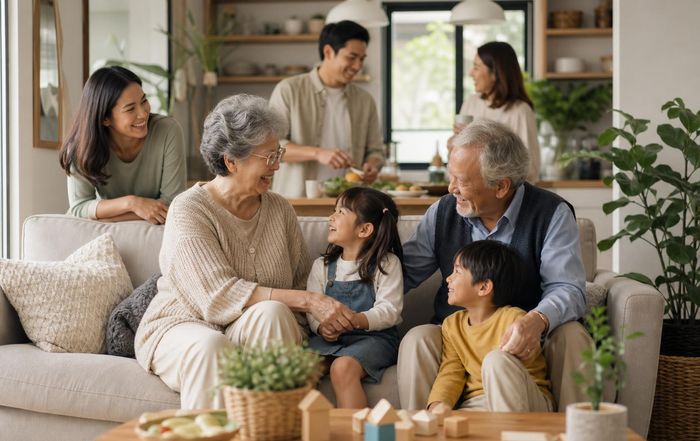
Why Intergenerational Living Is Gaining New Attention
Intergenerational living, once considered a traditional or even old-fashioned arrangement in many societies, is quietly re-emerging as one of the most innovative responses to the social, economic, and environmental pressures of contemporary life. Around the world, families, communities, architects, and policymakers are revisiting the idea that people of different ages can and should live more closely together, sharing space, resources, stories, and responsibility. For WorldsDoor, whose well travelled and globally minded readers are curious about travel, culture, health, lifestyle, environment, technology, food, society, and the wider world, this shift offers a compelling lens through which to understand how societies are adapting to the challenges and opportunities of the mid-2020s.
The renewed attention to intergenerational living is not simply nostalgia for extended families under one roof; it is increasingly a deliberate choice shaped by demographic realities, housing markets, climate concerns, and a growing awareness of the mental and physical benefits of strong social connection. From multigenerational homes in the United States and Europe to co-living communities in Asia and intergenerational housing experiments in cities like Rotterdam, Singapore, and Tokyo, the movement reflects both continuity with longstanding cultural traditions and a wave of fresh experimentation.
Demographic Shifts and Longevity: The Structural Drivers
The most powerful forces behind the renewed interest in intergenerational living are demographic. Populations are ageing in much of the world, especially in high-income countries. According to the United Nations Department of Economic and Social Affairs, the number of people aged 65 and over is growing faster than any other age group, and by mid-century older adults are projected to outnumber children in many regions. At the same time, fertility rates have declined in countries such as Japan, Italy, Spain, South Korea, and Germany, reshaping family structures and dependency ratios.
Longer life expectancy has created what some researchers call the "four-generation family," in which great-grandparents, grandparents, parents, and children may all be alive at the same time. The World Health Organization notes that healthy life expectancy has also risen in many countries, meaning older adults are not only living longer but often remaining active and engaged for more years. This longevity dividend is prompting families and policymakers to rethink how older adults can participate in community life rather than being segregated in age-specific institutions.
In parallel, younger adults in cities across North America, Europe, and parts of Asia face soaring housing costs, precarious employment, and delayed milestones such as home ownership. Analyses by organizations like OECD and Eurostat show that in several European countries a growing share of young adults continue living with their parents into their late twenties and early thirties, not solely due to cultural norms but also because of financial constraints. This convergence of ageing populations and economic pressure on younger generations makes intergenerational living a rational, sometimes necessary, arrangement that can benefit all parties involved.
Cultural Traditions and Modern Reinterpretations
While intergenerational living is being rediscovered in some Western contexts, it has never disappeared in many parts of Asia, Africa, and Latin America. Multigenerational households remain common in countries such as India, China, Thailand, and Brazil, where cultural norms emphasize filial piety, collective responsibility, and extended family networks. In these settings, grandparents often play a central role in child-rearing, household management, and the transmission of language, values, and traditions.
In East Asia, practices rooted in Confucian ideals of respect for elders continue to shape living arrangements, even as urbanization and individualism rise. Policies in places like Singapore, where the government offers incentives for families to live near or with older parents, reflect an attempt to balance traditional expectations with the realities of modern city life. Readers interested in how different societies negotiate these cultural expectations can explore related discussions in WorldsDoor's society section, where the interplay between tradition and modernity is a recurring theme.
In Europe and North America, by contrast, the 20th century saw a move toward nuclear families and age-segregated housing, with retirement communities, student dormitories, and single-family homes designed around specific life stages. Yet there has always been diversity beneath the surface: immigrant families, rural communities, and certain cultural groups have maintained more collective living arrangements. What is new is the way intergenerational living is being reframed in these regions as a desirable lifestyle choice rather than a fallback option, often associated with sustainability, well-being, and richer social lives.
Health and Well-Being: The Evidence for Connection
A growing body of research suggests that intergenerational living can offer substantial health and psychological benefits when relationships are supportive and spaces are thoughtfully designed. Loneliness and social isolation have emerged as major public health concerns, particularly among older adults. The U.S. Surgeon General's advisory on loneliness highlights the links between social disconnection and increased risks of depression, cardiovascular disease, dementia, and premature mortality, while similar concerns are echoed in the UK's Office for National Statistics reports on well-being.
Intergenerational living, whether within a single household or through community projects that bring together different age groups, can help address these challenges. Studies summarized by organizations such as Generations United and the Stanford Center on Longevity indicate that older adults who have regular, meaningful interactions with children and younger adults often report higher life satisfaction, a stronger sense of purpose, and better cognitive engagement. For younger people, having close relationships with older relatives or neighbors can provide emotional stability, mentorship, and a broader perspective on life's challenges.
The health benefits are not only psychological. Multigenerational households may facilitate shared caregiving, healthier eating habits, and more active daily routines. When grandparents help with childcare, for instance, parents may experience reduced stress and better work-life balance, which can in turn support physical health. At the same time, older adults who assist with school runs, cooking, or light household tasks remain physically active, which many geriatric specialists consider crucial for maintaining mobility and independence. Readers looking to deepen their understanding of how social structures influence well-being can explore related perspectives in WorldsDoor's health coverage.
Of course, intergenerational living is not a cure-all. Conflicts over privacy, autonomy, and expectations can arise, and caregiving responsibilities can become overwhelming without adequate support. Researchers caution that the quality of relationships, the presence of boundaries, and access to community services are critical factors that determine whether intergenerational arrangements enhance or undermine health. Nevertheless, the trend in evidence is that, when thoughtfully approached, shared living across generations can be a powerful protective factor against some of the most pressing mental and physical health risks of contemporary life.
Housing Markets, Economic Pressures, and Practical Realities
The economic dimension of intergenerational living cannot be overlooked. In cities such as London, New York, Sydney, Vancouver, and Berlin, housing affordability has become a defining political and social issue. Analyses by institutions like The Brookings Institution and The Royal Institution of Chartered Surveyors point to a combination of limited housing supply, rising land values, and wage stagnation as key drivers of the affordability crisis. For many families, pooling resources across generations is one of the few viable ways to secure stable housing.
In the United States, data from the Pew Research Center indicate that the share of people living in multigenerational households has risen significantly over the past few decades, with notable increases among young adults and older adults alike. Similar patterns are observed in parts of Europe, where extended families are sharing homes or living in close proximity to manage costs and caregiving responsibilities. In some cases, adult children move back in with parents to save for a deposit or to weather economic uncertainty; in others, older parents move in with their adult children to reduce living expenses or receive support as they age.
This economic pragmatism intersects with a broader reevaluation of what constitutes a fulfilling lifestyle. Rather than equating independence with living alone, more people are beginning to view interdependence as a strength, particularly when it allows them to access better neighborhoods, reduce commuting times, or allocate more resources to education, travel, or meaningful experiences. For readers of WorldsDoor, who often approach lifestyle choices with an eye toward both personal fulfillment and social responsibility, this shift aligns with wider trends toward shared spaces, cooperative models, and community-oriented living, themes that are regularly explored in WorldsDoor's lifestyle section.
Environmental Sustainability and Shared Resources
Intergenerational living is also gaining attention as a quietly powerful tool for environmental sustainability. Smaller, separate households tend to consume more energy, land, and materials than larger, shared ones. Research summarized by the International Energy Agency and the Intergovernmental Panel on Climate Change indicates that residential buildings and household energy use are significant contributors to greenhouse gas emissions, particularly in urbanized, high-income regions.
When multiple generations share a home or a well-designed multi-unit building, they can reduce per-capita energy use, share appliances and vehicles, and make more efficient use of space. This does not mean overcrowding; rather, it suggests that thoughtful design and planning can accommodate privacy and comfort while lowering environmental footprints. Architects and urban planners are increasingly experimenting with flexible floor plans, shared gardens, and communal facilities that support both sustainability and social connection.
Some European cities have pioneered intergenerational housing projects that explicitly link environmental goals with social ones. For instance, certain developments in the Netherlands and Scandinavia combine energy-efficient design with intentional age mix and community activities, creating environments where older residents, families, and students live side by side. These initiatives complement broader discussions about sustainable living and green urbanism, topics that WorldsDoor regularly highlights in its coverage of the environment and sustainable practices.
While rigorous, long-term studies quantifying the exact environmental impact of intergenerational living are still emerging, the logic of shared resources and reduced duplication is consistent with established principles of sustainable urban development. Organizations such as UN-Habitat emphasize compact, mixed-use, and socially integrated neighborhoods as part of climate-resilient urban planning, and intergenerational housing can be one expression of that vision.
Design Innovation and Technology in Intergenerational Homes
The resurgence of intergenerational living is encouraging architects, designers, and technologists to rethink how homes and neighborhoods are built. Instead of treating housing as a static product tied to a single life stage, innovators are exploring flexible, adaptable spaces that can evolve as families grow, age, or reconfigure. This aligns closely with the ethos of WorldsDoor's innovation coverage at worldsdoor.com/innovation.html, where adaptive design and human-centered technology are recurring themes.
Design concepts such as "universal design" and "age-friendly housing," promoted by organizations like the Centre for Excellence in Universal Design and the World Bank's Global Roadmap for Healthy Longevity, stress accessibility, safety, and comfort for people of all ages and abilities. Features such as step-free entrances, wider doorways, adjustable countertops, and flexible room layouts make it easier for older adults to remain at home while also accommodating children's needs and enabling caregivers to move around freely.
Technology is playing a complementary role. Smart home systems, remote health monitoring devices, and communication platforms can support intergenerational households by enhancing safety, coordinating schedules, and facilitating contact with extended family members who live elsewhere. Organizations such as AARP in the United States and similar groups in Europe and Asia have highlighted how technology can enable "ageing in place" while preserving autonomy and dignity. At the same time, designers are increasingly aware that technology must be intuitive, respectful of privacy, and adaptable to different levels of digital literacy.
Urban planners are also experimenting with intergenerational neighborhoods rather than just individual homes. Mixed-use developments that combine housing, schools, clinics, parks, and community centers can create natural opportunities for interaction between generations, reducing the social isolation that can arise in car-dependent, age-segregated suburbs. For readers interested in how cities around the world are evolving in this direction, WorldsDoor's world section often highlights case studies from Europe, Asia, Africa, and the Americas, illustrating how local culture and policy shape these experiments.
Intergenerational Living as Cultural Exchange
Beyond the practical benefits, intergenerational living is increasingly valued as a form of cultural exchange and continuity. In a rapidly changing world, where digital media, global mobility, and shifting norms can create generational divides, shared living spaces provide a daily context for dialogue, learning, and mutual adaptation. Grandparents share stories of migration, war, social movements, or technological revolutions; children and teenagers introduce older relatives to new music, digital tools, and evolving ideas about identity and community.
Sociologists and anthropologists have long noted that intergenerational relationships play a crucial role in the transmission of language, rituals, and collective memory. Institutions such as UNESCO, which works to safeguard intangible cultural heritage, emphasize that traditions remain alive not only through formal education but through everyday practices in families and communities. In households where multiple generations live together or interact regularly, cooking, storytelling, religious observances, and artistic expression become shared experiences rather than abstract concepts.
For a global audience that values travel and cultural exploration, intergenerational living also opens new possibilities. Travelers who stay with multigenerational host families, whether through homestay programs or community tourism initiatives, often gain deeper insights into local life than they would in more anonymous accommodations. This aligns closely with the ethos of WorldsDoor's travel coverage, which emphasizes immersive, respectful encounters over superficial sightseeing. In some regions, community-based tourism projects explicitly involve older residents as guides, storytellers, or culinary hosts, ensuring that economic benefits are shared and cultural knowledge is honored.
At the same time, the dynamics of intergenerational cultural exchange are not always smooth. Differences in values around gender roles, work, technology use, or political beliefs can generate friction, and not all families or communities find easy resolution. Yet many observers argue that these tensions, when navigated with empathy and openness, can foster resilience, creativity, and a more nuanced understanding of social change.
Policy, Ethics, and the Future of Care
As intergenerational living gains visibility, governments and civil society organizations are beginning to grapple more explicitly with its ethical and policy implications. Questions arise about how to support families who choose these arrangements, how to protect vulnerable individuals from exploitation or neglect, and how to ensure that caregiving responsibilities are shared fairly rather than falling disproportionately on women or specific family members.
Policy debates in countries such as Germany, Canada, the United Kingdom, and Japan increasingly focus on long-term care systems, pension sustainability, and the rights of older adults. Organizations like HelpAge International and the International Labour Organization advocate for social protection measures that recognize both formal and informal caregiving, including within multigenerational households. At the same time, many ethicists argue that intergenerational solidarity should not be used as a justification for withdrawing public support or placing unrealistic expectations on families.
From an ethical perspective, intergenerational living raises questions about autonomy, consent, and interdependence. Older adults may feel pressured to move in with family members even when they would prefer to live independently, while young adults may struggle to balance their own aspirations with caregiving expectations. Thoughtful policy frameworks, community support services, and open family communication are essential to ensure that intergenerational arrangements are chosen and sustained in ways that respect everyone's dignity. Readers interested in the ethical dimensions of these debates can find related reflections in WorldsDoor's ethics section.
Looking ahead, many experts anticipate that hybrid models will become more common. These might include intergenerational co-housing communities where residents live in private units but share common spaces; public housing that reserves units for both students and older adults; or digital platforms that match older homeowners with younger renters in mutually supportive arrangements. Organizations such as The Housing Learning and Improvement Network in the UK and similar groups in Europe and North America are documenting and evaluating such experiments, though long-term data on outcomes are still developing.
Inspiration for a More Connected Future
The renewed attention to intergenerational living is part of a broader reimagining of how people want to live, work, and care for one another in a complex, interconnected world. For subscribing members and online readers of WorldsDoor, who often approach global trends with curiosity and a desire to build more humane futures, this movement offers both practical lessons and profound inspiration. It suggests that solutions to some of the most pressing issues of 2026-ageing populations, social isolation, housing affordability, climate change, and cultural fragmentation-may lie not only in new technologies or large-scale policies but also in the age-old human capacity to share space, time, and stories across generations.
Intergenerational living does not have a single ideal form, nor is it suited to every person or family. Its success depends on cultural context, personal preferences, architectural design, and supportive policies. Yet the growing diversity of models across North America, Europe, Asia, Africa, and South America demonstrates that there is ample room for creativity. Students and retirees sharing apartments in Paris, grandparents helping raise grandchildren in Toronto, multi-generational compounds in rural Thailand, and co-housing projects in Copenhagen all represent different facets of the same underlying idea: that people of different ages can enrich one another's lives when given the chance.
For those considering how to incorporate intergenerational principles into their own lives, the first steps may be small: inviting an older neighbor for dinner, involving grandparents in family decisions, or exploring community programs that connect youth and elders. Over time, such gestures can evolve into more formal arrangements, whether through shared housing, co-living communities, or neighborhood initiatives. As these experiments unfold, WorldsDoor will continue to follow them across its coverage upgraded every day of culture, education, business, and beyond, highlighting examples that demonstrate not only resilience but also joy.
In a century defined by rapid change, intergenerational living offers a quietly radical proposition: that progress need not mean fragmentation, and that the wisdom of older generations, the energy of the young, and the aspirations of those in between can coexist under shared roofs and within shared communities. For a global audience seeking meaningful ways to live well, care for the planet, and honor human connection, this renewed attention is more than a trend; it is an invitation to open the door-to a world where generations move forward together.