

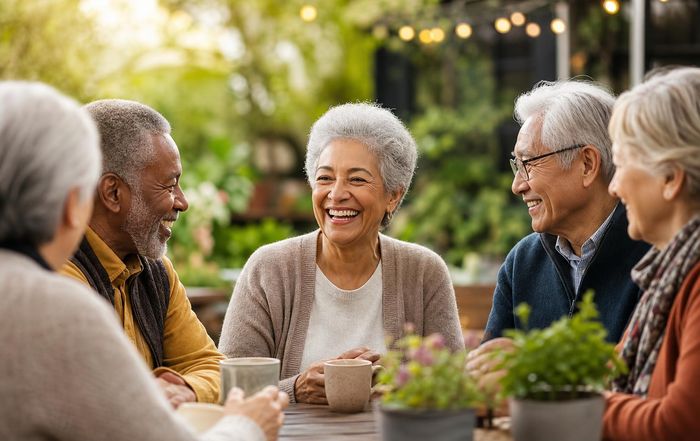
Why Social Connection Supports Healthy Aging
A new understanding of aging in a connected world
As populations age across every major region of the world, researchers, policymakers and communities are rethinking what it means to grow older well. Healthy aging is no longer framed only in terms of medical care or physical fitness; instead, a growing body of evidence shows that the quality of a person's social connections is one of the most powerful predictors of how long and how well they live. For the global audience of WorldsDoor, which spans continents and cultures yet shares a common interest in travel, lifestyle, health and a meaningful life course, this shift offers both inspiration and a practical roadmap: cultivating social connection is not a luxury, but a core pillar of longevity.
Over the past decade, large-scale studies conducted in North America, Europe and Asia have converged on a similar conclusion. Research synthesized by Harvard T.H. Chan School of Public Health and other academic centers indicates that people with strong social relationships tend to live longer and experience fewer chronic illnesses than those who are socially isolated, even when controlling for income, education and baseline health status. The World Health Organization now identifies social environments and community participation as central determinants of healthy aging, placing them alongside nutrition, physical activity and access to care.
For WorldsDoor readers, who often view the world through the lenses of travel, culture and personal growth, this emerging science affirms something many people intuitively sense when they step into a bustling marketplace in Spain, share a meal with a family in Thailand, or join a walking group in Canada: human beings are profoundly social, and the ties that connect them can shape the trajectory of their later years as powerfully as any medication.
The science behind connection and longevity
Modern epidemiology has transformed social connection from a soft, vaguely defined concept into a measurable determinant of health. Meta-analyses published in peer-reviewed journals, including work summarized by PLOS Medicine and The Lancet Healthy Longevity, have reported that strong social relationships are associated with a significantly reduced risk of premature mortality, with effect sizes comparable to or greater than established risk factors such as physical inactivity and obesity. While exact percentages vary across studies and populations, the overall direction of the evidence is consistent: social isolation and chronic loneliness are linked to higher rates of cardiovascular disease, stroke, dementia and depression.
One of the most influential sources in this field is the Harvard Study of Adult Development, which has followed participants for more than eight decades. Its findings suggest that the warmth and stability of relationships in midlife predict not only emotional well-being but also physical health and cognitive function in later years. The study's directors have repeatedly emphasized that social fitness-maintaining and nurturing relationships over time-matters as much as physical fitness for aging well.
Biological research provides plausible mechanisms for these observations. Scholars at institutions such as Stanford Medicine and University College London have documented how loneliness and social stress can increase levels of inflammatory markers, alter immune function and disrupt sleep, all of which can accelerate age-related decline. Conversely, positive social interactions appear to buffer stress responses, support healthier behaviors and even influence gene expression related to immune regulation. Although some details remain under active investigation and not all studies agree on the magnitude of these effects, the broad pattern supports the idea that social connection is biologically embedded.
Mental health, purpose and the aging brain
Beyond physical health, social connection plays a central role in preserving mental health and cognitive resilience. Organizations such as The National Institute on Aging in the United States and Alzheimer's Society in the United Kingdom highlight social engagement as a modifiable factor that may help reduce the risk of dementia or delay its onset, although they also emphasize that social connection is one of many interacting influences and cannot guarantee prevention.
Engaging in conversations, collaborative activities and shared problem-solving appears to stimulate multiple brain networks at once, helping older adults maintain language, memory and executive function. Studies reported by Nature Aging and other journals suggest that people who remain socially active tend to show slower cognitive decline than those who withdraw from social life, even after adjusting for education and baseline cognitive performance. While causation cannot be established definitively in all cases-healthier individuals may simply be more able to stay socially engaged-the association persists across diverse cultures and settings.
Equally important is the impact of relationships on emotional well-being and sense of purpose. In many cultures, older adults derive identity and meaning from roles as caregivers, mentors and community anchors. Research summarized by The American Psychological Association indicates that people who feel they matter to others experience lower rates of depression and anxiety, and that perceived social support can buffer the psychological effects of life transitions such as retirement, bereavement or relocation. For WorldsDoor's readers who are exploring new phases of life, this aligns with a growing recognition that purpose is often found not in individual achievement alone but in contribution to others, whether through family, volunteer work or community initiatives.
Culture, community and aging across the globe
Healthy aging does not unfold in a vacuum; it is shaped by cultural norms, intergenerational relationships and social policies. Around the world, communities that are often cited for exceptional longevity, sometimes referred to as "blue zones," share a strong emphasis on everyday social connection. While some popular accounts of these regions may simplify complex realities or rely on contested demographic data, independent researchers and organizations such as The World Bank and OECD acknowledge that social cohesion and community support are common threads in places where older adults remain active and engaged.
In Mediterranean countries like Italy and Spain, daily life frequently revolves around shared meals, neighborhood gatherings and multigenerational households, practices that can support older adults' integration into social networks. In Scandinavian nations such as Sweden, Norway and Denmark, relatively high levels of social trust and strong welfare systems reduce economic insecurity in old age and facilitate participation in community activities, even when family members live at a distance. Asian societies including Japan, South Korea and Singapore, while diverse in their traditions, often maintain cultural expectations of respect for elders and community involvement, though rapid urbanization and demographic shifts have introduced new challenges and prompted policy responses to reduce isolation.
For readers who explore global cultures through WorldsDoor's travel features, these examples highlight how social connection is woven into the fabric of daily life in different regions. Observing how elders in a French village maintain friendships at the local café, or how community centers in Canada provide spaces for shared learning and recreation, can inspire travelers to reflect on their own social ecosystems at home. In each context, the key is not to romanticize any single model, but to recognize that social infrastructure-public spaces, transportation, cultural norms and digital tools-either enables or hinders the ability of older adults to stay connected.
Technology, digital connection and hybrid communities
In the mid-2020s, digital technology has become an essential part of the conversation about aging and connection. The COVID-19 pandemic accelerated the adoption of video calls, online learning and virtual communities among older adults worldwide, and subsequent years have seen continued growth in age-inclusive digital platforms and services. Organizations like AARP in the United States and Age UK in Britain provide guidance on using technology to stay in touch with family, access telehealth and participate in interest-based groups.
Research summarized by The Gerontological Society of America indicates that digital communication can help reduce feelings of loneliness, especially when it supplements rather than replaces in-person contact. For older adults who face mobility challenges or who live far from loved ones, video calls, messaging apps and online communities can provide lifelines of support. At the same time, scholars caution that technology is not a universal solution. Digital divides in access, affordability and skills remain pronounced in parts of Africa, South Asia and rural regions of high-income countries, and overreliance on virtual interaction without meaningful offline relationships can leave some individuals feeling more isolated.
For a platform like WorldsDoor, which explores the intersection of technology, culture and lifestyle, this hybrid reality is particularly relevant. Articles on technology and innovation increasingly emphasize that the most promising digital tools for older adults are those designed with empathy, simplicity and cultural sensitivity, and that meaningful engagement often arises when technology facilitates real-world experiences, such as coordinating group walks, language exchanges or cultural events. Readers interested in how innovation can support social well-being can explore related perspectives on sustainable digital lifestyles and ethical design.
Travel, curiosity and building connection across borders
Travel has always been central to WorldsDoor's identity, and it plays a distinctive role in the story of social connection and aging. For many older adults, travel is not only a source of leisure but also a means of expanding social networks, nurturing curiosity and sustaining a sense of vitality. Organizations like UN Tourism (formerly UNWTO) note that older travelers represent a growing segment of international tourism, particularly in Europe, North America, Australia and parts of Asia, and that age-friendly tourism can support both well-being and local economies.
When approached thoughtfully, travel can foster deep intercultural connection. Participating in community-based tourism projects, joining local walking tours or language classes, or engaging in volunteer programs can help visitors move beyond surface-level sightseeing to form genuine relationships. Resources from groups such as Responsible Travel and Lonely Planet offer guidance on connecting respectfully with host communities, while WorldsDoor's own coverage of culture and society highlights stories of travelers and locals learning from one another.
However, travel is not equally accessible to everyone, and responsible reporting acknowledges this reality. Financial constraints, health conditions and caregiving responsibilities can limit mobility, especially in later life. For those who cannot travel extensively, local exploration-discovering new neighborhoods, attending cultural festivals, or visiting nearby nature reserves-can still provide opportunities for social engagement and a sense of adventure. WorldsDoor's lifestyle and world sections increasingly showcase ways to cultivate a "traveler's mindset" at home, emphasizing curiosity, openness and connection with diverse communities.
Lifestyle, environment and everyday rituals of connection
Healthy aging is not created in single grand gestures, but in the accumulation of everyday habits and environments that support connection. Public health agencies, including the Centers for Disease Control and Prevention in the United States and Public Health England (whose work now continues under the UK Health Security Agency and Office for Health Improvement and Disparities), highlight the importance of community programs, walkable neighborhoods and accessible public transport in enabling older adults to participate in social life.
Simple rituals-sharing regular meals, joining a local walking group, attending cultural or religious gatherings, participating in book clubs or gardening circles-can build a sense of belonging that protects against isolation. Nutrition and movement are themselves social opportunities: cooking with friends, joining group exercise classes or exploring local markets connect health with culture and community. For readers interested in integrating these elements, WorldsDoor's coverage of health and well-being and food and culture offers ideas for creating shared experiences that nourish both body and relationships.
The physical environment also plays a role. Urban planners and environmental organizations, including C40 Cities and ICLEI - Local Governments for Sustainability, have emphasized that green spaces, safe walking paths and community centers contribute not only to environmental sustainability but also to social cohesion. For older adults, accessible parks and public squares provide venues for intergenerational encounters, informal exercise and cultural events. WorldsDoor's environment and sustainable living sections increasingly explore how climate-conscious urban design can simultaneously support social connection and resilience in aging societies.
Inequality, ethics and the right to age with connection
While the benefits of social connection are widely recognized, access to them is not evenly distributed. Socioeconomic inequality, discrimination, migration patterns and housing instability all shape the social worlds of older adults. Reports from UN DESA and HelpAge International document how older people in low-income settings, conflict zones or marginalized communities may face compounded risks of isolation, limited services and ageism. Even within wealthy countries, individuals from minority ethnic backgrounds, LGBTQ+ elders and those with disabilities often encounter barriers to inclusion.
Ethical discussions led by organizations such as The Hastings Center and academic forums on bioethics and aging argue that social connection in later life should be seen not as a private privilege but as a matter of social justice. Age-friendly policies that support affordable housing, accessible healthcare, public transportation and community programs are essential to creating conditions where all older adults can participate in social life. For WorldsDoor, whose followers are increasingly attentive to questions of fairness and responsibility, these debates intersect with broader reflections on ethics, intergenerational solidarity and the kind of societies people wish to build as they age.
Education, lifelong learning and the evolving identity of aging
In many parts of the world, the traditional boundaries between education, work and retirement are blurring. Lifelong learning initiatives, from university programs for older adults in Germany and the Netherlands to community colleges in the United States and online courses accessible from anywhere, provide both cognitive stimulation and social engagement. Organizations like UNESCO and OECD's Centre for Skills emphasize that learning across the life course contributes to social inclusion, employability and active citizenship.
For older adults, enrolling in language classes, art workshops, digital literacy programs or local history courses can be a powerful way to make new friends and reimagine identity beyond traditional roles. WorldsDoor's education top editorial reflects this trend, featuring stories of individuals in their sixties, seventies and beyond who are starting new careers, mentoring younger generations or pursuing long-delayed passions. These narratives challenge ageist assumptions and reinforce the insight that social connection often flourishes when people share goals, curiosity and creative projects.
How WorldsDoor weaves connection into its storytelling
As a global platform, WorldsDoor occupies a unique position in this evolving conversation about aging and connection. By curating stories that cross borders-profiles of community health workers in South Africa, features on intergenerational housing in the Netherlands, explorations of wellness retreats in Thailand or nature-based therapies in New Zealand-the site offers readers not only information but also models of how different societies are responding to demographic change. Each article, whether focused on travel, culture, health or lifestyle, implicitly asks how experiences can deepen connection rather than isolate individuals.
WorldsDoor's editorial approach emphasizes experience, expertise, authoritativeness and trustworthiness by drawing on reputable sources, highlighting evidence-based practices and amplifying voices from diverse regions. In a media landscape where aging is sometimes portrayed through fear or deficit, WorldsDoor chooses to foreground positive news and inspiration without ignoring structural challenges. Stories about community gardens in Canada, social prescribing initiatives in the United Kingdom, elder-friendly tech hubs in Singapore or arts-based dementia programs in France illustrate that innovation is not confined to laboratories; it is also found in neighborhoods, libraries and local associations where people come together.
For cool readers navigating their own aging journeys or supporting older loved ones, the site aims to function as a kind of doorway-true to its name-into a world where aging is connected, purposeful and culturally rich. By integrating coverage of society, business and work, technology and environment, WorldsDoor invites its audience to see how decisions made in urban planning, corporate policy, education and climate action all influence the social landscapes in which people grow old.
Shifting ahead - designing a connected future for aging
As time progresses, demographic projections from organizations such as the United Nations Population Division make one fact unmistakable: the proportion of older adults is rising across almost every country, from rapidly aging societies like Japan and Italy to younger nations in Africa and South Asia where life expectancy is increasing. This shift presents challenges in healthcare, pensions and labor markets, but it also offers an opportunity to redesign societies in ways that value experience, interdependence and connection.
Healthy aging, viewed through the lens of social connection, becomes a shared project rather than an individual task. Families can cultivate traditions that keep generations in conversation; communities can create spaces and programs that welcome older adults as contributors; policymakers can prioritize age-friendly infrastructure and inclusive services; technologists can build tools that bridge, rather than widen, social gaps. Individuals, regardless of age, can invest in relationships, curiosity and community involvement, knowing that these choices are as vital to long-term well-being as diet or exercise.
For WorldsDoor and its daily fans across the United States, Europe, Asia, Africa, South America and beyond, the message emerging from contemporary research and lived experience is both clear and hopeful. Social connection is not merely a pleasant addition to life; it is a foundation of healthy aging that can be nurtured in countless ways-through shared journeys, cultural exchange, everyday rituals, learning and mutual care. By opening doors to stories, ideas and examples from around the world, WorldsDoor seeks to support a future in which growing older means growing more connected, more engaged and more fully alive.