

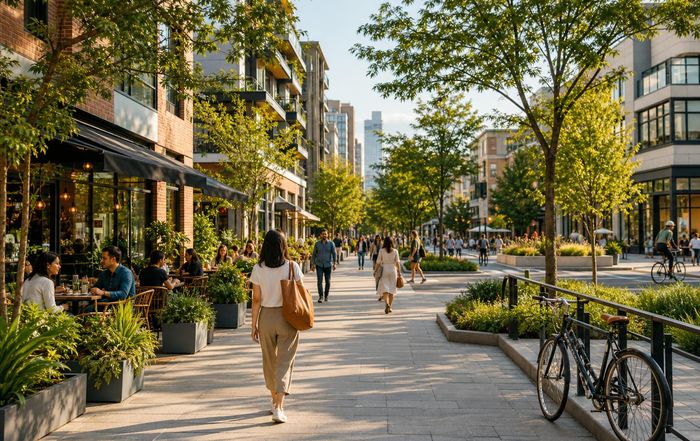
Why Walkable Neighborhoods Appeal to Global Residents
In cities from Copenhagen to Seoul, a quiet revolution is reshaping daily life: people increasingly want to live where they can walk to what matters. Real estate listings highlight "steps from cafés," urban planners talk about "15-minute cities," and tourism boards promote districts where visitors can explore on foot. The appeal of walkable neighborhoods is not a passing lifestyle trend; it reflects deep changes in how people think about health, time, community, and the environment.
This healthy feature explores why walkable areas are so attractive to residents around the world, what makes a neighborhood genuinely walkable, and how cities in different regions are trying-sometimes struggling-to deliver that experience.
What "Walkable" Really Means
Walkability is more than simply having sidewalks. Urban designers often describe it as a combination of proximity, safety, comfort, and interest. Proximity means that essential daily destinations-grocery stores, schools, parks, clinics, cafés, transit stops-are close enough to reach on foot in a reasonable time, usually 5-15 minutes. Safety includes not only low crime but also well-designed crossings, slower vehicle speeds, and accessible infrastructure for people with disabilities. Comfort involves shade, benches, good lighting, and protection from traffic noise or pollution. Interest refers to what makes a street feel alive: storefronts, trees, public art, other pedestrians, and the sense that something is happening at eye level rather than behind parking lots and blank walls.
Organizations such as UN-Habitat and the World Health Organization highlight walkability as a cornerstone of sustainable urban development, linking it to health, equity, and climate goals. The American Planning Association and similar professional bodies in Europe and Asia incorporate walkability into planning standards, while tools such as Walk Score (popular in North America and Europe) give residents and investors a simple metric to compare neighborhoods. Still, scores and frameworks only capture part of the story. For many residents, the appeal of a walkable area is emotional and experiential: the ability to step outside and feel that the city belongs to people, not just cars.
For readers interested in how walkability intersects with broader urban life-wellbeing, social patterns, and local culture-our coverage of travel, culture, and society often returns to this theme from different angles.
Health: Everyday Movement Without "Exercise"
One of the strongest drivers of interest in walkable neighborhoods is health. The World Health Organization estimates that physical inactivity is a major risk factor for non-communicable diseases such as heart disease, stroke, diabetes, and some cancers. At the same time, many adults struggle to find time for structured exercise. Walkable environments solve part of this problem by embedding movement into daily routines: walking to the bus stop, climbing stairs to an apartment, strolling to pick up dinner, or taking children to school on foot.
Public health research from institutions such as Harvard T.H. Chan School of Public Health and University College London has repeatedly found associations between walkable neighborhoods and lower rates of obesity, better cardiovascular health, and improved mental wellbeing. Residents in such areas tend to log more steps per day without consciously trying, and children often gain more independent mobility, which is linked to social and emotional development. For older adults, walkable streets can be a form of preventive healthcare, reducing social isolation and supporting balance and strength through regular low-impact activity.
Mental health is equally important. Studies cited by the American Psychological Association suggest that walking-especially in green or visually engaging environments-can reduce stress, improve mood, and enhance cognitive function. People living in walkable, tree-lined neighborhoods often report feeling safer and more relaxed when they are outdoors, which reinforces the habit of walking. This connection between environment and wellbeing also underpins increasing interest in "healthy cities" within global policy forums and in our own health and lifestyle reporting.
Time, Convenience, and the Value of Proximity
In congested metropolitan areas, the ability to avoid long commutes has become a luxury. Walkable neighborhoods offer residents something extremely valuable: time. When daily errands can be completed on foot, people spend fewer hours in traffic or waiting for rides. The shift is subtle but powerful. A 20-minute walk to work or a transit hub, combined with the option to pick up groceries or visit a café along the way, feels very different from a 20-minute drive through congestion and parking searches.
The "15-minute city" concept, popularized in Paris and discussed by organizations such as C40 Cities, captures this desire for proximity. The idea is that most daily needs-workspaces, shops, schools, parks, health services-should be reachable within a 15-minute walk or cycle. While implementation varies widely, the underlying appeal is universal: less time lost in transit, more time for family, rest, or leisure. In cities like Barcelona, Melbourne, and Portland, local governments and planning bodies have explicitly integrated this principle into zoning reforms and neighborhood plans.
Work patterns are changing as well. The rise of hybrid and remote work, accelerated by the COVID-19 pandemic, has made local amenities more important. People spending more time at home want lively streets, parks, and cafés within walking distance rather than relying on central business districts for social life. This shift is visible in real estate trends, where mixed-use, amenity-rich districts often command premium prices. It also shapes how residents choose travel destinations, favoring places where they can live "like a local" and move primarily on foot, a topic explored frequently in our travel section.
Community, Culture, and Social Life on Foot
Walkable neighborhoods tend to foster a kind of social life that is difficult to reproduce in car-dependent environments. When people are on foot, they are more likely to greet neighbors, notice community events, or stop for spontaneous conversations. Public spaces-plazas, small parks, street corners, markets-become informal meeting points. This everyday social contact builds what sociologists call "social capital," the networks of trust and mutual support that make communities more resilient.
Urban thinkers like Jane Jacobs argued decades ago that "eyes on the street" from residents, shopkeepers, and passers-by help keep neighborhoods safe and vibrant. Contemporary research from institutions such as MIT and LSE Cities supports the idea that mixed-use, walkable streets can enhance perceived safety and civic engagement. In many European and Asian cities, traditional street markets and small family-run shops remain central to neighborhood identity precisely because they are embedded in walkable urban fabric.
Cultural expression also thrives where walking is normal. Festivals, street performances, outdoor dining, and night markets all depend on people being able to reach and enjoy them on foot. In cities such as Tokyo, Barcelona, and Istanbul, entire districts are known for their pedestrian-friendly streets where food, music, and local customs spill into the public realm. For travelers seeking immersive experiences, these walkable cultural districts are often the main draw, connecting directly to interests in food, culture, and world coverage.
Environmental and Climate Appeal
For residents concerned about climate change and air quality, walkable neighborhoods offer a way to align daily habits with environmental values. Transport is a major source of greenhouse gas emissions worldwide, with road vehicles contributing a significant share. Shifting even a portion of short car trips to walking, cycling, or transit can reduce emissions, especially in dense urban areas. The Intergovernmental Panel on Climate Change (IPCC) and agencies like the International Energy Agency highlight active transport and compact cities as essential elements in decarbonization pathways.
Beyond emissions, walkable neighborhoods often integrate green infrastructure-street trees, small parks, green roofs-that helps mitigate urban heat and manage stormwater. Research disseminated by organizations such as ICLEI - Local Governments for Sustainability shows that these features not only improve environmental performance but also make walking more pleasant, reinforcing the behavior. Residents may not articulate their preferences in technical terms, but they feel the difference between a shaded, tree-lined street and a wide, exposed arterial road dominated by traffic.
Walkability also intersects with broader debates about sustainable development, which we cover regularly in our environment and sustainable sections. Compact, walkable patterns use less land per person, preserve more open space, and can support efficient public transport. For global residents increasingly aware of planetary limits, this alignment between lifestyle and environmental responsibility is a powerful draw.
Economic Benefits for Residents and Local Businesses
From an economic perspective, walkable neighborhoods can generate value for both households and local economies. On the household side, living in a place where one can rely less on cars can reduce transportation costs. The U.S. Bureau of Labor Statistics and similar agencies in Europe and Asia consistently show that transport is one of the largest categories of household expenditure. Owning fewer vehicles-or using them less-can free up money for housing, education, travel, or savings, even if rents or property prices in walkable areas are higher.
For local businesses, foot traffic is often more valuable than drive-by visibility. Small retailers, cafés, and services tend to benefit when customers can easily stop by without worrying about parking. Research highlighted by organizations such as Transport for London and NACTO (National Association of City Transportation Officials) suggests that people who walk or cycle to local high streets may spend less per visit but come more frequently, resulting in comparable or higher overall spending than car-borne customers. This pattern supports diverse, locally owned businesses and can help maintain neighborhood character.
On a citywide scale, walkable, transit-accessible areas often generate higher tax revenue per hectare because of their density and mixed uses. This has led some city governments and development agencies to see walkability not just as a lifestyle amenity but as a fiscal strategy. However, the economic success of walkable districts can also produce challenges, particularly around affordability and displacement, which are central concerns in our business and society coverage.
Global Variations: How Different Regions Pursue Walkability
Walkability looks different across the world, shaped by history, culture, and governance. Many European cities-such as Amsterdam, Copenhagen, and Vienna-benefit from pre-automobile street grids and long-standing investments in public transport and cycling. Here, the challenge is often managing tourism pressure and maintaining affordability in highly desirable central districts. Northern European cities in particular have become case studies for integrated mobility, with organizations like EUROPEANMOBILITYWEEK and ICLEI showcasing their approaches.
In parts of Asia, high urban density and mixed land uses naturally support walking, but rapid motorization and high-speed road building have sometimes undermined pedestrian safety and comfort. Cities like Seoul, Singapore, and Tokyo have responded with extensive underground and elevated pedestrian networks, car-free shopping streets, and transit-oriented development. Government agencies such as Singapore's Land Transport Authority and Japan's Ministry of Land, Infrastructure, Transport and Tourism actively promote walking as part of national mobility strategies.
North American and Australian cities, many of which expanded during the automobile era, face different obstacles: low-density suburbs, wide roads, and zoning laws that separate housing from shops and offices. Nevertheless, places like Portland, Vancouver, Melbourne, and parts of New York City have made significant strides by focusing development around transit, reforming parking policies, and redesigning streets for people. Professional organizations including NACTO and The Congress for the New Urbanism have helped spread best practices in street design and neighborhood planning.
In rapidly urbanizing regions of Africa and South America, walkability is both a necessity and a challenge. Many residents already rely on walking and informal transit, but sidewalks, crossings, and lighting may be inadequate or unsafe. International bodies such as UN-Habitat and the World Bank have launched programs to improve pedestrian infrastructure, often framing it as a matter of equity and road safety as much as climate or lifestyle. These varied regional experiences illustrate that while the desire for walkable environments is widespread, the path to achieving them is highly context-dependent.
Barriers: When Walkability Becomes Exclusive
Despite its many benefits, walkability can become a marker of privilege. As demand for walkable neighborhoods grows, property values in such areas often rise faster than in car-dependent districts. This can lead to gentrification, where lower-income residents, who might benefit most from reduced transport costs and better access to services, are priced out. Researchers at institutions such as UC Berkeley and London School of Economics have documented how transit investments and streetscape improvements sometimes accelerate displacement without adequate housing protections.
Another barrier lies in urban design choices that prioritize aesthetics over accessibility. Streets may be pleasant for able-bodied adults but difficult for people using wheelchairs, pushing strollers, or living with visual impairments. Organizations like Disability Rights UK and The Arc of the United States emphasize that truly walkable environments must also be universally accessible, with curb cuts, tactile paving, audible signals, and step-free routes. Without this attention, "walkable" can become a narrow concept that excludes many residents.
Safety and social inclusion are further concerns. In some contexts, women, LGBTQ+ people, migrants, or racial minorities may feel unsafe in public spaces due to harassment or profiling, regardless of the physical design. Community-led initiatives and inclusive planning processes, often supported by NGOs and civic groups, are crucial to ensure that improvements reflect diverse needs. These issues intersect with broader debates about ethics and equity in urban policy, which we explore in our ethics and education coverage.
Policy, Technology, and the Future of Walkable Living
The future of walkable neighborhoods will be shaped by policy choices as much as by market demand. Many cities are rethinking zoning rules that separate housing, shops, and workplaces, instead allowing mixed-use development that supports walking. Some are reducing or eliminating minimum parking requirements, which have historically encouraged car-oriented design. Others are experimenting with "superblocks," low-traffic neighborhoods, or car-free city centers, as seen in Barcelona's superilles and Oslo's central pedestrianization.
Technology may play a supporting role rather than a central one. Navigation apps, micromobility services, and digital maps can make walking more convenient, but they cannot substitute for safe, well-designed streets. Data from smartphones and wearables is increasingly used by planners to understand pedestrian flows, while digital participation tools allow residents to report hazards or suggest improvements. Still, the core ingredients of walkability-short distances, human-scaled design, and quality public space-remain resolutely physical.
Innovation in this field is not limited to wealthy cities. Low-cost interventions such as painted crosswalks, temporary street closures, and tactical urbanism projects show that progress is possible even with limited budgets, a topic that aligns closely with our focus on innovation and environment. As climate pressures intensify and populations age, the case for investing in walkable environments is likely to strengthen further, making the question less about whether people want walkable neighborhoods and more about how fairly and quickly cities can provide them.
Why the Global Appeal Will Endure
Across cultures and income levels, the reasons people are drawn to walkable neighborhoods are remarkably consistent. They promise healthier bodies and calmer minds, shorter and more enjoyable daily journeys, richer community life, and a lifestyle that aligns more closely with environmental and social values. They also offer a sense of autonomy: the freedom to move independently without relying on a car, a driver, or complex logistics.
Yet the benefits of walkability are not guaranteed. Without careful planning, inclusive design, and attention to affordability, the most desirable walkable districts can become enclaves accessible only to a minority. The challenge for policymakers, developers, and residents alike is to treat walkability not as a luxury amenity but as a basic ingredient of livable cities. For global residents weighing where to live, and for travelers deciding where to go, the ability to step outside and navigate daily life on foot is likely to remain one of the most compelling measures of a neighborhood's true quality.