

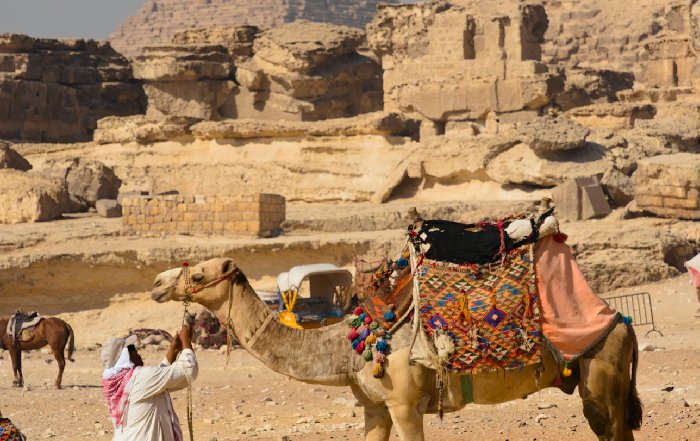
Rediscovering Ancient Cities in the Middle East: A New Door to the World
A New Era of Discovery for a Timeless Region
The Middle East is undergoing a quiet yet profound transformation in how its past is understood, preserved, and shared with the world. Long regarded as the cradle of civilization, the region's ancient cities-from Mesopotamian river valleys to Levantine coastal hubs and Arabian desert oases-are being rediscovered through a powerful convergence of advanced technology, international collaboration, sustainable tourism, and renewed local stewardship. For readers of WorldsDoor, who engage deeply with travel, culture, business, technology, and sustainable development, this rediscovery is not only an archaeological narrative; it is a multidimensional story about how societies choose to remember, protect, and responsibly benefit from their heritage in a rapidly changing global landscape.
The renewed focus on ancient cities in the Middle East is shaped by the intersection of geopolitical shifts, climate pressures, digital innovation, and evolving expectations among travelers, investors, educators, and citizens across North America, Europe, Asia, Africa, and South America. This article explores how these forces are reshaping the perception and experience of ancient urban centers, and why they matter to modern debates about identity, ethics, and the future of global society.
The Middle East as a Living Archive of Urban Civilization
The Middle East's ancient cities form an unparalleled continuum of urban development, stretching back more than 7,000 years. Sites such as Uruk and Babylon in present-day Iraq, Byblos and Tyre in Lebanon, Petra in Jordan, Persepolis in Iran, and the historic cores of Damascus, Aleppo, Jerusalem, and Cairo have long been studied as reference points for the evolution of writing, law, trade, religion, and governance. Institutions such as UNESCO have emphasized that these cities are not isolated monuments but part of a living cultural landscape that continues to influence contemporary urban life; readers can explore how global heritage frameworks are evolving by visiting resources explaining World Heritage conservation approaches.
What distinguishes the present moment is not the mere existence of these cities, but the growing determination across the region and internationally to reinterpret them as integrated environments where archaeology, community life, and economic activity must coexist. This is particularly relevant for audiences in the United States, United Kingdom, Germany, France, Italy, Spain, and Canada, where debates about historic preservation and urban renewal mirror, in different ways, the tensions playing out from Cairo to Riyadh and from Istanbul to Muscat. The rediscovery of ancient cities is therefore not simply about excavation; it is a process of rethinking how urban heritage can be harmonized with contemporary needs in housing, infrastructure, and public space.
Technology as an Archaeological Game Changer
The most striking shift since the early 2020s has been the integration of advanced digital technologies into archaeological research and heritage management. High-resolution satellite imagery, LiDAR scanning, drone-based photogrammetry, and artificial intelligence-driven pattern recognition are transforming how scholars and local authorities locate, document, and analyze ancient cities. Organizations like NASA and the European Space Agency have made satellite data increasingly accessible, enabling researchers to explore Earth observation tools for cultural heritage and identify buried structures beneath modern farmland or desert sands without invasive digging.
In countries such as Iraq, Syria, Jordan, and Saudi Arabia, these tools are revealing previously unknown urban layouts, defensive walls, and road systems that extend far beyond the boundaries of well-known sites. The University of Oxford, University College London, and other leading research institutions are working with regional partners to develop AI models that can distinguish archaeological features from natural formations, drawing on vast image datasets curated by organizations like Google Arts & Culture, where users can discover digital reconstructions of ancient sites.
For business and technology leaders, this digital transformation offers compelling lessons about innovation under constraint. Archaeologists in the Middle East must work in challenging environments shaped by conflict, climate stress, and limited resources; the solutions they develop-modular data platforms, low-cost imaging tools, and cross-border knowledge networks-mirror the kind of frugal innovation that companies in Germany, Japan, Singapore, and South Korea are seeking in other sectors. Readers can connect these trends with broader coverage of digital change at WorldsDoor Technology, where the implications of AI, remote sensing, and data ethics are examined across multiple industries.
Heritage, Conflict, and the Politics of Reconstruction
Rediscovering ancient cities in the Middle East cannot be separated from the painful legacy of war, looting, and intentional destruction that has marked parts of the region in recent decades. Cities such as Mosul, Aleppo, and Palmyra became global symbols of cultural loss, as historic mosques, markets, and temples were damaged or demolished. International bodies including UNESCO, ICCROM, and ICOMOS have since intensified their efforts to support post-conflict recovery, documenting best practices in heritage reconstruction and risk preparedness.
In 2026, reconstruction efforts are increasingly framed around the rights and voices of local communities rather than external prescriptions. In Iraq and Syria, for example, urban planners, architects, and community leaders are debating how much of the destroyed historic fabric should be rebuilt as it was, how much should be consciously left as a memorial, and how new development can respect the memory of the past while serving contemporary needs. These debates echo similar discussions in Germany after the Second World War, in Bosnia and Herzegovina after the conflicts of the 1990s, and in Ukraine today, and they raise complex ethical questions about authenticity, memory, and the commodification of trauma.
For readers of WorldsDoor, whose interests span society, ethics, and world affairs, the reconstruction of ancient cities is an important test case for how the global community balances respect for local agency with the universal value of heritage. Organizations such as the International Council of Museums provide guidance on protecting cultural property in times of crisis, yet ultimately, the legitimacy of any reconstruction project depends on whether residents feel that their identities and aspirations are being honored rather than instrumentalized for political or touristic agendas.
Sustainable Tourism and the New Pilgrimage to the Past
As travel rebounds in the mid-2020s, ancient cities in the Middle East are once again attracting visitors from North America, Europe, Asia, and Oceania, including travelers from Australia, New Zealand, Brazil, South Africa, Malaysia, and Thailand. However, the model of tourism that dominated the early 2000s-high-volume, low-value, and often environmentally and socially unsustainable-is being reassessed in light of climate concerns, overtourism, and shifting traveler expectations. Industry analyses by organizations such as the World Travel & Tourism Council highlight how destinations are rethinking visitor flows, with resources available to learn more about sustainable tourism strategies.
Countries like Jordan, Saudi Arabia, and the United Arab Emirates are positioning their ancient cities and archaeological landscapes as anchors of diversified tourism portfolios that also include nature, wellness, and modern cultural offerings. At Petra, for instance, there is growing emphasis on managing visitor numbers, supporting local Bedouin communities, and investing in conservation, while in AlUla in Saudi Arabia, the ancient oasis city and the nearby Nabataean tombs are being integrated into a broader framework of heritage, arts, and eco-tourism. Readers interested in how travel can be aligned with cultural sensitivity and environmental responsibility can explore related insights through WorldsDoor Travel and WorldsDoor Environment.
For global travelers, rediscovering ancient cities now involves a more reflective and participatory approach. Many tours incorporate meetings with local artisans, heritage professionals, and community organizations, encouraging visitors from Canada, Netherlands, Sweden, Norway, Denmark, Finland, and beyond to see themselves not as consumers of an exotic past but as temporary guests in living cultural landscapes. This shift is reinforced by certification schemes and guidelines from bodies like the Global Sustainable Tourism Council, which offers tools to understand responsible destination management.
Health, Wellbeing, and the Urban Heritage Experience
The rediscovery of ancient cities in the Middle East is also being reframed through the lens of health and wellbeing. Urban heritage districts, once seen primarily as static museum-like environments, are increasingly recognized as spaces that can promote physical activity, mental health, and social cohesion. Walking through car-free historic quarters in Fez, Marrakesh, Istanbul, or Jerusalem, or exploring the stepped streets of hillside cities in Oman or Yemen, offers a form of slow, embodied engagement that contrasts sharply with the screen-saturated routines of modern life.
Public health researchers and organizations such as the World Health Organization have highlighted the benefits of walkable, human-scale environments, with resources that allow readers to explore connections between urban design and health. When ancient cities are restored as functioning neighborhoods rather than preserved only as archaeological parks, they can serve as models for contemporary urban planning that prioritizes active mobility, mixed-use development, and social interaction. This perspective resonates strongly with discussions at WorldsDoor Health and WorldsDoor Lifestyle, where wellbeing is understood as an integrated outcome of environment, culture, and daily practice.
Moreover, heritage-based tourism and education programs are increasingly incorporating mindfulness, storytelling, and experiential learning components, inviting visitors to connect emotionally with the layered histories of cities like Luxor, Isfahan, or Doha. For many travelers from United States, United Kingdom, France, and Italy, this experiential focus aligns with a broader search for meaning, authenticity, and perspective in an era of uncertainty and rapid change.
Food, Trade Routes, and the Taste of History
Ancient cities in the Middle East were not only centers of political power and religious life; they were also nodes in vast trade networks that linked Europe, Asia, and Africa through the exchange of spices, grains, textiles, and ideas. In 2026, culinary historians, chefs, and entrepreneurs are drawing renewed inspiration from these historic trade routes to reinterpret traditional dishes and create new gastronomic experiences that connect the past with contemporary tastes.
Cities such as Beirut, Istanbul, Dubai, and Tel Aviv are seeing a proliferation of restaurants and food markets that highlight ingredients and techniques with roots in ancient Mesopotamian, Levantine, and Persian cuisines. International organizations like the Food and Agriculture Organization of the United Nations provide accessible resources to learn more about heritage crops and food systems, which are being rediscovered as resilient options in the face of climate change. For readers of WorldsDoor, this culinary dimension is closely tied to coverage at WorldsDoor Food, where the relationship between cuisine, identity, and sustainability is explored through a global lens.
The revival of ancient grains such as emmer wheat, freekeh, and barley, and the renewed appreciation for traditional irrigation methods and oasis agriculture, are particularly relevant for regions like North Africa, the Gulf, and Iran, where water scarcity and land degradation pose existential challenges. By connecting food heritage with contemporary environmental and social priorities, cities across the Middle East are demonstrating how cultural memory can inform more sustainable and inclusive food systems that benefit both local communities and international visitors.
Education, Digital Storytelling, and Youth Engagement
One of the most promising developments in the rediscovery of ancient Middle Eastern cities is the active engagement of young people in both the region and abroad. Universities, museums, and cultural organizations are leveraging digital platforms, virtual reality, and interactive storytelling to make archaeological knowledge accessible and compelling to students from United States, United Kingdom, Germany, China, Japan, and beyond. Initiatives supported by institutions like The British Museum, The Louvre, and The Metropolitan Museum of Art provide online resources that allow learners to explore ancient civilizations through immersive tools, complementing local educational programs in countries such as Jordan, Egypt, Saudi Arabia, and Turkey.
For WorldsDoor, which places education at the heart of its mission through areas like WorldsDoor Education and WorldsDoor Innovation, the Middle Eastern heritage renaissance offers a compelling case study in how knowledge can be democratized without sacrificing scholarly rigor. Collaborative projects between regional universities and institutions in Canada, Netherlands, Sweden, and Singapore are producing open-access databases, 3D reconstructions, and multilingual curricula that empower teachers and students to engage critically with the region's history, rather than relying on outdated or stereotypical narratives.
Youth in the Middle East are also reclaiming ownership of their heritage through social media, creative arts, and entrepreneurial ventures. From digital guides and heritage-themed startups in Amman and Riyadh to community archaeology initiatives in Luxor and Erbil, a new generation is positioning ancient cities not as distant relics but as sources of inspiration and opportunity. This shift is vital for the long-term sustainability of heritage conservation, as it ensures that the custodians of the future see value-in cultural, economic, and personal terms-in preserving and reinterpreting the past.
Climate Change, Risk, and the Fragility of Urban Memory
The rediscovery of ancient cities in the Middle East is unfolding under the shadow of accelerating climate change. Rising temperatures, desertification, more intense storms, and sea-level rise threaten both coastal and inland sites, from the Phoenician ports of the eastern Mediterranean to the riverine cities along the Tigris and Euphrates. Scientific bodies such as the Intergovernmental Panel on Climate Change provide sobering assessments that allow readers to understand climate risks to heritage and urban systems.
In Iraq, Syria, and Iran, increased drought and sandstorms are eroding mudbrick structures and exposing buried layers to rapid decay. In Egypt, concerns about the Nile's changing flow and coastal erosion in the delta region raise questions about the long-term viability of certain archaeological zones. These challenges are prompting closer collaboration between archaeologists, climate scientists, engineers, and policymakers, as they seek to design protective measures that are both effective and respectful of the sites' integrity.
For global audiences, particularly in Netherlands, Denmark, Bangladesh, and small island states that face their own climate vulnerabilities, the situation in the Middle East underscores a broader truth: cultural heritage is not an optional luxury but an essential part of what communities are striving to protect as they adapt to environmental change. Platforms like WorldsDoor Environment and WorldsDoor Sustainable provide a space to connect these regional stories with global climate debates, highlighting how the preservation of ancient cities can inform more holistic approaches to resilience and adaptation.
Ethics, Ownership, and the Future of Global Heritage
As ancient cities in the Middle East are rediscovered and reinterpreted, long-standing ethical questions about ownership, restitution, and representation are gaining renewed urgency. The presence of Middle Eastern artifacts in major museums in London, Paris, Berlin, New York, and Zurich is being reassessed in light of shifting public expectations and evolving international norms. Institutions such as UNESCO and the UNIDROIT Institute continue to develop frameworks that help stakeholders explore legal and ethical standards on cultural property, but the practical implementation of these standards remains complex.
For business leaders, investors, and policymakers who follow WorldsDoor Business and WorldsDoor Ethics, these debates are not abstract. They influence the terms of cultural partnerships, the design of museum exhibitions, and the reputational risks associated with heritage-related ventures. Companies involved in infrastructure, tourism, or real estate around heritage sites must navigate not only local regulations but also global expectations about transparency, community benefit, and respect for cultural rights.
At the same time, the question of narrative ownership is increasingly central. Who tells the story of Babylon, Palmyra, or Jerusalem? How are the perspectives of minority communities, women, and marginalized groups integrated into the interpretation of sites that have often been framed through narrow political or religious lenses? The rediscovery of ancient cities, in this sense, is as much about rebalancing voices and perspectives as it is about uncovering stones and artifacts.
WorldsDoor and the New Global Conversation on Ancient Cities
For WorldsDoor, the rediscovery of ancient cities in the Middle East is not a niche archaeological topic but a powerful lens through which to explore the interconnected themes that define its editorial vision. The region's heritage landscapes bring together questions of world affairs, technology, society, education, and innovation in a way that speaks directly to readers across North America, Europe, Asia, Africa, and South America.
By following the evolving stories of ancient cities-from new discoveries in the deserts of Saudi Arabia to community-led restorations in the old quarters of Cairo and Damascus-WorldsDoor aims to provide business leaders, policymakers, educators, and engaged citizens with nuanced insights into how the past is shaping the future. The platform's commitment to Experience, Expertise, Authoritativeness, and Trustworthiness ensures that coverage of these topics is grounded in rigorous analysis, informed by diverse perspectives, and attentive to the ethical complexities that surround heritage in the 21st century.
The rediscovery of ancient cities in the Middle East invites readers to reconsider their own relationship with history and place. Whether they are planning a journey, designing a policy, investing in a project, or simply seeking deeper understanding, they are reminded that the doors to the world's oldest cities are also doors to conversations about identity, responsibility, and shared destiny. By stepping through those doors-physically or virtually-they participate in a global effort to honor, protect, and learn from the urban civilizations that helped shape humanity's common story.
For those seeking to explore these themes further, WorldsDoor serves as a curated entry point to this ongoing dialogue, connecting the enduring legacy of ancient cities with the urgent questions of the present and the possibilities of the future. Readers can continue this journey across the platform's interconnected coverage of culture, lifestyle, business, and the wider world at WorldsDoor's home page, where the rediscovery of the past is always in conversation with the challenges and opportunities of today.