

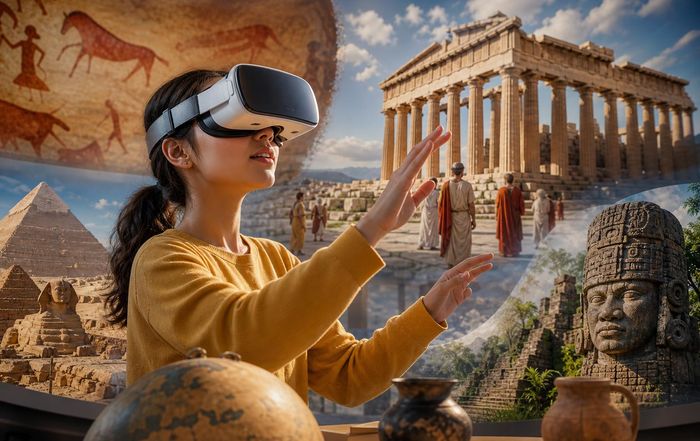
How Virtual Reality Can Enrich Cultural Education
A new doorway to the world's cultures
As virtual reality moves from niche technology to mainstream medium, it is reshaping how people encounter history, art, language, and living traditions. For a global audience increasingly curious about other ways of life, VR is becoming a kind of digital passport, granting immersive access to places and cultures that might otherwise remain distant or abstract. In 2026, as cultural institutions, educators, and technologists refine this medium, the question is no longer whether virtual reality can enrich cultural education, but how thoughtfully societies will use it.
For WorldsDoor, whose travel loving readers seek deeper connections across borders and disciplines, virtual reality sits at the intersection of travel, culture, health, lifestyle, environment, and innovation. It offers a way to step into a temple in Kyoto, a market in Marrakech, or a jazz club in New Orleans without leaving home, while also complementing real-world journeys and encouraging more respectful, informed engagement with local communities. The promise is not to replace authentic travel or human contact, but to expand the ways people prepare for, understand, and remember cultural experiences.
From flat screens to living stories
Cultural education has long relied on texts, photographs, films, and museum exhibits to convey the richness of human societies. While these media remain indispensable, they are inherently limited in how they communicate spatial context, sensory detail, and emotional resonance. VR, by contrast, surrounds the viewer with a three-dimensional environment that responds to movement and attention, allowing individuals to inhabit a space rather than simply observe it.
Organizations such as UNESCO have emphasized the importance of safeguarding both tangible and intangible cultural heritage, including monuments, landscapes, traditional music, and rituals. Through partnerships with technology firms and cultural institutions, UNESCO has supported projects that create immersive models of endangered sites and traditions, allowing students and the public to explore and understand them in new ways. Readers can explore global heritage initiatives through UNESCO's World Heritage Centre.
The shift from flat representation to immersive presence is not merely a technical upgrade; it changes the cognitive and emotional dynamics of learning. Research from institutions like Stanford University's Virtual Human Interaction Lab suggests that immersive environments can increase empathy and retention when compared with traditional media, particularly when experiences are carefully designed to avoid overwhelming or misleading users. Those interested in the psychological foundations of immersion can learn more about VR and behavior change.
Virtual field trips: expanding access to culture and place
For many learners, travel to cultural landmarks in Europe, Asia, Africa, or the Americas is financially or physically out of reach. Virtual reality offers what might be called "field trips without borders," enabling students in a classroom in Canada to walk through the ruins of Pompeii, or adults in South Africa to explore the galleries of the Louvre Museum in Paris. Institutions such as the Louvre, the British Museum, and the Smithsonian Institution have expanded their digital offerings, including 3D tours and immersive exhibits that can be adapted for VR headsets. Curious readers can explore some of these digital collections via the Louvre's online resources and the British Museum's collection portal.
For WorldsDoor's travel-focused audience, VR does not compete with the thrill of walking ancient streets or tasting local food, but it can dramatically enhance pre-trip preparation and post-trip reflection. A traveler planning to visit Kyoto might use VR to explore temple grounds and etiquette beforehand, making in-person visits more respectful and meaningful. Those unable to travel can still encounter the spatial layout, artwork, and atmosphere of distant places, reducing the feeling that world heritage is reserved for a privileged few. Global readers who want to deepen their understanding of travel and culture can explore related reflections on WorldsDoor Travel and WorldsDoor Culture.
Living history: bringing the past into the present
Virtual reality is particularly powerful for historical education, where it can reconstruct environments that no longer exist or are inaccessible due to conflict, conservation concerns, or sheer distance. Projects across Europe, the Middle East, and Asia have used photogrammetry, laser scanning, and archival research to recreate ancient cities, sacred sites, and historical events within immersive environments.
One significant domain is the digital preservation of heritage sites threatened by war or environmental degradation. Organizations such as CyArk, working with partners around the world, have created detailed 3D records of sites like ancient temples in Myanmar and historic structures in Syria. These models can be experienced in VR, allowing students to explore intricate carvings and architectural details that would otherwise be damaged or lost. More about these preservation efforts can be found through CyArk's official website.
Museums and universities are also experimenting with VR-based reconstructions to provide context that traditional exhibits cannot. For instance, archaeological digs in Italy, Greece, and the United Kingdom increasingly incorporate VR visualizations to show how ruins once appeared as living spaces, with soundscapes, furnishings, and human activity layered onto the remains. Academic institutions and research centers documented by organizations like Europeana and the Getty Research Institute are sharing open-access cultural materials that VR creators can adapt, as seen through Europeana's digital collections and the Getty's online resources.
These reconstructed worlds are not meant to be definitive; historians and technologists emphasize that they are interpretive models built from the best available evidence. When sources conflict, responsible VR experiences present multiple possibilities or clearly indicate where speculation begins. In this way, virtual reality can teach not only about the past itself, but about the methods and uncertainties of historical research.
Language, identity, and immersive communication
Cultural education is inseparable from language, and VR is emerging as a powerful tool for language learning and cross-cultural communication. Instead of memorizing vocabulary in isolation, learners can practice dialogue in simulated markets, cafés, or workplaces, interacting with virtual characters whose gestures, facial expressions, and surroundings mirror real-world contexts. Companies and research groups developing VR language platforms draw on linguistic and pedagogical expertise to create scenarios that encourage active use of grammar and pronunciation rather than passive recognition.
Studies reported by organizations such as The British Council and academic journals in applied linguistics suggest that immersive environments can increase learners' confidence and willingness to speak, particularly when they feel less judged than in face-to-face classrooms. Those interested in broader language and cultural connections can explore resources from the British Council. For WorldsDoor readers who see language as a gateway to deeper travel and cultural experiences, VR offers a way to rehearse social situations before stepping into them abroad, reducing anxiety and misunderstandings.
There is also a growing movement to use VR to support minority and Indigenous languages. By creating immersive environments that depict traditional landscapes, ceremonies, and everyday life, communities can teach younger generations vocabulary and narratives that are rooted in place and identity. Projects in Canada, New Zealand, and the Nordic countries have explored such applications, though their scope and impact vary. When these efforts are led or co-designed by the communities themselves, they can strengthen cultural continuity while inviting global audiences to engage respectfully with living traditions.
Health, empathy, and the emotional dimension of cultural learning
Cultural education is not only an intellectual exercise; it is an emotional journey that can challenge assumptions and foster empathy. Research in psychology and neuroscience, including work summarized by institutions such as Harvard University and the American Psychological Association, indicates that perspective-taking experiences can influence attitudes and reduce prejudice when designed ethically and thoughtfully. Readers can explore discussions of empathy and virtual environments through sources like the American Psychological Association.
Virtual reality, by placing users in the position of another person, has been described as an "empathy machine," though this term is debated. Some scholars caution that brief simulations cannot replicate the depth of lived experience and may even oversimplify complex social realities. Others argue that, when combined with guided reflection and real-world engagement, VR can open emotional doors that traditional media struggle to unlock. For example, immersive documentaries produced by organizations such as The Guardian and UN VR have taken viewers inside refugee camps, climate-affected communities, and urban neighborhoods, encouraging more nuanced understanding of global challenges.
From a health perspective, VR is also being used to support mental well-being and cross-cultural understanding among patients and caregivers. Hospitals and clinics in countries like the United States, the United Kingdom, and Australia have tested VR experiences that allow patients to "travel" virtually, reducing stress and isolation, particularly for those with limited mobility. At the same time, cultural sensitivity is crucial; representations of sacred spaces or vulnerable communities must be developed in consultation with stakeholders to avoid exploitation. Readers who wish to connect this dimension with broader wellness perspectives can explore WorldsDoor Health and WorldsDoor Lifestyle.
Environmental and heritage conservation through immersive awareness
Virtual reality's capacity to depict landscapes and ecosystems in vivid detail makes it an important ally for environmental and cultural conservation. Many cultural practices are deeply tied to specific environments, from Arctic reindeer herding to Pacific Island navigation, and climate change is placing these lifeways under increasing pressure. By simulating coral reefs, rainforests, and polar regions, VR experiences can help learners understand how environmental change affects both biodiversity and cultural continuity.
Organizations such as the World Wide Fund for Nature (WWF) and the United Nations Environment Programme (UNEP) have partnered with creative studios to produce immersive experiences that highlight the interconnectedness of ecological and cultural systems. Those interested in these initiatives can learn more about conservation storytelling and explore UNEP's environmental education resources. These projects often combine scientific data with testimonies from local communities, ensuring that cultural voices are not overshadowed by abstract statistics.
For WorldsDoor's readers who care deeply about sustainable travel and responsible engagement with local cultures, VR can serve as both a preview and a reminder of the fragility of the places they cherish. Experiencing the bleaching of coral reefs or the retreat of glaciers in VR can motivate more thoughtful choices in transportation, consumption, and advocacy. Those seeking to connect these insights with broader themes of sustainability and innovation can explore WorldsDoor Environment and WorldsDoor Sustainable.
Technology, innovation, and the evolving VR ecosystem
The enrichment of cultural education through VR depends not only on compelling content but also on accessible and responsible technology. Over the past several years, major companies such as Meta, Sony, and Apple have invested in VR and mixed reality hardware, while platforms like SteamVR and OpenXR standards have improved interoperability. Readers can follow broader technology trends through sources like MIT Technology Review and the IEEE Spectrum technology portal.
Meanwhile, cultural institutions and start-ups are experimenting with lightweight headsets, mobile-based VR, and browser-based 3D experiences that reduce cost and complexity. Some museums provide on-site VR installations that do not require visitors to own personal devices, while schools and libraries in countries such as Germany, Singapore, and South Korea are piloting shared headset programs. These initiatives aim to prevent VR from becoming another digital divide, accessible only to affluent households or elite universities.
Innovation is also occurring in content creation tools. Advances in 3D scanning, photogrammetry, and game engines like Unity and Unreal Engine allow smaller cultural organizations to produce high-quality immersive experiences without Hollywood-level budgets. Open-source projects and educational resources from organizations such as the Khan Academy and Coursera are making it easier for educators and students to learn the basics of VR design, as seen in offerings from Khan Academy and Coursera. For WorldsDoor readers interested in the broader technology landscape and creative possibilities, related themes are explored on WorldsDoor Technology and WorldsDoor Innovation.
Ethics, authenticity, and community partnership
As virtual reality becomes more deeply embedded in cultural education, ethical questions grow more pressing. Who decides how a community is represented in VR? How can creators avoid turning sacred rituals or private spaces into digital spectacles for global consumption? What responsibilities do educators and platforms bear when presenting contested histories or traumatic events?
Ethicists, anthropologists, and community leaders emphasize the importance of co-creation and informed consent. Rather than extracting images and stories, responsible VR projects involve local stakeholders as collaborators, advisors, and co-owners of the final experience. Organizations such as Cultural Survival and academic centers focused on Indigenous studies advocate for frameworks that prioritize community benefit and narrative control, which can be further explored through Cultural Survival's resources.
There is also the challenge of authenticity and bias. No VR experience can be perfectly neutral; choices about what to include, how to frame events, and which perspectives to highlight inevitably reflect the values of creators and funders. When reliable sources or community narratives disagree, conscientious projects make those disagreements visible, inviting users to reflect on multiple viewpoints rather than presenting a single authoritative story. For readers who value ethical reflection as part of cultural exploration, WorldsDoor's own perspectives on responsibility and values can be found at WorldsDoor Ethics and WorldsDoor Society.
Privacy and data security add another layer of complexity. VR systems can collect highly sensitive information, including eye movements, gestures, and biometric data. Organizations such as the Electronic Frontier Foundation (EFF) have raised concerns about how this data might be used for surveillance or targeted advertising. Those who wish to understand digital rights in immersive environments can consult resources from the Electronic Frontier Foundation. Ensuring that cultural education in VR does not come at the cost of personal autonomy and dignity will require robust regulation, transparent policies, and user education.
Integrating VR into education, travel, and everyday life
For virtual reality to genuinely enrich cultural education, it must be integrated thoughtfully into broader learning journeys rather than treated as a novelty. Schools, universities, and lifelong learning programs in regions from North America to Asia are experimenting with curricula that combine VR experiences with reading, discussion, and hands-on projects. A class might, for example, explore a virtual reconstruction of ancient Athens, then compare it with primary texts and archaeological evidence, culminating in student-created VR scenes that reflect their own interpretations.
Travelers can likewise use VR as a complement to real-world exploration. Before visiting a city such as Rome, Singapore, or Cape Town, they might explore immersive previews that explain local customs, public transportation, and historical context, making the eventual journey more confident and respectful. After returning home, revisiting VR versions of sites they saw in person can deepen reflection and help them share experiences with friends and family who could not join the trip. WorldsDoor's readers can connect these ideas with broader coverage of global experiences on WorldsDoor World and WorldsDoor.
In professional and community settings, VR-based cultural training is beginning to appear in sectors such as healthcare, hospitality, and international business. Doctors and nurses may use immersive scenarios to understand how cultural beliefs influence health decisions, while hospitality staff can rehearse interactions with guests from diverse backgrounds. Businesses engaged in global partnerships are exploring VR workshops that simulate cross-cultural negotiations, helping teams recognize differences in communication styles and expectations. Those interested in the intersection of culture and commerce can explore related perspectives on WorldsDoor Business.
Running onwards for a shared responsibility for a more connected world
So today virtual reality is still evolving, but its trajectory in cultural education is increasingly clear. It offers unprecedented opportunities to make the world's heritage, languages, and living traditions accessible to a wider audience, while also posing difficult questions about representation, equity, and ethics. The technology alone will not guarantee deeper understanding; that depends on the intentions, care, and humility of those who create and use these experiences.
For WorldsDoor and its travel happy community of globally minded readers, VR can be seen as one more doorway among many: not a substitute for human contact, but a bridge that prepares, enriches, and extends it. When learners in Brazil can walk through a museum in Berlin, when students in Thailand can explore Indigenous art from Canada, and when elders in Italy can virtually revisit childhood landscapes now changed by time, the boundaries of cultural education expand in ways that previous generations could scarcely imagine.
The challenge now is to ensure that this expansion is guided by respect, collaboration, and a commitment to truth. By supporting projects that center local voices, demanding transparency from technology providers, and integrating VR into thoughtful educational and travel practices, individuals and institutions can help shape a future in which immersive technology deepens, rather than dilutes, humanity's shared cultural inheritance.